
 E-Paper



Grim, moving stories. It’s time to light a candle, says Sandeep Rai
According to Rai, the book comprises stories from Teach for India and tells readers about the lives of thousands of children who represent the dismal statistics of India’s education

 Prefer HTon Google


Teach For India marked a decade of service at the Symbiosis Centre for Management Studies, Vimannagar, on October 11, by releasing Grey Sunshine, a collection of stories, authored by its chief of city operations Sandeep Rai, highlighting the organisation’s 10-year journey.
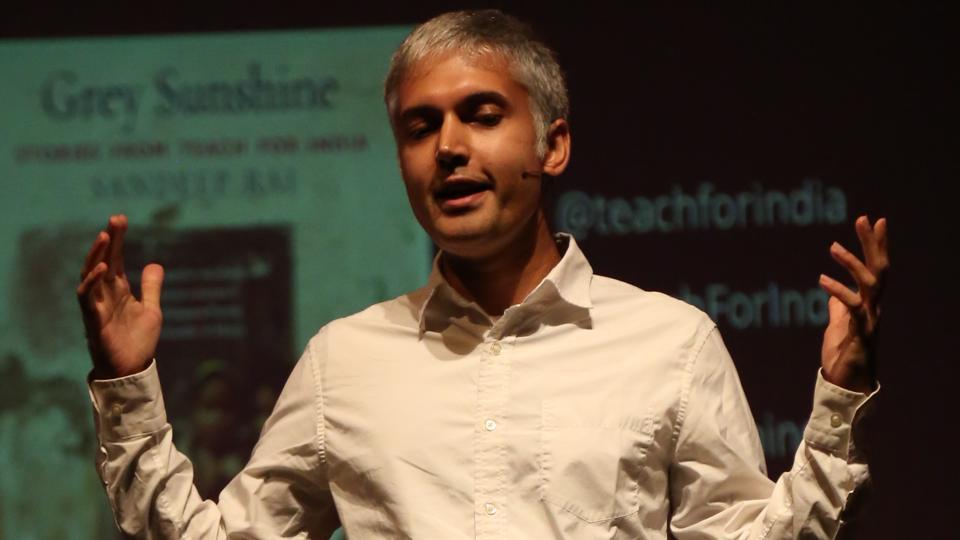
According to Rai, the book comprises stories from Teach for India and tells readers about the lives of thousands of children who represent the dismal statistics of India’s education. It tells the shameful story of India’s inequity. However, the stories are not only about the all-pervading greyness, but also about sunshine penetrating the grey clouds because of the heroic efforts of Teach for India fellows who work tirelessly to improve the dismal Indian education system. Excerpts of the interview…
What is the book about?
Grey Sunshine is a book about human stories underlying a national crisis we see—and yet don’t see—every single day: the state of Indian education. It is an invitation to walk in the shoes of hundreds of thousands of children battling the injustice of poverty, and the 4,000 leaders from Teach For India (fellows), that fight alongside them. Over the past ten years working with Teach For India, I’ve met thousands of children across the country who are fighting for a better tomorrow. I have also had the privilege to work with the fellows of Teach For India who are joining hands to ensure a more equitable future. Grey Sunshine is that story. It’s, furthermore, the recognition that working with poverty is daring to launch across the greyness. And, eventually, you do discover the sunshine, the hope.
What prompted you to write the book?
Numbers and data alone‒which today’s media publishes relentlessly‒will not jolt people into action to fix our broken system. Today’s Indians need to emotionally connect with the problem. They must know the human faces that underlie those numbers. What is missing from the publishing landscape, and frankly what our country desperately needs, is a work that liberates educational reform from the realm of academia. We need a book that “re-humanises” the current educational crisis; vividly describes the disastrous implications of ignoring the problem; shares insights on what needs to be done to solve the crisis; and, ultimately, inspires hope and action to radically change our current trajectory. We need to show people the power of a more equitable and empowered India. Grey Sunshine fills this gap.
How have you selected the stories?
Teach For India as a movement has gained tremendous traction over the past ten years. We have 4,000 people who have completed our two-year fellowship programme and together we have supported 38,000 children in the process. Weaving the common threads of the narrative across such a diverse group was an arduous task, to say the least. However, as I interviewed our teachers and students, it became increasingly clear that there are certain values and experiences that connect us and that make up the journey of the fellowship. The stories in the book are reflective of that.
Which of the stories were the most difficult to write or emote?
One of the most challenging things about writing the book was processing the stories I heard throughout this journey. These were stories of poverty, of struggle, and of oppression. They weren’t statistics, though. They were the stories of real people - told by real people. Listening to them shook me to my soul, in more than one way. I stayed overnight in some of the communities that our students live in to interview them, their parents, their friends, even their neighbours! It was a humbling experience that’s difficult to describe in this format. It’s hard to pick just one. The process of writing this book and the stories in it collectively has changed me.


