The Gurugram Metropolitan Development Authority (GMDA) will impose a penalty of ₹50,000 per month on colonisers — those who have developed private colonies— if they discharge untreated sewage in residential areas or in stormwater drains, officials said on Saturday, adding that the fine will be added to the water supply bill of violators.
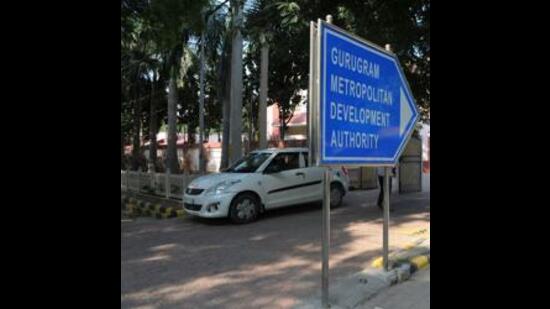
GMDA officials said that the problem arises mainly due to the lack of proper sewage treatment by sewage treatment plants (STPs) installed by developers on their properties, and their failure to comply with conditions outlined in occupational certificates (OC) issued by the department of town and country planning (DTCP) and the consent to operate issued by the Haryana State Pollution Control Board (HSPCB).
In order to address this issue, officials said, GMDA will actively monitor the operation of all private STPs established by developers and licence holders to ensure that sewage generated on their premises undergoes proper treatment.
GMDA chief executive officer A Sreenivas directed officials to ensure that the data of all STPs set up by colonisers/licence holders in Gurugram must be linked with an integrated command and control centre.
“It has been noticed that colonisers who have taken the consent to establish and consent to operate their STPs from HSPCB are not following the established guidelines, which is posing a hazard to the environment. Thus, all colonisers/builders must install online monitoring devices so that the quantity and quality of the treated waste water may be ascertained whether it is meeting the parameter prescribed by the HSPCB. The online monitoring system must have the capability of providing real-time data and information on operational parameters with flow to GMDA,” said Sreenivas.
{{/usCountry}}“It has been noticed that colonisers who have taken the consent to establish and consent to operate their STPs from HSPCB are not following the established guidelines, which is posing a hazard to the environment. Thus, all colonisers/builders must install online monitoring devices so that the quantity and quality of the treated waste water may be ascertained whether it is meeting the parameter prescribed by the HSPCB. The online monitoring system must have the capability of providing real-time data and information on operational parameters with flow to GMDA,” said Sreenivas.
{{/usCountry}}The data captured from the online monitoring system via flow meter and analysers will be linked with ICCC for monitoring purposes and help in identifying those residential societies wherein the STPs are not operated as per the stipulated guidelines and standards, said officials.
Sreenivas said all licences wherein the establishment of an STP has been made mandatory, the licensee must set up STPs of adequate capacity to treat the sewage generated in their colonies. “It must also be ensured by the licence holders that STP is fully functional and is utilising its maximum capacity to treat the sewage and to further use the treated waste water for horticulture, construction and other non-potable purposes within their colonies,” he said.
Stay updated with all the Breaking News and Latest News from Mumbai. Click here for comprehensive coverage of top Cities including Bengaluru, Delhi, Hyderabad, and more across India along with Stay informed on the latest happenings in World News.
Stay updated with all the Breaking News and Latest News from Mumbai. Click here for comprehensive coverage of top Cities including Bengaluru, Delhi, Hyderabad, and more across India along with Stay informed on the latest happenings in World News.