Gurugram is set to revive its long-delayed waste-to-energy (WTE) project after the city’s first scientific study of fresh municipal solid waste found that nearly 85% of the 1,100 tonnes of garbage generated daily can be scientifically processed instead of being dumped in landfills.
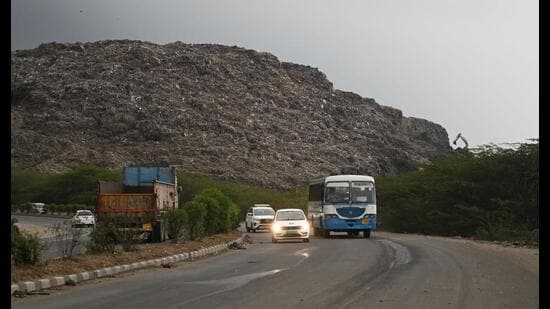
Based on the findings, the Municipal Corporation of Gurugram (MCG) has started preparing the request for proposal (RFP) for an integrated waste processing park comprising recycling, composting, refuse-derived fuel (RDF) and a waste-to-energy plant, officials aware of the matter said.
The 164-page study titled “Fresh Municipal Solid Waste Characterisation Study”, commissioned by the MCG and conducted by Bareilly-based Wasat International Laboratory last week, found that Gurugram’s waste stream has sufficient calorific value and a composition suitable for electricity generation through scientific waste processing.
MCG additional commissioner Yash Jaluka said the study establishes Gurugram’s potential for waste-to-energy generation alongside composting and recycling.
“We are preparing the RFP and will soon float tenders for developing the integrated waste processing project at Bandhwari Landfill. The chief minister has already announced the city’s waste-to-energy project, and this report provides the technical foundation required for planning the infrastructure. Our objective is to minimise landfill disposal, maximise resource recovery and convert municipal waste into a source of green energy through scientific processing,” Jaluka said.
The move comes nearly a decade after the state’s earlier waste-to-energy project at Bandhwari failed to take off. In August 2017, Ecogreen Energy signed a concession agreement with the Haryana government for municipal solid waste management, including the construction of a 15-MW waste-to-energy plant at Bandhwari. The facility was expected to eventually generate around 25 MW of electricity by processing about 1,500 tonnes of waste daily. However, the concession agreement was later terminated and the project was discontinued.
{{/usCountry}}The move comes nearly a decade after the state’s earlier waste-to-energy project at Bandhwari failed to take off. In August 2017, Ecogreen Energy signed a concession agreement with the Haryana government for municipal solid waste management, including the construction of a 15-MW waste-to-energy plant at Bandhwari. The facility was expected to eventually generate around 25 MW of electricity by processing about 1,500 tonnes of waste daily. However, the concession agreement was later terminated and the project was discontinued.
{{/usCountry}}In June this year, scientists collected 100-kg samples of fresh municipal waste from 24 wards across all eight MCG zones. The unprocessed samples were reduced using the internationally accepted coning and quartering method before laboratory analysis to ensure representative results.
According to the study, biodegradable waste accounts for 47.8% of the city’s waste, followed by plastic (14.4%), paper (7.9%), cardboard (3%), textiles (2.7%), glass (1.9%) and metals (1.3%). Among the eight zones, the commercial-dominated Zone 4 recorded the highest plastic content at nearly 17%, while residential Zone 3, a residential area had the highest biodegradable waste at around 52%.
Laboratory analysis of the waste found an average moisture content of 31.3%, volatile matter of 40.8% and a gross calorific value of 2,605 kilocalories per kilogram, which the report said is suitable for waste-to-energy generation.
The study recommends setting up a 350-tonne-per-day material recovery facility, a 400-tonne composting plant, a 250-tonne RDF processing unit and a waste-to-energy plant as part of an integrated waste processing park. It also recommends source segregation of wet and dry waste and GPS-based monitoring of waste collection vehicles.
MCG officials said implementing these recommendations could substantially reduce the volume of waste sent to the Bandhwari landfill while promoting resource recovery and renewable energy generation.
Stay updated with all the Breaking News and Latest News from Mumbai. Click here for comprehensive coverage of top Cities including Bengaluru, Delhi, Hyderabad, and more across India along with Stay informed on the latest happenings in World News.
Stay updated with all the Breaking News and Latest News from Mumbai. Click here for comprehensive coverage of top Cities including Bengaluru, Delhi, Hyderabad, and more across India along with Stay informed on the latest happenings in World News.