The housing sector in Gurugram moved towards affordability, with houses getting smaller and cheaper in the 2016-2021 period and an emphasis on timely deliveries — a move away from the premium and luxury segments that dominated the sector from 2011 to 2015 — according to a report released by a private real estate service company on Tuesday.
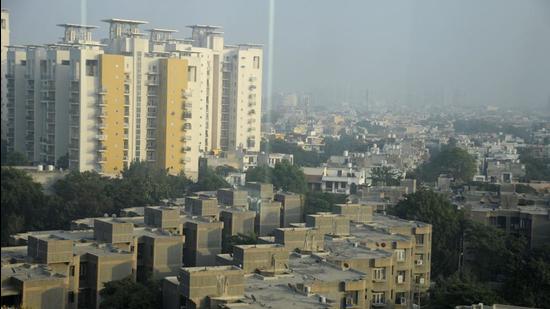
The report, NCR Real Estate Market – A 2015-2021 Timeline, released by Anarock Property Consultants, states that the average size of houses has reduced from 1,550 square feet (sqft) to 1,250sqft in the second half of the last decade. In the past five years, the ticket size (investment per unit) of flats also reduced from ₹68 lakh to ₹56 lakh, according to the report. Also, speculated buying and role of local developers reduced in this period while branded and listed developers, with corporate backgrounds, have taken centre stage, it stated.
The report also stated that almost 52% of stalled or delayed housing projects in the country are in the National Capital Region (NCR), with Greater Noida accounting for the maximum, at 26% (162,720 units), while Gurugram accounts for 6.24% (40,380 units) of it.
Arun Puri, chairman of Anarock Property Consultants, said that by far, the most glaring aspect of NCR’s darker years is now beginning to see some light at the end of the tunnel. “The aftermath of this (2010 to 2015) period is still glaringly evident. More than 328,600 homes are either terminally stalled or heavily delayed in NCR alone, accounting for 52% of all such units across India’s seven major cities,” he said.
{{/usCountry}}Arun Puri, chairman of Anarock Property Consultants, said that by far, the most glaring aspect of NCR’s darker years is now beginning to see some light at the end of the tunnel. “The aftermath of this (2010 to 2015) period is still glaringly evident. More than 328,600 homes are either terminally stalled or heavily delayed in NCR alone, accounting for 52% of all such units across India’s seven major cities,” he said.
{{/usCountry}}Another noticeable change that has happened over the years, the report stated, is that developers are also launching smaller projects. The average size of projects has reduced from 950 units to 650 units to allow faster completion and delivery.
City-based developers and experts concurred with the findings of the report, attributing the change to the introduction of a real estate regulatory act in 2016, demonetisation, affordable housing, market slowdown and predominance of end-users among buyers. The industry is also moving towards consolidation, professionalism and corporatisation, with established brands entering the sector and improvement in the quality of investors.
Prashant Solomon, the managing director of Chintels and spokesperson, Confederation of Real Estate Developer’s Associations of India (CREDAI) NCR, said that in the past five years, housing has become more end-user driven. “RERA [Real Estate Regulatory Authority] has changed the perspective of developers and there is more accountability and transparency in project funding, development and delivery timelines. Home loan culture has reduced the involvement of speculation,” he said, adding that ticket sizes of flats and projects have been reduced for easy affordability and faster completion.
Gurugram-based experts said that the residential market has seen a major change over the past five to seven years, from an unorganised, highly speculative and overpriced market to an organised, consumer-driven affordable housing market. They said that the changes have been so much so that at present, Gurugram has emerged as a hub of affordable housing.
“The central government’s reforms, such as RERA, fully regulated the property market and effectively put an end to speculative selling by banning pre-launch sales. Further, PMAY [Pradhan Mantri Awas Yojana] incentives were restricted to only first-time buyers of homes up to ₹45 lakh to check speculation and promote affordable housing. The introduction of GST by the Centre and later its rationalisation to 1% for affordable/mid-segment housing further fuelled affordable housing,” said Vinod Behl, a city-based real estate expert.