The double-decker sleeper bus that overturned on the Purvanchal Expressway, killing five people and injuring around 40, had 67 challans against it — yet it continued to operate across states.
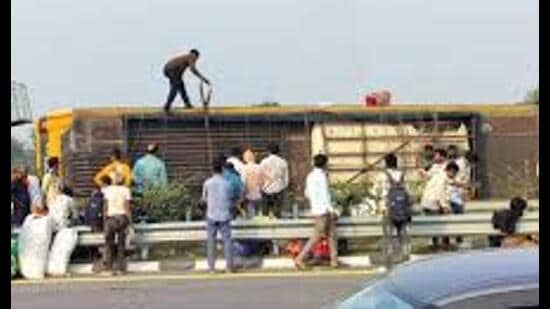
The accident has shifted focus to a larger enforcement question: how does a commercial vehicle with dozens of recorded violations remain in service?
67 challans, ₹6 lakh pending
According to RTO (enforcement) Prabhat Pandey, a total of 67 challans had been issued to the Haryana-registered bus over time. Of these, 50 were disposed of while 18 remain pending, including one issued on the fateful day. The outstanding amount is approximately ₹6 lakh.
“Even after challans are issued, operations do not automatically stop. Many remain pending while buses continue to ply. As long as taxes are paid and documents appear in order, vehicles keep running,” Pandey said.
On whether authorities can act against vehicles with mounting unpaid penalties, he said the department currently has no direct power to halt operations solely due to pending challans. A new rule is under process that would restrict further services and allow seizure if fines remain unpaid, he added.
Checking limited to challans
{{/usCountry}}Checking limited to challans
{{/usCountry}}The bus had been operating regularly on the Punjab-Bihar route, crossing multiple toll plazas and enforcement zones in Uttar Pradesh. However, no decisive action was taken within the state.
“Only challans were issued. Some were related to modification violations, but those were not under UP jurisdiction. No specific action regarding structural changes was taken here,” Pandey said.
The case has raised questions about whether routine checking mechanisms, including interceptor vehicles and checkpoint inspections, go beyond document verification.
Fit on paper, altered on ground
While documents showed compliance, post-accident inspection revealed major irregularities. The bus was authorised to operate with 16 sleeper berths and 32 seats, but investigators found the internal structure had been modified to create 43 sleeper berths. Passenger numbers also reportedly exceeded the sanctioned capacity.
The main emergency exit was blocked by an additional seat, and even an emergency window exit had been obstructed. Authorities also found the vehicle exceeded permissible size limits: against the standard 12-metre length, it measured about 12.9 metres.
Modification and centre of gravity risk
Transport experts said unauthorised structural changes in double-decker or sleeper coaches can significantly alter a vehicle’s centre of gravity.
Adding extra berths and structural elements increases weight, particularly in the upper section, making the vehicle more prone to instability at high speeds or during sudden manoeuvres. On expressways, such imbalance can heighten rollover risk. Investigators are examining whether these modifications contributed to the loss of control.
Interstate seizure dilemma
Pandey said enforcement agencies also face logistical challenges in seizing interstate buses. “If we seize a Bihar-bound bus in Lucknow, transferring passengers becomes difficult. State-run buses can operate only up to the border, and passengers may be stranded,” he said, adding that this often results in issuing challans rather than impounding vehicles.
Systemic gaps under lens
The crash has once again exposed the gap between regulatory framework and implementation. While compliance appeared intact on paper, with valid permits and tax payments, physical inspection revealed serious safety compromises.
As five families mourn their loss and dozens remain hospitalised, 30 at SGPGI, seven at KGMU and three at SPM Civil Hospital, the focus has now shifted to accountability.