
 E-Paper



Yogi warns BJP workers against complacency during SIR
Chief minister Yogi Adityanath says during his visit to a district, names of Bangladeshi nationals were found on the voter list, along with glaring anomalies in age details across generations

 Prefer HTon Google


Expressing concern over gaps in the voter list during the ongoing Special Intensive Revision (SIR), chief minister Yogi Adityanath on Sunday warned BJP workers that a large number of eligible voters – about four crore or 40 million – were missing from the electoral rolls and 85% to 90% of these voters, he stressed, are “ours”.
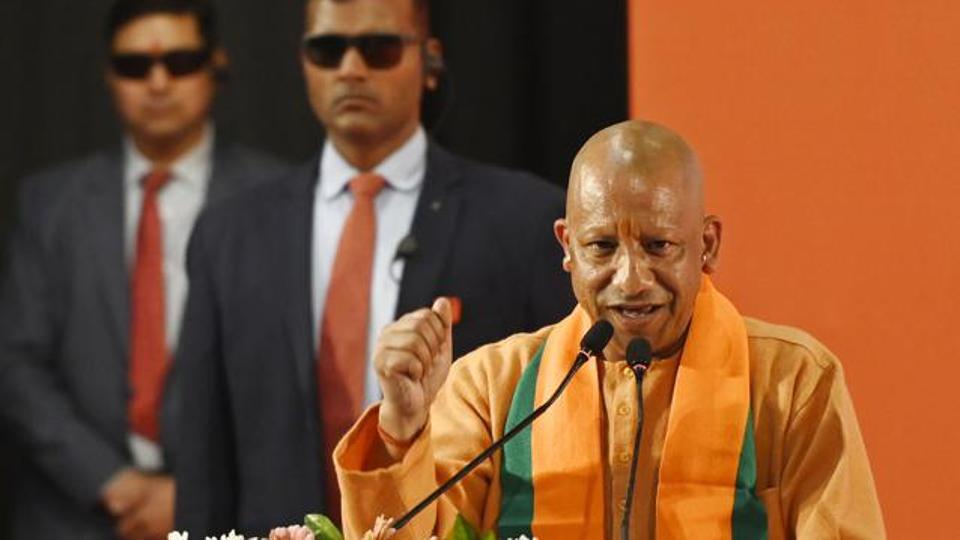
The chief minister also flagged instances of irregularities, stating that during his visit to one district, names of Bangladeshi nationals were found on the voter list, along with glaring anomalies in age details across generations.
Addressing party workers at a state-level convention held to announce the name of the new party chief, he warned workers against complacency. Yogi said Pankaj Chaudhary had taken charge as the “new captain” for Uttar Pradesh’s next political journey but new challenges lay ahead.
He said that the Opposition lacked the strength to pose a serious challenge in the 2027 Assembly elections. However, he stressed that BJP workers must remain alert and capable of countering every “trick and conspiracy” of rival parties.
Referring to the ongoing Special Intensive Revision (SIR) of electoral rolls, the chief minister said misleading claims were being spread that the process was “99% complete”. “This is not the truth. SIR is meant to ensure the purity of the voter list,” he said, urging workers to rely on facts rather than rumours.
“Uttar Pradesh’s population stands at around 25 crore, of which nearly 65% should be eligible voters, translating to about 16 crore voters considering all above 18 years to be voters. However, during the SIR exercise, only around 12 crore names had been recorded so far,” he noted
Mentioning the 2025 electoral rolls, Yogi said it earlier contained 15.44 crore or 154.4 million voters, but instead of increasing, the number has declined, leaving a gap of nearly four crore voters.
“This is not your opponent’s voters . Eighty-five to 90 per cent of these missing voters are ours,” Yogi told party workers, urging them to take the issue seriously.
He said only 12 days remained for the exercise and asked workers to ensure that forms reach every household. Emphasising booth-level vigilance, Yogi noted that each booth had 200 to 250 households, making verification manageable.
Stressing that elections were fought and won at the booth level, Yogi asked workers to use the draft voter lists effectively to ensure electoral purity. “Clean voter lists will accomplish three-fourth of your election work ensuring the party’s return to power in 2027 with the three-fourth majority,” he told the gathering.
YOGI WELCOMES PANKAJ CHAUDHARY, SAYS GOVT, ORGANISATION WILL MOVE FORWARD TOGETHER
Welcoming the newly appointed state BJP president Pankaj Chaudhary, chief minister Yogi Adityanath said the government and organisation would now move forward together to take Uttar Pradesh ahead in line with Prime Minister Narendra Modi’s vision.
He said UP’s identity began changing after the BJP came to power in the state in 2017, with a marked improvement in law and order that attracted investors. “We received full support from the Centre. Every demand related to UP’s development was met,” he said.
Highlighting development milestones, Yogi said Uttar Pradesh hosted its first-ever ground-breaking ceremony for investors, moved out of the ‘BIMARU’ category and transitioned from an image once associated with riots to one defined by development, heritage and strong law and order.
He cited the Ram temple in Ayodhya from the bhoomi pujan to its inauguration and the recent dhwajarohan ceremony marking its completion as landmark achievements possible under BJP rule.
Yogi also said UP now had the highest highway network and the largest operational metro rail system in the country, adding that the state has transformed from erratic power supply to becoming an infrastructure-driven economy.


