E-Paper



Sabyasachi and The MET collab explores how art and culture travel through time and evolve into contemporary pieces

 Prefer HTon Google


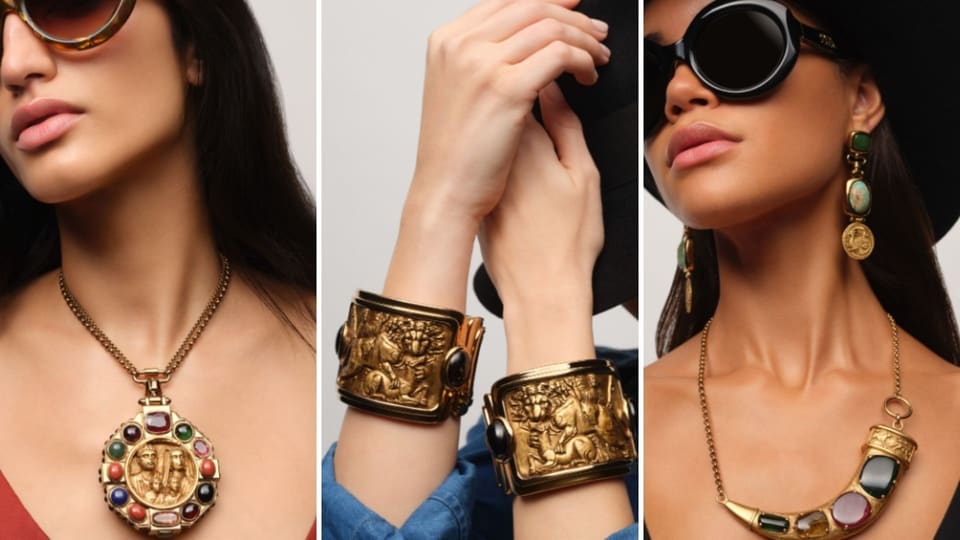
The fashion designer has teamed up with The Metropolitan Museum of Art for a new collection that is inspired by exhibits going back to the Byzantine Empire.
Sabyasachi Mukherjee and The Metropolitan Museum of Art announced on August 11 a multi-year collaboration that will see the Indian designer draw inspiration from the museum's vast collection of art and culture for contemporary jewellery, accessories and clothing.
Also Read | An exhibition with ambition that traces the untold history of comics in India
The inaugural chapter of the collaboration will see Sabyasachi's label unveil a high jewellery collection inspired by the art of the Byzantine Empire at a runway presentation during New York Fashion Week on September 15.
A peek into Sabyasachi’s new collection
On the day of the announcement, a sneak peek into the upcoming collection was offered on Instagram by Sabyasachi. Every piece in the collection is said to have been conceived, developed and handcrafted in India by Mukherjee's network of master artisans.
1. Wrist cuff
The first in the list is a wrist cuff, crafted in a combination of 18-karat and 22-karat gold with garnet cabochons and studded with brilliant-cut brown diamonds inspired by a third-century Roman sculpture.
Source object at the MET: Marble sarcophagus with lions felling antelope, 3rd century. Roman. Gift of Carmel and Eugene Krauss M.D., 2021.
2. Pendant necklace
Next is a pendant necklace crafted in a combination of 18-karat and 22-karat gold studded with tourmaline garnet, jasper, lapis lazuli, and jade, inspired by a marble sculpture from the imperial Roman period depicting a family from Thrace, Northern Greece and the Danube province.
Source object at the MET: Marble funerary relief, 2-3 century CE. Roman. Fletcher Fund, 1949.
3. Necklace
Third is a necklace crafted from a combination of 18-karat and 22-karat gold in a tiger-claw motif, studded with cabochons of tourmaline and jade and highlighted with brilliant-cut brown diamonds, inspired by a 12th-century Italian or Byzantine bone-ivory carved panel depicting animals.
Source object at the MET: Casket with Erates and Animals, 12th-century Italian or Byzantine. Gift of J. Pierpont Morgan, 1917.
4. Wrist cuff
The final ornament is another wrist cuff, this one crafted in a combination of 18-karat and 22-karat gold studded with cabochons of garnet and tourmaline, inspired by a late imperial Roman sculpture.
Source object at the MET: Marble sarcophagus with the Triumph of Dionysos and the Seasons, dated ca. 260-270 CE Roman. Purchase, Joseph Pulitzer Bequest, 1955.
Inspiration behind Sabyasachi’s new collection
The collection is inspired by the art of the Byzantine Empire from the fourth through the 15th centuries. It draws on Byzantium's history as a major centre of commerce, culture and artistic exchange, with its visual language shaped by influences from Ancient Egypt, Greece, Rome, Persia and civilisations of the Far East connected through the Silk Route via India.
For the collection, Sabyasachi has drawn from objects, motifs and techniques represented across The Met's departments of Greek and Roman, Medieval and Islamic art.
Imperial medallions, architectural adornments, ancient statuary and stonework, religious iconography and other objects of antiquity serve as starting points for the contemporary jewellery collection.
"This collaboration is about engaging with one of the world's great collections of art and the opportunity to reinterpret centuries of creativity through contemporary design," stated the designer.
"The Byzantine world was not defined by a single geography. It was shaped by the movement of people, ideas, and craftsmanship across continents, including India. What fascinates me is not only Byzantium itself, but the civilisations that informed it and the extraordinary artistic dialogue that emerged from interactions through trade," he added.