
 E-Paper



Ahilyabai Holkar pioneered revival of Sanatan heritage: Yogi
During an era marked by foreign invasions and temple destruction, Lokmata Ahilyabai Holkar undertook restoration of sacred sites from Kashi to Rameshwaram, says CM

 Prefer HTon Google


LUCKNOW Chief minister Yogi Adityanath on Wednesday eulogized Ahilyabai Holkar as the very epitome of “dharma, justice, and national duty”, and credited her with pioneering the revival of India’s Sanatan heritage.
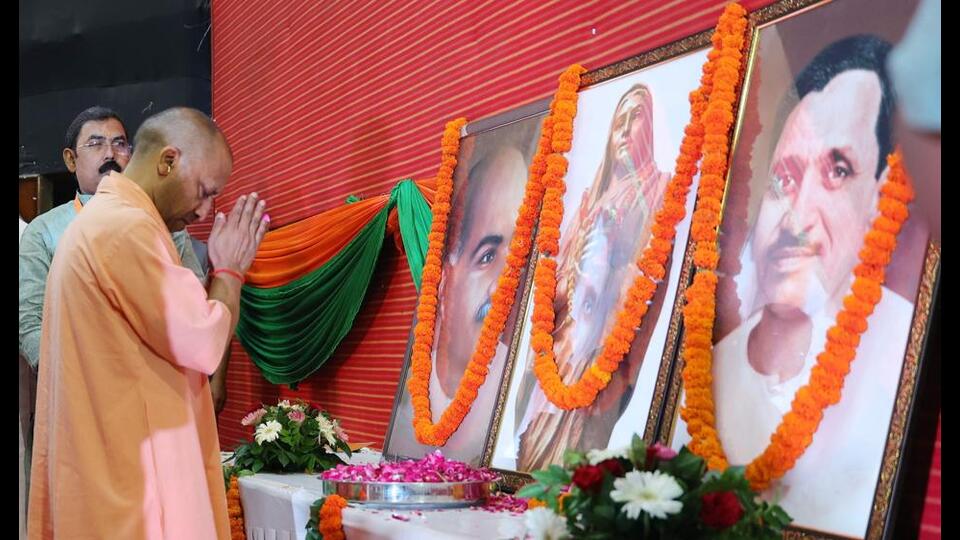
At a ceremony marking the queen of Indore’s 300th birth anniversary at Indira Gandhi Pratishthan here, he recalled that during an era marked by foreign invasions and widespread temple destruction, Lokmata Ahilyabai Holkar courageously undertook the restoration of sacred sites from Kashi to Rameshwaram.
“In doing so, she embodied the Vedic principle ‘Dharmo rakṣati rakṣitaḥ’ (dharma protects those who protect it). Her legacy should inspire every citizen to contribute to the revival of India’s ancient cultural glory,” he said.
Adityanath said Ahilyabai undertook the task of re-establishing Sanatan Dharma in the country.
Quoting her words — “My path is the path of dharma; the path of dharma is the path of justice, and only justice can make us powerful and capable”, the CM noted that this credo shaped both her statesmanship and service.
The present-day splendour of the Kashi Vishwanath temple, he reminded the gathering, rests on the foundations she laid between 1777 and 1780 with her personal resources — work that Prime Minister Narendra Modi described in 2021 as the forerunner of the modern Kashi Vishwanath Dham Corridor.
“Ahilyabai’s efforts stretched far beyond Kashi. She rebuilt and renovated Kedarnath, Rameshwaram, Somnath, Haridwar, Mahishmati, and numerous other holy sites, while commissioning ghats, wells and step-wells to ensure pilgrims’ comfort and access to pure water,” CM said.
Celebrating her as an enduring symbol of ‘nari shakti’, Adiytyanath highlighted her dharma-aligned, people-centric administration and her trail-blazing work in social justice and women’s empowerment. She promoted the sari industry in Mahishmati to foster women’s self-reliance, encouraged widow remarriage and moved to end child marriage.
Drawing a parallel with Sardar Vallabhbhai Patel’s post-Independence restoration of Somnath, Adityanath said Ahilyabai had sown the same seeds of cultural resurgence centuries earlier. He also invoked Adi Shankaracharya’s four ‘peethas’ as proof of India’s enduring cultural unity.
The CM noted that, under Prime Minister Modi’s leadership, monumental projects in Kashi, Ayodhya, Ujjain, and Maa Vindhyavasini Dham carry forward this legacy.
“Let us,” he said, “take inspiration from Maharani Ahilyabai’s life and commit ourselves wholeheartedly to restoring India’s timeless splendour and the vitality of Sanatan culture.”
Addressing the gathering, the CM emphasized that the double-engine government is implementing numerous schemes to empower women and foster self-reliance. Programmes like the ‘Lakhpati Didi Yojana’, launched under the leadership of the Prime Minister, had empowered over one crore women across the country.
Similarly, initiatives such as the Kanya Sumangala Yojana, Mukhyamantri Samuhik Vivaah Yojana, Ujjwala Yojana, and Pradhan Mantri Matru Vandana Yojana were providing women with opportunities to demonstrate their abilities, whether in village panchayats, households, or on the nation’s frontiers.
Giving an example, he said the presence of women workforce in UP went up from just 10,000 in 2017 to 40,000 now.
During the ceremony, deputy chief minister Brajesh Pathak, BJP state president Bhupendra Singh Chaudhary and Rajya Sabha MP Kavita Patidar aso presented their views on the contribution and relevance of Ahilyabai, appealing to party workers to take her deeds to each and every individual.


