
 E-Paper


US to ban H-1B visas for 3 years? All on new ‘End H-1B Abuse Act’ and how it will impact Indians
The End H-1B Abuse Act, proposed by Senator Tim Sheehy, could suspend new H-1B visas for three years and implement stricter regulations.

 Prefer HTon Google


If you intend to work in the United States on an H-1B visa, it is important to be aware of a recent proposal. A Republican senator has put forth a bill in the US Senate that aims to implement significant modifications to the H-1B visa program, which includes a three-year suspension on the issuance of new H-1B visas.
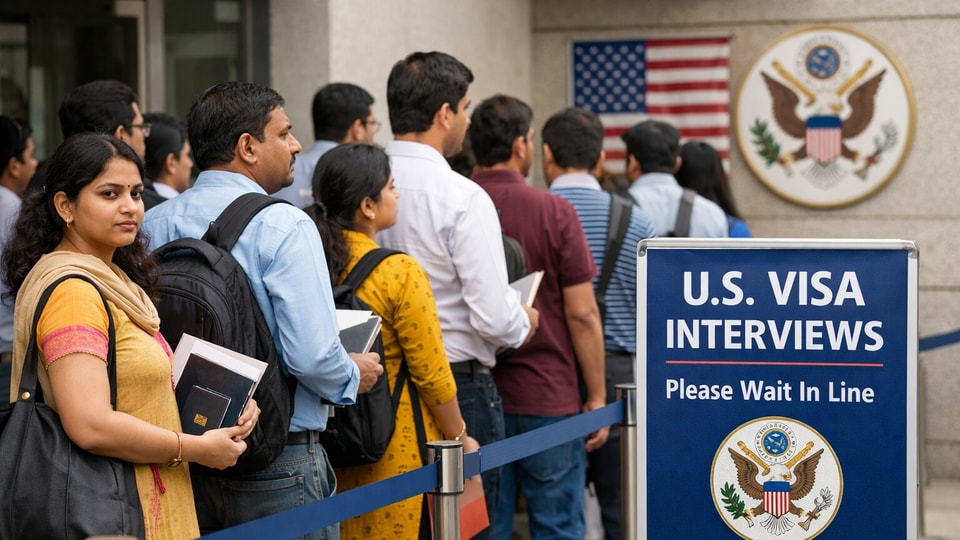
Currently, the proposal is just a bill. It has not yet been enacted into law, and the H-1B program remains unchanged. Should it be approved, it could greatly influence Indian professionals, who obtain a significant number of H-1B visas each year.
End H-1B Abuse Act: All we know about new proposal
US Senator Tim Sheehy from Montana has put forth the End H-1B Abuse Act in the Senate. Sheehy stated that the H-1B program was established to address specialized positions that American companies struggle to fill with qualified personnel. He contended that it should not serve as a means to substitute American workers with less expensive foreign labor.
He stated that the suggested legislation would return the program to its initial intent, enhance protections, minimize fraud, and prioritize American workers.
What does the proposal entails?
A three-year suspension of new H-1B visas, after which the program will resume with significantly stricter limitations and enhanced criteria.
It formalizes President Trump’s $100,000 fee for each H-1B application.
It abolishes the random lottery system by law, replacing it with a wage-based selection process, and prohibits concurrent employment as well as the use of third-party staffing agencies.
It terminates the concept of "dual intent" for H-1B visa holders.
It restricts H-class visa holders from bringing their dependents.
It prohibits federal agencies from sponsoring or employing individuals on nonimmigrant visas.
It revokes work authorization for foreign students and specific exchange visitors, effectively ending programs similar to Optional Practical Training.
What are the implications for Indians?
India stands as one of the largest beneficiaries of the H-1B program. Each year, numerous Indian engineers, IT specialists, researchers, healthcare professionals, and other skilled workers obtain H-1B visas to work in the United States.
If this bill be enacted into law, it may lead to various outcomes:
The issuance of new H-1B visas may be halted for a period of three years.
Organizations might incur significantly increased expenses due to the suggested fee of USD 100,000 for each H-1B application.
People intending to relocate to the United States with their families could also be affected if dependent visas are eliminated under the proposed modifications.
International students aspiring to remain and work in the US post-graduation via OPT-like programs could forfeit that opportunity if the proposal is enacted.
Bill comes amid Trump's H-1B USD 100,000 fee scrutiny
The bill also aims to establish a permanent USD 100,000 fee ( ₹96,00,000) that was initially introduced during the Trump administration. However, a federal judge previously invalidated this fee, stating that it constituted a tax that Congress had not authorized. Additionally, the US Court of Appeals for the First Circuit denied the Trump administration's appeal to maintain the fee while the legal dispute is ongoing.
The proposed bill intends to provide legal support for this fee through an Act of Congress.
The proposal has only been put forth in the US Senate. It still needs to progress through the US legislative process before it can be established as law. Currently, the existing H-1B visa program continues to function under the current guidelines. Indians who plan to apply for an H-1B visa do not need to take any urgent actions based on this proposal alone.


