
 E-Paper



Anaemia weakens heart in long run, say experts
Experts at a conclave emphasize that anaemia weakens the heart and increases infection risk, urging a comprehensive approach to combat it.


The poor count of red blood cells in the body (as anaemia is explained) makes one’s heart work overtime and, in the long run, makes the organ weak, experts gathered at the National Conclave on Anaemia Reduction said, adding the disorder also makes the person one vulnerable to infections.
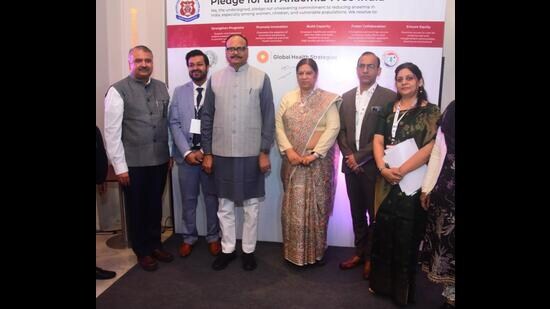
The meet was organised by the critical care medicine (CCM) department of King George’s Medical University (KGMU). Deputy chief minister Brajesh Pathak was the chief guest of the event. “Anaemia reduces oxygen supply to the entire body and vital organs. This activates compensation mechanism where the heart has to pump more blood. This to ensure optimum level of oxygen supply is maintained,” said Prof Avinash Agrawal, the head of CCM.
Data from KGMU suggests up to 70 % patients coming to the department are anaemic. “After admission, 95% of patient test positive for anaemia and this makes them further vulnerable to infections. Though with treatment they recover, but those who have the blood disorder need more attention and take more time,” added Agrawal.
Those who suffer with anaemia for long unknowingly make their heart work more, to fulfill the oxygen need of the body. “If a normal person’s heartbeat remains between 60 and 80 beats per minute an anemic person might have it above 100, which is also termed as tachycardia. This situation, if it stays for long, weakens the heart,” said Prof Agrawal.
Recent data from the National Family Health Survey (NFHS-5) shows a decline in maternal anaemia prevalence from 51% in 2016 to 45.9% in 2021, marking significant progress. “This decline has to be consistant and should continue only then we shall achieve a society which can be said anaemia free,” said Prof Agrawal.
KGMU V-C Dr Soniya Nityanand, who’s a clinical hematologist, in her key note address said there should be a life-cycle approach when addressing maternal anemia. “It should not only be addressed in pregnancy, but also in the post-delivery phase when mother is breastfeeding, in the adolescent phase and in the pre pregnancy phase, so that a woman enters pregnancy stage with adequate Hb levels. Only when it is addressed in all phases, the incidence of maternal anemia will reduce.”
Curbing anaemia top priority for us: Dy CM
Deputy chief minister Brajesh Pathak, while addressing the gathering in the inaugural session, reaffirmed the government’s dedication to combating maternal anaemia.
He highlighted the need for innovative healthcare interventions, stating, “Anemia is a significant challenge, and reducing its prevalence among mothers and children remains a top priority for us. This is a disease with far-reaching socioeconomic implications, and I am hopeful that all the stakeholders present in the conclave will deliberate and come up with effective solutions to combat it at every level.”
“Under the leadership of Prime Minister Narendra Modi, we have seen transformative initiatives—from tackling COVID-19 to ensuring access to clean drinking water through Jal Jeevan Mission—demonstrating that no challenge is insurmountable when addressed with determination and grassroots action,” Pathak who is state’s medical education minister said.


