The investigation into suspected sleeper cells in Western Uttar Pradesh has widened after the arrest of Kashmir resident Dr Adeel Ahmad Rather from Saharanpur, with the Anti-Terrorism Squad (ATS) and other security agencies now verifying every individual linked to him through work, study or social contact.
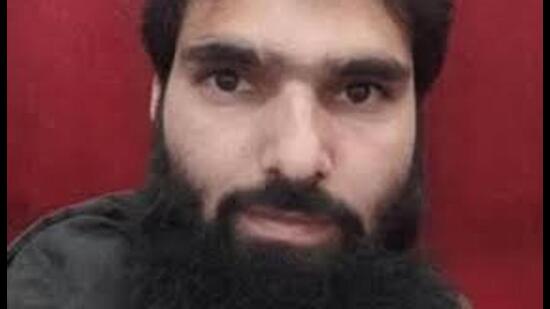
According to ATS officials, a notebook seized from Dr Adeel’s hideout in Saharanpur contained names of madrasa students, doctors, patients, car dealers and property agents.
“All entries are being cross-checked as part of a large-scale verification drive across Saharanpur and adjoining regions. The teams of ATS, Intelligence Bureau (IB) and district police have conducted searches at medical colleges, madrasas, hostels and rented accommodations, examining tenant records, travel details, mobile numbers and digital activity of outstation students,” a senior ATS official said.
Also Read: Dr Umar Un Nabi was in J&K before Red Fort blast, had asked brother to 'dump' phone if...
He further said that police in Deoband had launched a door-to-door tenant verification campaign, checking over 200 houses to identify outsiders living without proper documents or those who might have come in contact with suspected recruiters.
{{/usCountry}}He further said that police in Deoband had launched a door-to-door tenant verification campaign, checking over 200 houses to identify outsiders living without proper documents or those who might have come in contact with suspected recruiters.
{{/usCountry}}“It is suspected that Dr Adeel may have attempted to influence Kashmiri students at a local medical college and seminary, and possibly tried to radicalise vulnerable hospital visitors,” he added.
Investigators said the checks would continue until “every link is accounted for” and no hidden module remains active.
Officials are scanning past records, digital traces and movement logs of absconding suspects. The probe comes amid heightened security following the November 10 Delhi blast which, officials believe, may indicate long-dormant sleeper cells attempting to regroup in the region and a string of recent arrests and detentions in Uttar Pradesh.
Sharing more about sleeper cells, former UP director general of police (DGP) Arvind Kumar Jain said the recent arrests have exposed how terror sleeper cells, long believed to be dismantled, quietly regrouped under the radar of security agencies and revived their operations across several districts in the state as well as other parts of the country.
Also Read: Doctors tied to terror bust bought a new Brezza car weeks before Delhi blast, pic surfaces
He pointed out that the ongoing investigation into a terror module of medical professionals has become the latest evidence of how these dormant cells continued to function in stealth -- often disguised under professional identities -- while exploiting systemic lapses in local level surveillance.
He expressed apprehension that some members of the network may have attempted to cultivate sleeper modules among students and young professionals. Even small, early-stage attempts at recruitment would be scrutinised closely to prevent the formation of covert support structures, he added.
A former 1978-batch IPS officer, Jain said the revival of sleeper modules suggests that although agencies initiate aggressive crackdowns after each major attack, the momentum fades within weeks.
“As a result, critical intelligence chains break before the full network can be uncovered. This cycle -- a spike in action followed by months of lull -- appears to have given terror outfits enough time to rebuild networks, recruit new faces and re-establish hidden communication pipelines,” he explained, adding, “The latest blast in the national capital is not an isolated act, but a sign that buried sleeper cells have been operational for far longer than many believe.”
Notably, the first major alert came about this multi-state terror module operated by doctors following the arrest of Dr Adeel from Saharanpur by the Jammu and Kashmir Police on November 6. His interrogation revealed a sprawling network of professionals, including doctors, educators, and students linked through ideological indoctrination and covert financial channels.
Investigators suspect that Dr Adeel, arrested in connection with a broader terror-module probe, had attempted to establish contact with students from Kashmir studying in Saharanpur’s medical college and Darul Uloom, an Islamic seminary.