E-Paper



BJP’s surge in West Bengal, Assam to sharpen focus on Uttar Pradesh ahead of 2027 battle
With its cadre energised, the BJP may go for a dual strategy of Hindutva plus development in Uttar Pradesh to consolidate support and pre-empt Opposition attempts to shift the discourse towards caste or other issues

 Prefer HTon Google


The Bharatiya Janata Party’s stunning victory in West Bengal, coupled with a third consecutive government in Assam, is likely to reset the political narrative nationally and sharpen the dynamics of the battle ahead of the assembly elections in Uttar Pradesh, due early next year.
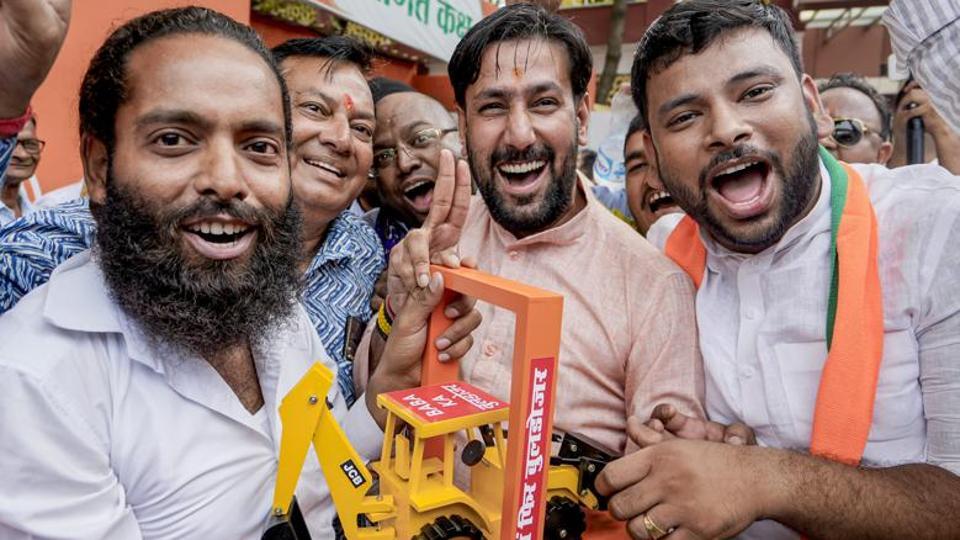
After an underwhelming performance in the 2024 Lok Sabha elections in Uttar Pradesh, the results mark a decisive recovery for the BJP, which had otherwise swept most states that went to polls following the parliamentary elections.
The scale and symbolism of the West Bengal victory, however, sets it apart, marking a breakthrough in a state that always resisted the BJP’s expansion.
Scale of Bengal victory mirrors
Modi’s 2014 win, says Maurya
Talking to Hindustan Times, deputy chief minister Keshav Prasad Maurya said the scale of the BJP’s victory in West Bengal mirrored the mandate with which the party formed the government under Narendra Modi at the Centre in 2014.
“The majority with which the BJP made the government under Narendra Modi at the Centre in 2014 has come back with the same mandate in West Bengal in 2026. This shows PM Modi’s growing popularity in the country,” he said.
“Though the BJP is on a victory journey in the entire country, the joy of this win in West Bengal cannot be expressed in words. It is simply ‘adbhut’ (incredible),” he said.
He asserted that the Bengal results, in particular, would energise the BJP cadre in Uttar Pradesh, expressing confidence that the party would return to power in the state for a third consecutive term with a landslide mandate.
Hindutva pitch and narrative consolidation
The outcomes in both West Bengal and Assam are being seen as underlining the continued electoral significance of Hindutva as a mobilising plank. The BJP’s campaigns in these states blended ideological messaging with welfare and development narratives.
In UP, where chief minister Yogi Adityanath is already seen as a strong national Hindutva face, the party is likely to more aggressively emphasise this tried-and-tested plank alongside its development pitch.
With law and order and welfare delivery forming key elements of its incumbency narrative in UP, the BJP may sharpen a dual strategy — Hindutva plus development to consolidate support and pre-empt opposition attempts to shift the discourse towards caste or other issues.
Opposition faces narrative and morale challenge
It is believed that for the principal opposition in Uttar Pradesh, the Samajwadi Party (SP), the eastern verdicts pose both a narrative and psychological challenge. The SP has been attempting to stitch together a broad social coalition in the name of PDA to counter the BJP, but repeated successes across diverse regions weakens opposition’s narrative against the saffron party.
The BJP’s ability to breach entrenched political ecosystems like West Bengal is also likely to raise concerns within opposition ranks in UP about the durability of their own caste-based or regional strongholds, potentially impacting cadre morale in the run-up to the polls.
Allies’ bargaining power may shrink
It is being said the results could also recalibrate internal dynamics within the BJP-led National Democratic Alliance (NDA). A resurgent BJP, buoyed by victory in West Bengal, is likely to approach seat-sharing negotiations in Uttar Pradesh from a position of greater strength ahead of the 2027 assembly elections.
This could reduce the bargaining power of smaller regional allies, as the BJP may feel less dependent on alliance arithmetic and more confident in its standalone electoral appeal of Modi and Yogi in the state.
UP as the decisive battleground
With Uttar Pradesh remaining central to national politics, the latest round of results serves both as a morale booster for the BJP and a strategic template for the battles ahead. The party is expected to adapt elements of its eastern campaigns while leveraging its incumbency advantages in governance and leadership.
For the opposition, the challenge, it is said, will be to counter the BJP’s renewed narrative momentum while addressing local issues that could still shape voter behaviour.
As the electoral cycle moves towards UP, the ripple effects of the Bengal and Assam verdicts are set to influence both strategy and rhetoric across the political spectrum in the state which will be the BJP’s primary focus now.