
 E-Paper



Saudi Arabia, Turkey and Pakistan sign defence pact: What the agreement means
The deal brings together Saudi Arabia, Pakistan and Turkey, which has NATO's second-largest army and a rapidly expanding defence industry.

 Prefer HTon Google


Saudi Arabia, Turkey and Pakistan on Friday signed a trilateral defence agreement aimed at strengthening military cooperation and collective security among the three countries.
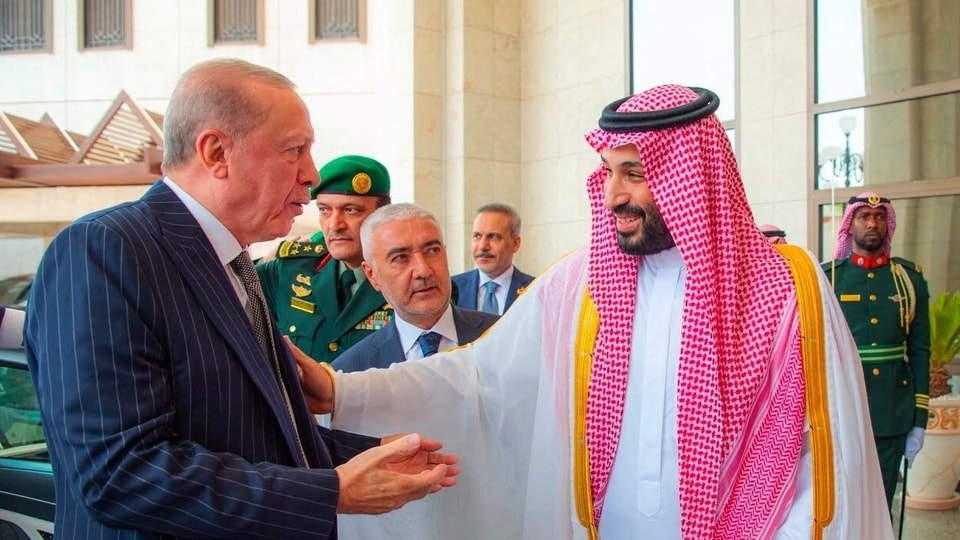
Signed in the Saudi holy city of Mecca by Saudi Crown Prince Mohammed bin Salman, Turkish President Recep Tayyip Erdogan and Pakistan Prime Minister Shehbaz Sharif, the pact says that an armed attack on any one of the three countries will be treated as an attack on all.
READ ALSO | What India said on Pak-Saudi inking 'attack on one, attack on both' defence pact
What is the agreement?
Deep Dive

According to Pakistan's foreign ministry, the agreement is designed to strengthen "collective deterrence" against any act of aggression. It says that if one of the three countries is attacked, the other two will regard it as an attack against themselves.
The pact also commits the three countries to expand defence cooperation in all areas, as per AP.
Together, Saudi Arabia’s financial power, Turkey’s defence capabilities and Pakistan’s nuclear strength make the grouping a significant regional force.
What will the countries cooperate on?
While the agreement does not publicly spell out detailed commitments, Turkish media reported that it is expected to include:
-Joint military exercises and training.
-Technology transfers.
-Intelligence sharing.
-Greater defence cooperation between the three countries.
The deal also brings together Saudi Arabia, Pakistan and Turkey, which has NATO's second-largest army and a rapidly expanding defence industry.
ALSO READ | India reacts to Turkey-Pakistan-Saudi defence deal: 'Closely following the development'
Why was the deal signed now?
The agreement comes amid maximum security concerns in West Asia, including the US and Israeli war on Iran, Israel's UN-designated genocide on Gaza and other regional instability.
Saudi Arabia has also been seeking to diversify its defence partnerships after its oil facilities and critical infrastructure came under attack during regional conflicts.
Pakistan said Prime Minister Shehbaz Sharif's visit to Saudi Arabia was aimed not only at discussing the Gulf crisis but also at strengthening ties and improving coordination on regional and international issues, AFP reported.
Is this a new alliance?
Experts say the agreement should not be viewed as a formal military alliance similar to NATO.
Burcu Ozcelik, senior fellow at the Royal United Services Institute (RUSI), said the pact was better seen as an effort to increase regional security cooperation among countries that remain part of a broader US-led security architecture.
She noted that Saudi Arabia and Pakistan already have a mutual defence agreement, while discussions on a trilateral framework with Turkey have been underway for months.
According to Ozcelik, the agreement could lead to closer cooperation on border security, counterterrorism, military interoperability, defence production and technology partnerships, while also adding a new dimension to regional diplomacy, including Saudi Arabia's relations with Israel.


