E-Paper



Breaking barriers, women rewrite Kanwar Yatra norms
Among the many Yatris, some are women—young professionals, homemakers, mothers, widows—each with a story that fuels their determination.


Along the bustling highways and narrow bylanes of western Uttar Pradesh, a saffron tide of kanwariyas surges every year during Sawan.
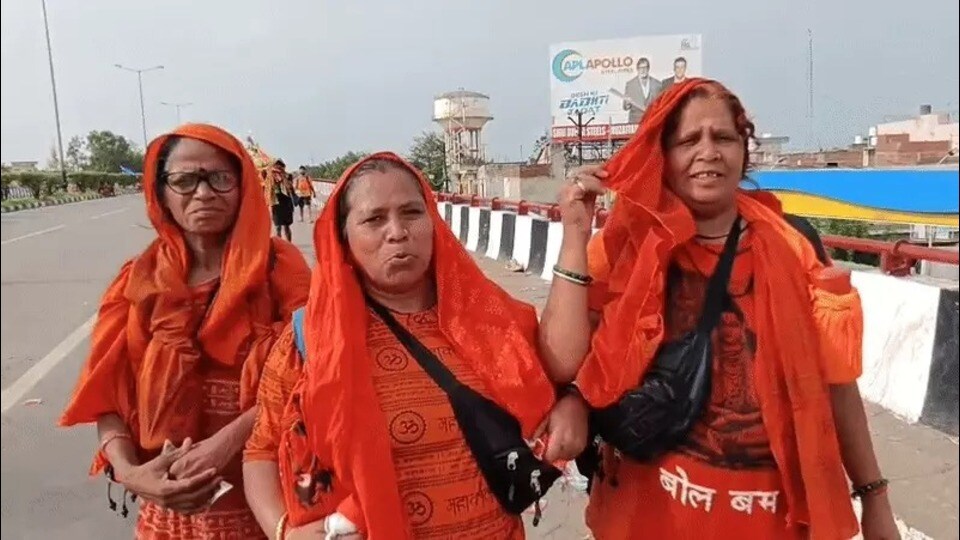
This year, however, the sacred Kanwar Yatra is witnessing a quiet revolution: women marching shoulder to shoulder with men, reshaping a centuries-old tradition once seen as a male domain.
From the thunderous chants of “Har Har Mahadev” to the rhythmic clinks of ‘kanwar’—bamboo poles with holy Ganga water—the landscape is changing.
Among the many Yatris, some are women—young professionals, homemakers, mothers, widows—each with a story that fuels their determination.
Kanwar Yatra this year, which began on July 11 and will culminate on July 23, has, so far, drawn over three crore pilgrims to Haridwar alone, officials said.
Manju Gupta, a 53-year-old from Meerut, walks the NH-58 route with her son. “This is my first time. I’m doing it for my family’s well-being. Yes, it’s painful, but Shiva gives me strength.”
Nearby, 32-year-old Manju Rajput from Delhi navigates the slippery path with her toddler daughter.
“In many parts, there are no proper toilets or places to rest. It’s tougher for women. But I feel empowered,” she says.
At a camp in Kuti Chauraha in Meerut, three friends—Krishna Singh, Sundari, and Bala Devi —pause after a gruelling day’s walk. Sundari, 48, from Delhi, vowed to take the yatra after her husband survived a mysterious illness.
“Doctors couldn’t help him. But Shiva did.” Bala, 55, from Bulandshahr walks in gratitude after her daughter-in-law’s cancer scare ended with a clean report.
For Krishna, 60, each Yatra is in the memories of her son who passed away years ago. “I walk for him. And this year, I pray for my younger son’s marriage. Shiva listens.”
Then there’s Usha from Haryana. Her son took part in Kanwar Yatra for four years before his unexpected death. To fulfil his dream of a fifth time, Usha, now 52, picked up his kanwar. “I walk for his soul. He’s not here, but I feel him with me.”
In one camp, a male pilgrim’s comment—“Women can never be clean”—a nod to lingering menstrual taboos, is met with Usha’s dignified defiance: “My son’s wish was pure, and so is my devotion.”
Ranjana Devi, 45, from Muzaffarnagar, shares her experience: “After walking for hours, we rest at makeshift camps along NH-58 or in village homes that open their doors to us. The men are like our brothers—they share their food, help us find safer spots to sleep, and even take turns to keep watch at night so that we can rest without worry.”
Kavita Tomar, 29, from Saharanpur, says: “We often stop at small dhabas (roadside eateries) or under trees for shade when the heat gets unbearable. There aren’t enough proper rest areas for women, so we make do.”
Sociology professor and NCC associate officer at Meerut’s RG College Anjula Rajvanshi said, “Kanwar Yatra is no longer an exclusively male domain. Women are asserting their presence with unwavering devotion and remarkable courage.”
‘Don’t sleep much, can’t let our guard down’
The path from Meerut to Haridwar route via NH-58 is lined with makeshift camps offering food, shelter, and medical aid. Yet, for women, these halts are a mixed blessing. While some find camaraderie, others face inadequate sanitation, lack of privacy, and unsafe sleeping conditions.
Rajveer Singh, a camp organiser in Khatauli, acknowledges the disparity: “Women are braver than most. They face the same hardships as men but with fewer resources. We’re trying to improve, but it’s not enough.” Another kanwariya, Neha Kumari, 29, echoes the feeling: “The camps are crowded, and men often get priority for space. We need separate tents.”
Night halts are especially risky. Most women travel in groups, taking turns to stay awake. Others rely on local villagers for shelter. “We don’t sleep much,” says Priya Sharma from Ghaziabad. “We can’t afford to let our guard down.”
Aware of these challenges, the Uttar Pradesh government has implemented special measures.
Over 11,000 CCTV cameras, AI-based crowd control systems, and a surge in female police deployment aim to give better security to women pilgrims. DSP Rishika Singh says: “We’ve added toilets for women, increased female presence, and are monitoring every stretch closely.”
ADG Meerut Zone Bhanu Bhaskar says: “We are committed to ensuring the safety and dignity of women kanwariyas. This year, we’ve deployed more female cops…”