E-Paper



Explosive biz thrived in Lucknow suburb and ‘no one knew’
The explosion sites were less than a kilometre away from the Behta police outpost, raising serious questions over police vigil; two cops suspended, probe ordered

 Prefer HTon Google


LUCKNOW Villagers in Behta stood stunned, watching their quiet green field turn into a scene of chaos and fear on Monday as police teams seized a large quantity of raw material for manufacturing crackers from four hidden storage points. Barely 10km from Gudamba police station and on the edge of Lucknow’s municipal limits near the Barabanki border, Behta has long existed in a ‘grey zone’ where an old, family-run but dangerous trade flourished unnoticed.
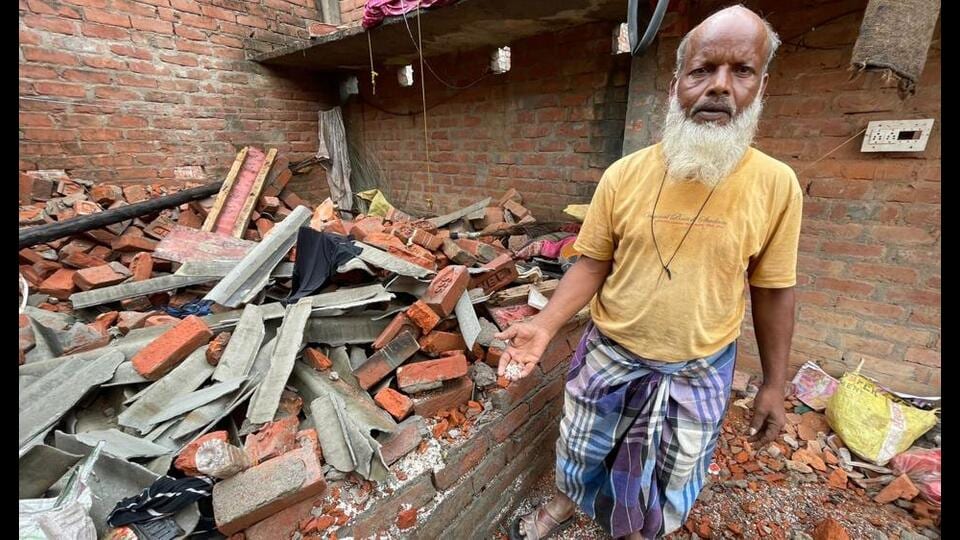
Even people living a few feet away claim they knew nothing about it.
“We had no idea what was going on inside their house. We never got the slightest hint,” said Zaid, a neighbour whose home suffered severe damage in the blast that rocked the village on Sunday morning.
According to gram pradhan Vinod Jaiswal, the operation was bigger than anyone imagined.
“Alam and his wife Munni were continuing an old family business. Their relatives are spread across the village. Many are into the same illegal firecracker trade. Some have licenses, which they use to cover up the rest,” he told HT. “Before Diwali, storage sites were stocked to the brim with raw material,” he added.
The explosion sites were less than a kilometre from Behta police outpost, raising serious questions over police vigil. On Sunday night, DCP (east) suspended two policemen and ordered a detailed probe.
An officer told HT that the original licence to stock and sell firecrackers was in the name of Khatoon, wife of Alam’s brother Munna. “After Munna’s death, Alam applied for renewal under his son’s name. The renewal was pending, yet the unit kept functioning on the old licence. This placed the operation in a ‘grey zone’ between legal and illegal,” the officer said.
When Team HT visited Behta on Monday, the aftermath of the blasts was visible everywhere. The house where Alam and Munni died lay in ruins, its debris spilling across the lane. The impact was so strong that windows of a school 400 metres away were shattered.
At the second site, a rooftop solar panel, nearly 500 metres from the explosion, hung twisted and broken. “The pillars are gone; we will have to rebuild everything,” Zaid said, surveying what was left of his home.
The tragedy was also devastating for Aziz, 60, a daily-wager, who lives in a rented house near Alam’s. His wife Raees, 50, and daughter Hoorjahan, 26, were injured in the blast. “Our house is gone, all food is also gone. I had ₹30,000 for my wife’s medical treatment...that too is lost,” he lamented. Asked if he ever suspected anything, Aziz shook his head, saying: “Never, not once.”