LUCKNOW The Uttar Pradesh Power Corporation Ltd (UPPCL) has finally started installing smart meters at the houses of its employees – an initiative that had been in the works for the past two decades but saw limited success. This is part of a larger push for energy accountability and transparency within the corporation and aligns with a mandate from the UP Electricity Regulatory Commission (UPERC).
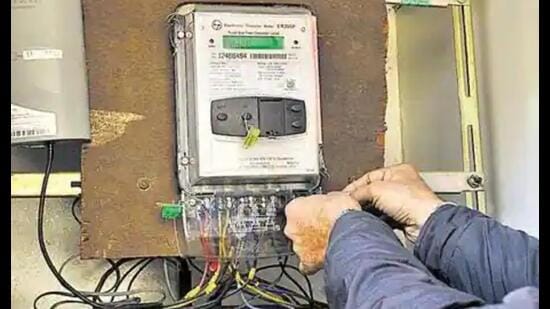
For decades, power personnel, including pensioners, enjoyed unmetered electricity under the LMV-10 category — a perk that was widely known but never seriously questioned. They paid only monthly fixed charges as determined by the regulator, irrespective of the units they consumed.
Now, as per “audit requirements,” the corporation has initiated mass installation of prepaid smart meters across employee residences, and the numbers show both progress and the scale of the previous loophole.
According to official district-wise data, the five state-owned discoms - PuVVNL (Varanasi) MVVNL (Lucknow), DVVNL (Agra), KeSCO (Kanpur) and PUVVNL (Meerut) together have over 62,000 employee power connections, of which 8,516 have already been metered by October.
“We had written letters to all chief engineers to start installing meters at the power staff’s houses as mandated under the Electricity Act, 2003, which says no power connection can be given to any category of consumers without a valid meter,” UPPCL director (commercial) Prashant Verma said.
The rollout is uneven. Some zones like Prayagraj, Azamgarh, Varanasi and Bareilly have moved faster, while others – Mathura, Banda, Ghaziabad sectors and parts of Ayodhya – report negligible installations so far. The data also reveals that most installed meters already have sealing certificates issued, meaning UPPCL is treating this as a formal compliance exercise rather than a symbolic gesture.
{{/usCountry}}The rollout is uneven. Some zones like Prayagraj, Azamgarh, Varanasi and Bareilly have moved faster, while others – Mathura, Banda, Ghaziabad sectors and parts of Ayodhya – report negligible installations so far. The data also reveals that most installed meters already have sealing certificates issued, meaning UPPCL is treating this as a formal compliance exercise rather than a symbolic gesture.
{{/usCountry}}The corporation maintains that the drive is only for the purpose of energy audit. “We have convinced the staff that the purpose of installing meters at their houses is to record the energy consumption and the rebate they get will continue,” Verma said.
The subtext is, however, obvious. The unmetered consumption within the department had become financially indefensible as it was not only against legal provisions, but UP was the only state where this facility prevailed. The UPERC too has taken exception several times to the unmetered supply to power staff.
With UP’s discoms already under pressure due to revenue gaps, losses and central reform benchmarks, continuing unlimited free electricity for insiders was a political and economic liability. The meter drive is being seen as the first real attempt to quantify how much power employees were actually drawing.
At the ground level, the push is forcing uncomfortable adjustments. Many staff members are quietly resisting, some questioning the sudden concern for “audit” after decades of looking the other way.
A senior UPPCL official said the installation delays in several zones hinted at hesitation rather than logistical issues. But as numbers rise, 4,170 installations in MVVNL alone, over 1,200 in DVVNL and steady progress in PuVVNL clusters, it’s clear UPPCL has decided to close at least one leak in its system.
UP Rajya Vidyut Abhiyanta Sangh general secretary Jitendra Singh Gurjar said though the management has started putting meters at the staff’s houses in the name of energy audit, the argument against the move remained valid. “Availability of power to us at a concessional tariff is part of our service condition and any attempt to dilute this facility will meet with fierce protest,” he warned.