Many households are struggling to decide what to eat and what to leave out as the prices of essential food items continue to surge, making the common man’s thali, or traditional meal, become increasingly expensive with several varieties of dals (pulses) and vegetables joining the ₹100-plus club.
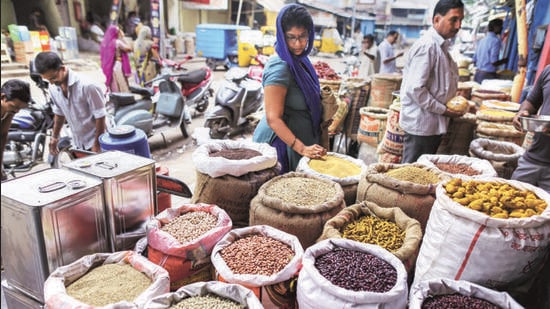
The skyrocketing prices have severely impacted the middle class, while the poor receive free rations from the government and the rich remain relatively unaffected.
Meera Yadav, a homemaker, said, “The poor get ration free of cost, including dal, pulses, and wheat from the government, while the rich have nothing to worry about. It’s the middle class that suffers. Our entire budget has been thrown off balance. Arhar dal (pigeon pea) now costs ₹175 per kg, instead of ₹140 three months ago. Moong is around ₹122 instead of ₹100. Green Urad is ₹150, and black urad is about ₹130. Vegetables are also out of reach—tomatoes are selling at ₹100 per kg, potatoes at ₹40 instead of ₹20 20 days ago, onions at ₹60 per kg instead of ₹30 a month ago, ginger at ₹200 per kg, and chillies around ₹90 to ₹100 per kg. Dhania (coriander) is selling at ₹150 per kg. How are we supposed to keep our kitchen fires burning?”
“The government and relevant authorities need to address this issue urgently to alleviate the financial burden on common citizens,” she added.
{{/usCountry}}“The government and relevant authorities need to address this issue urgently to alleviate the financial burden on common citizens,” she added.
{{/usCountry}}The escalating prices of essential food items are causing widespread concern and distress among the middle class, which is now grappling with how to manage their household budgets amidst the rising costs.
Bharat Bhushan Gupta, president of the Dal and Rice Mills Owners Association, explained the situation from the suppliers’ perspective.
“Yes, pulses have gone up at the retail level, but the rates aren’t that high at the wholesale level. The stockists buy dal from us, and then retailers buy from the stockists, which causes the rates to shoot up. Additionally, every year, the government announces support prices, which also drives up the prices of essential commodities,” he said.
Rajendra Agarwal, president of the Pandeyganj Traders’ Association, offered an alternative solution for consumers. “Those who find arhar dal expensive can switch to matar dal, which is around ₹47 per kg at the wholesale level and may be selling at ₹55 per kg in the retail market. Chana dal is around ₹85 per kg. However, it’s true that rates have gone up a bit in the last few months.”
Rohit Ahuja of Moti Babu, a well-known retailer in Lucknow’s Fatehganj, stated, “The prices of many dals have surpassed ₹100 per kg. Arhar is around ₹175 per kg, Urad dhuli is ₹150, Urad hari is ₹170, masoor is ₹90 and Moong is ₹120 to 125. Additionally, prices of rice have also increased.”
Tinku Sonkar, a wholesale vegetable seller from Dubagga Mandi, confirmed the sharp increase in vegetable prices. “Yes, the rates of vegetables have shot up in the mandi (market). Potatoes are selling at ₹130 per paseri (5 kg) in the mandi, and lemons are selling at ₹80 per kg in the mandi, likely crossing ₹100 per kg in the retail market. Garlic is selling between ₹120 and ₹150 per kg in the wholesale market, and green chillies are priced at ₹60 per kg.”