Short but colourful performances by folk dancers dotted across the sprawling Indira Gandhi Pratishthan (IGP) filled it with vibrant energy on Monday when the fourth edition of Groundbreaking Ceremony (GBC) kicked off. Between engaging discussions and speeches of dignitaries, these ensembles leaped into action, captivating visitors with their spirited dance performances.
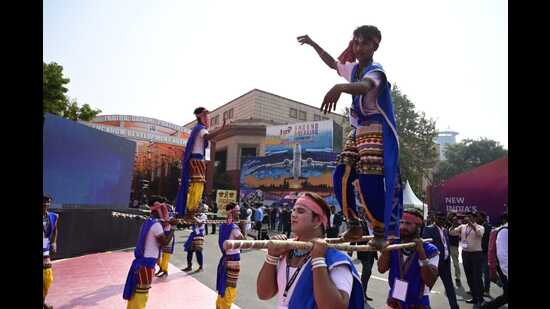
Faruwahi dancers from Ayodhya, stationed just near Gate No.1 of the venue, caught many eyes as they created a three-tier human pyramid while balancing on sticks. The group leader, Vijay Yadav, said the artform had been passed down from one generation to another.
From Pilibhit, a group performed Holi Nritya and Jhijhi Nritya—made popular by Tharu tribal communities from Uttarakhand. Eighteen-member strong, the troupe also had musicians who sang songs about Lords Krishna and Radha. “In our tribe (Tharu), the Holi festival is celebrated for a whole month. During this time, we go from door to door and perform at every house,” said Bullu Yadav, the group leader.
Raghuveer Singh Yadav from Jhansi was here with a group of 15 persons, six of whom were schoolgirls, who performed Rai Nritya--which is characterised by women in ghagras making non-stop chakkars (spins) to the music of a shehnai. “This is a folk dance meant to be performed during the season of Holi,” explained Yadav. “Now with the government recognising all these old folk arts, we get invitations to perform in different parts of the state,” he added.
An all-women’s group, ‘Awadh ki Dharohar’ from Ayodhya, performed the Badhava folk dance form. “This dance form is for happy occasions--when there is a wedding, when a child is born or when special guests are visiting,” said Prakriti Yadav. She has been teaching the dance form for the last six years, and says the dance form was taught in every household of her village when she was young. “However, it is only due to our association with the state culture department that we have been able to keep the folk dance alive.”
{{/usCountry}}An all-women’s group, ‘Awadh ki Dharohar’ from Ayodhya, performed the Badhava folk dance form. “This dance form is for happy occasions--when there is a wedding, when a child is born or when special guests are visiting,” said Prakriti Yadav. She has been teaching the dance form for the last six years, and says the dance form was taught in every household of her village when she was young. “However, it is only due to our association with the state culture department that we have been able to keep the folk dance alive.”
{{/usCountry}}