
 E-Paper



Gomti’s ‘waste’line expanding, courtesy unregulated development in Lucknow
Lucknow generates 730 MLD of sewage, but only has capacity to treat 450 MLD; the remaining 280 MLD flows untreated into the Gomti, contributing to declining oxygen levels and a dangerous rise in faecal contamination

 Prefer HTon Google


LUCKNOW As Lucknow surges ahead with ambitious urban development plans, environmentalists and city planners are sounding an alarm over the deteriorating health of the Gomti — a 960-km-long tributary of the Ganga, originating from Madho Tanda in Pilibhit and merging with the Ganga at Kaithi in Ghazipur. The river, central to Lucknow’s geography and ecology, is under severe stress due to unregulated urbanisation and untreated sewage discharge.
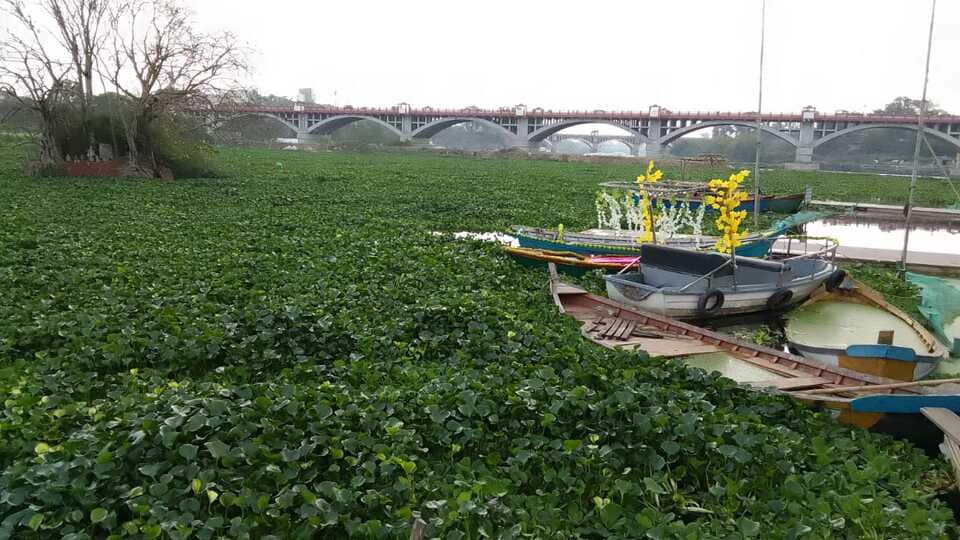
The river, which spans 101 km through Lucknow — including 30 km of urban area — is the lifeline for the city’s 40 lakh residents who depend on it for drinking water.
According to Lucknow Water Works (Jalkal) officials, 550 million litres of raw water is drawn from the Gomti every day, of which 120 MLD is supplied to the Balaganj waterworks and 200 MLD to the Aishbagh waterworks.
Once home to rich biodiversity, pristine riverbanks and thriving local economies, Gomti is now reeling under the weight of unregulated development, pollution, and systemic misgovernance.
River activist Ranjit Singh said: “Even after an investment of over ₹2,500 crore to clean and rejuvenate Gomti during the last 20 years, the water of the river remains heavily polluted as untreated sewage from 7 major drains continues to flow directly into it. The Lucknow Municipal Corporation has been found dumping solid waste in certain sections along the riverbanks, while garbage from slums is washed into the Gomti during rains. More than a decade after the National River Conservation Plan and AMRUT projects poured in funds, Gomti remains choked with filth.”
The Gomti once supported more than 35 species of fish and was a haven for aquatic birds, reptiles and endemic plant life. A recent survey conducted by LMC found that over 60% of native fish species have disappeared from urban stretches of the river. Key indicator species, such as the Indian River Dolphin, have not been spotted for years, pointing to a collapsing ecosystem.
“Migratory birds that once flocked here in winter are becoming rarer every year,” said Venkatesh Dutta, professor at the School of Earth and Environmental Sciences, BBAU. “This isn’t just about fish or birds — it’s about the ecological stability of the entire region.”
For thousands of families living along the river, especially fisherfolk and farmers, the ecological decline is not just an environmental issue but a livelihood crisis. The absence of edible fish, coupled with poor water quality, has devastated small-scale fishing in rural stretches of the river.
The city currently generates 730 million litres per day (MLD) of sewage, but only has the capacity to treat 450 MLD. The remaining 280 MLD flows untreated into the Gomti, significantly contributing to declining oxygen levels and a dangerous rise in faecal contamination.
With work on a number of major townships underway, population density is set to rise sharply. Besides, unregulated colonies are contributing to the pressure on Gomti.
“The challenge is not urbanisation itself, but the lack of integrated, sustainable urban planning. We need to think beyond concrete and commit to preserving our ecological assets.” said Ranjit Singh.
Environmentalist VK Joshi cautioned: “Every lake, pond and river in the city is a natural safety net. Destroying them invites nature’s backlash—floods, droughts, storms. The chain of aquatic life maintains our water table. Break that chain, and we break our future.”
BLUEPRINT FOR THE FUTURE
INTEGRATED DRAINAGE Experts are calling for urgent implementation of integrated drainage systems: To prevent untreated sewage from directly entering water bodies.
EXPANSION OF STPs Bridging the treatment gap is crucial to prevent further contamination.
WATER REUSE INFRA Recycled water can be used for non-potable purposes, reducing river dependency.
GREEN-BLUE urban planning for incorporating wetlands, ponds and green belts into city planning to aid natural water filtration and recharge aquifers.


