E-Paper



Modiji my political guru, I turn to him whenever I feel the need for guidance: UP minister Arvind Kumar Sharma
Former IAS officer Arvind Kumar Sharma, a minister in the Yogi cabinet, shares insights into his journey into politics, outlines the vision for his departments and addresses the contentious issue of privatising power distribution

 Prefer HTon Google


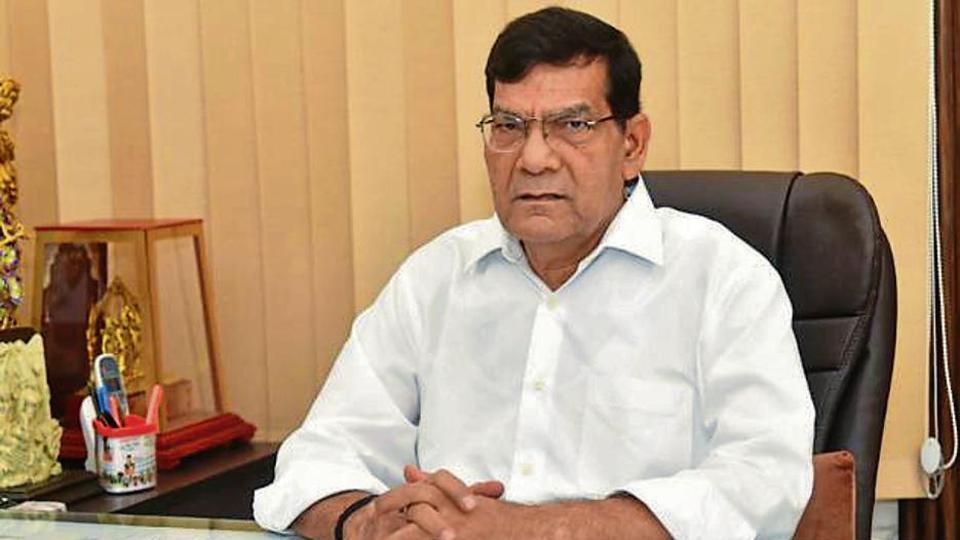
Arvind Kumar Sharma, former Gujarat-cadre IAS officer and now Uttar Pradesh’s minister for energy and urban development in the Yogi Adityanath cabinet, was known as Prime Minister Narendra Modi’s man when he entered the political arena, joining the BJP in Lucknow in January 2021. Speculation was rife about his role in UP, with many even projecting him as a future chief minister back then. Known for rarely giving interviews, Sharma spoke candidly to Hindustan Times.
Q: You had a long career as a bureaucrat before entering politics. How smooth or challenging has this transition been for you?
A: I moved to the chief minister’s office in 2001 when Narendra Modi became Gujarat’s CM. The office was a hub of visitors, including politicians and RSS leaders, and I often interacted with them to resolve their issues at the CM’s direction. This continued until 2014, when Modi became PM. Even before the Lok Sabha results were declared, he had asked me to be ready to shift to Delhi. After he took oath, I joined him in the PMO as joint secretary and later additional secretary. Both assignments in the CMO and PMO served as platforms of semi-political training for me, making my transition from bureaucracy to politics smooth and natural.
Q: Why did you choose politics as your second innings?
A; When I was joint secretary in the PMO, my senior PK Mishra (then additional secretary), once casually asked me what I planned to do after retirement. I told him I wished to join politics. He conveyed this to Prime Minister Modi, though the PM never discussed it with me at that time.
In June 2017, during President Trump’s first term, I accompanied Modiji to the US for several events, including his address to the Indian-American community in Washington DC. On our return flight, Modiji called me and asked what I wanted to do after retirement. Initially hesitant, I finally told him politely that I wanted to pursue politics. He just listened, and the matter ended there.
Later, after my promotion as secretary, I was moved to the MSME ministry during the Covid period in 2020. In December that year, I received a call from the PM. He said, “Sharmaji, UP jaane ki taiyari kijiye. Wahan kuch MLC ki seats khali ho rahi hain. Aapko 2022 ke assembly election ke liye bhi jutna hoga.” (Be ready to move to UP where some MLC seats are falling vacant; you will also have to prepare for the 2022 assembly election.)
I was taken aback since I still had two years of service left.
Q: What happened next?
A few days later, at 7 in the morning, the prime minister himself called me, guiding me through the minute details of filing nomination papers for the MLC elections in UP. For nearly a week, he called me daily on this matter.
Modiji instructed me not to disclose it to anyone. He explained every detail over the phone. Eventually, my voter registration was lawfully shifted from Delhi to UP.
I formally joined the BJP on January 14, 2021, was elected as MLC, and in the run-up to the 2022 assembly elections, I toured 65 districts across Uttar Pradesh in a year.
There was speculation you had been sent for a bigger role in UP. Was it so?
People did speculate, but I was always clear about my role. Before I moved to UP, the PM gave me clear dos and don’ts, and I have tried to strictly adhere to them.
Q: So, who is your guru in politics and do you still look up to him for guidance?
A: Of course, Modiji. He is not only my political guru but also a guardian. Even today, as a minister, I turn to him whenever I feel the need for guidance.
You interact with bureaucrats every day. How does the experience feel when you are on the other side of the table?
There are broadly two types of bureaucrats. One category is very rigid—rather than solving people’s problems, they end up creating hurdles by citing rules. I am not saying that following rules is wrong, but one should not always stick to the beaten path. Bureaucrats need to be flexible, practical, and solution-oriented. During my own tenure as an IAS officer, I always worked with this mindset.
Q: As a minister, what is your vision for shaping the urban development department and driving the energy sector forward?
A: My dream is to develop at least 75 cities in Uttar Pradesh so they can be showcased at the global level.
In the energy sector, there has been remarkable improvement in power supply since 2017, despite a manifold rise in demand. Our goal is to ensure 24x7 power supply to consumers across all categories.
Q: Last November, the government decided to privatise power distribution in 42 districts under Agra and Varanasi discoms, which triggered strong employee protests. Does that decision still stand?
A: Let me be very clear—there will be no compromise on the interests of either employees or consumers. What we are doing is not privatisation but a partnership with the private sector in the larger interest of the state. I see no harm in exploring alternatives when the existing system is not delivering results.