E-Paper



No director for 2 years stalls Kalyan Singh Super Speciality Cancer Institute and Hospital’s progress
The number of patients seen at KSSSCIH is lower than that of any community health centre in the state capital.

 Prefer HTon Google


An average of 250 patients are seen daily in the outpatient department (OPD) at the sprawling 100-acre campus of the Kalyan Singh Super Speciality Cancer Institute and Hospital (KSSSCIH), which houses 27 doctors. In contrast, the Gosaiganj Community Health Centre, with seven doctors, attends to over 400 patients daily. Despite both being situated in the state capital, these institutions have distinct narratives. KSSSCIH, envisioned as North India’s largest cancer treatment centre with handful of resources, has a sorry story to tell.
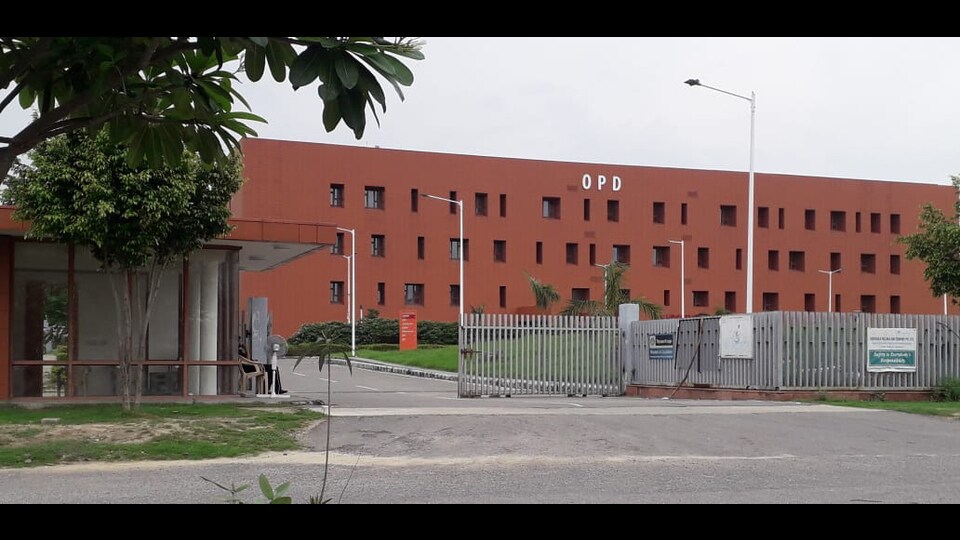
The numbers may be subject to debate when comparing the skill levels between KSSSCIH faculty and Community Health Centre (CHC) doctors. However, statistics unequivocally indicate that the KSSSCIH campus, envisioned to provide comprehensive, under-one-roof facilities for cancer management, research, and education, remains underutilised.
Established in 2016 with the goal of becoming North India’s largest centre for cancer treatment, KSSSCIH has been without a full-time director for the past two years and is struggling to establish its viability for patients.
“In these six years, we have moved at a snail’s pace. By now, our OPD should have reached an average daily count of at least 2,000,” lamented Dr Vijendra Kumar, secretary of the Faculty Welfare Association at KSSSCIH. The association has been staging a protest on campus for the past two days against the new salary structure for future faculty.
Dr Kumar emphasised concerns about delays in faculty appointments and the hiring of non-clinical staff essential for the smooth functioning of services. “Instead of attracting qualified faculty to join the campus, several faculty members have left KSSSCIH in the past one and a half years,” he noted.
Prof RK Dhiman, the director at Sanjay Gandhi Post Graduate Institute of Medical Sciences, who holds additional charge of KSSSCIH, stated, “KSSSCIH has made significant progress in recent years with the initiation of several new facilities. As the process for the selection of a new full-time director has begun, I hope the institute will make further progress rapidly.”
Faculty members who left KSSSCIH after their appointments include Dr Esha Zafa (DM Medical Oncology), Dr Sai Saran (DM Critical Care), Dr Indu Shukla (Head and Neck Surgeon), Dr Saurav Vij (DM Onco-Anesthesia), Dr Swati (DM Onco-Anesthesia), Dr Tanmoy Ghatak (Anesthesia), Dr Tapas Singh (Anesthesia), Dr Brijesh Mishra (Plastic Surgery), Dr Richa Srivastava, Dr Satya Prakash (Transfusion Medicine) and Dr HS Pahwa (Surgery).
For about two years now, KSSSCIH has been without a full-time director. Prof RK Dhiman took on additional charge after Dr Shleen Kumar was removed from the post. Despite two advertisements for the director’s post, the selection process is still pending.
Faculty members expressed that the additional charge, especially with PGI, one of the state’s pioneer institutes with heavy patient inflow, has kept KSSSCIH as a secondary priority. “It is obvious. If one holds charge of PGI the first priority will be PGI. Why would someone focus upon additional charge more than their parent office/institute. And KSSSCIH has suffered due to it,” said a senior faculty member.
The institute was intended to be developed as an advanced national-level referral and treatment facility, a centre of excellence for networking with other national-level institutions and international bodies, and a premier centre for research in basic and applied oncology, attracting national and international talent.
“Lack of faculty in each department has restricted DM/MCh seats. Some departments have just one faculty member. If all faculty posts are filled, at least 120 senior residents can join to improve patient care. But the fact is there are no senior residents, as all departments lack faculty as per national medical commission standards,” explained Dr Kumar.
The sprawling hundred-acre campus was designed to start admissions with 750 beds in the first phase and a total of 1,250 beds in the second phase. Six years later, the campus has a little over 250 beds and four operating theaters catering to patients, with 20 operating theaters remaining unutilized for the past six years.