
 E-Paper



‘No tainted faces’: BSP draws strategy for poll-bound states
Mayawati tells party leaders clean image will outweigh winnability as party looks to expand its footprint outside Uttar Pradesh.

 Prefer HTon Google


Ahead of crucial assembly elections, the Bahujan Samaj Party (BSP) has issued a firm directive to its units in West Bengal, Tamil Nadu and Kerala to field only candidates with an unblemished legal record, underscoring what party leaders describe as a “zero-tolerance” policy on criminalisation.
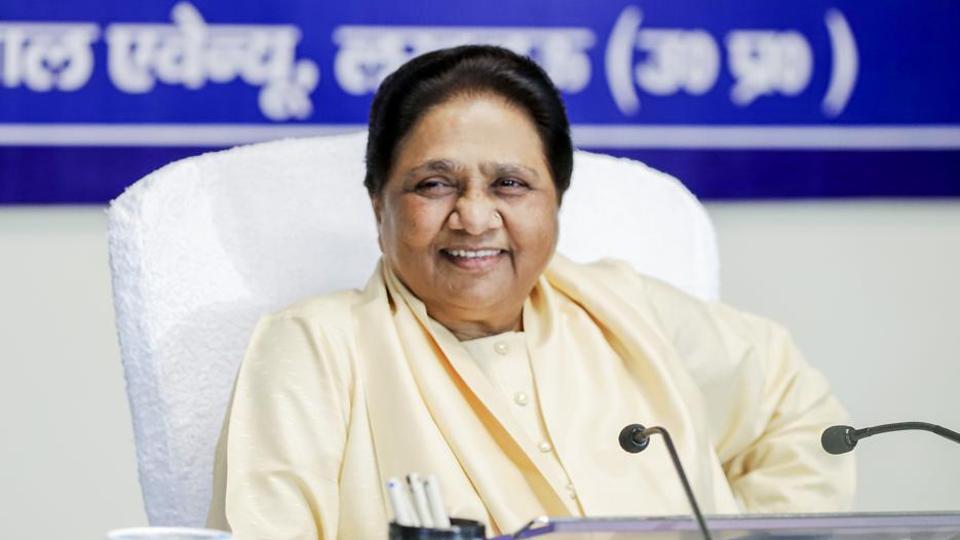
The decision was conveyed at an all-India review meeting chaired by BSP president Mayawati at her Lucknow residence on Sunday.
Elections in West Bengal, Tamil Nadu and Kerala are due later this year, alongside polls in Assam and the Union Territory of Puducherry.
Preparations for the elections were discussed at the meeting. The top leadership’s stance that credibility will not be sacrificed for electoral arithmetic comes amid renewed emphasis by the Election Commission of India on curbing the criminalisation of politics. The poll panel has repeatedly reminded parties of their obligation to disclose candidates’ criminal antecedents and justify selecting individuals facing charges over those with clean records.
Acting on Supreme Court-mandated guidelines, the Commission requires candidates with pending criminal cases to publicise these details in newspapers and electronic media and obligates parties to explain their choice in writing.
Senior BSP functionaries said Mayawati instructed state coordinators and zonal in-charges to subject all aspirants to rigorous scrutiny, including examination of affidavits, court records and ground-level feedback.
“The party president made it clear that individuals with serious criminal cases will not be considered. Electoral viability cannot override the party’s commitment to constitutional politics,” a senior leader said.
The BSP, which seeks to expand its footprint outside Uttar Pradesh, is attempting to position itself as a party of “clean governance” in states where multi-cornered contests and entrenched regional formations dominate the landscape. In West Bengal, Tamil Nadu and Kerala, the party leadership appears keen to draw a contrast with rivals frequently accused of fielding candidates with questionable backgrounds.
Party insiders indicated that a central scrutiny mechanism may be put in place to vet shortlisted names before final approval. Leaders warned that any deviation from the clean-image directive could invite disciplinary action.
While the BSP remains a marginal player in these states, it has been working to consolidate support among Scheduled Castes, Other Backward Classes and other marginalised communities as part of a broader national strategy.
Political analysts said the party’s latest stand served a dual purpose: reinforcing its ideological plank of social justice anchored in constitutionalism, and carving out moral high ground in an environment where public scrutiny of candidates’ backgrounds is sharper than ever.


