Observing that only 16 Full Court meetings had been convened by the Chief Justice over the past 10 years, Justice Vinod Diwakar of the Allahabad high court has questioned whether the Full Court was functioning as a meaningful collegiate forum in which the individual views of judges were deliberated upon and recognised.
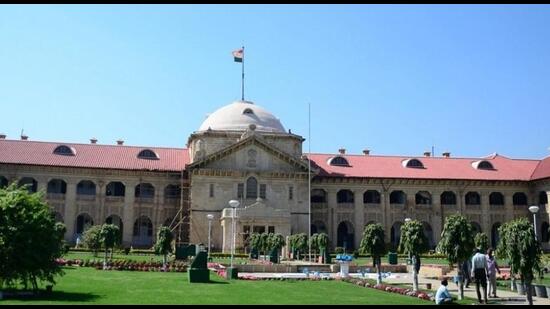
On the quality of deliberations in Full Court meetings of the high court, the judge observed the proceedings do not record the concurrence or dissent of individual judges.
In an 80-page judgment dated September 28 in Pappu Met alias Pappu vs State of UP and another, Justice Diwakar also called for a recalibration of the “Chief Justice-centric” model of high court administration, emphasising the need for a more deliberative, institutionally balanced and participative approach, along with stronger institutional accountability.
In a footnote, Justice Diwakar made a pointed observation about the conduct of recent Full Court meetings: “It was given an impression that last two Full Court meetings of this Court were stage-managed in the manner of a government whipping its members through a confidence vote, and this affronts the dignity of a Judge’s office.”
The observations were made while dealing with four cases in which the court flagged issues including delays in the subordinate judiciary, non-compliance with directions on bail and broader concerns relating to judicial discipline.
{{/usCountry}}The observations were made while dealing with four cases in which the court flagged issues including delays in the subordinate judiciary, non-compliance with directions on bail and broader concerns relating to judicial discipline.
{{/usCountry}}A Full Court comprises all judges of the high court and is convened to deliberate on important administrative and institutional matters.
Examining the administrative functioning of the high court, Justice Diwakar referred to the role of the Full Court under the Allahabad High Court Rules, 1952, including the frequency of its meetings, matters required to be placed before it and the manner in which deliberations are recorded.
Referring to Rule 8 of Chapter III of the Allahabad High Court Rules, 1952, the judgment noted that the Chief Justice is required to convene a Full Court meeting once every three months, excluding the summer vacation. The rule also provides that a meeting must be convened within a week if at least five judges request one.
The court also examined the agendas of the last 10 meetings and noted that designation of senior advocates had been placed before the Full Court on two occasions. The judgment said the designations approved on one of those occasions had subsequently been challenged on the judicial side and the matter was pending before the Lucknow bench.
The remaining agenda items largely concerned service conditions of judicial officers, the judgment said.
“No matter of general policy, no matter affecting the powers and status of the Court, and no annual report on the administration of justice has been placed before the Full Court during this period,” Justice Diwakar observed.
The court further noted that the annual reports on the administration of justice had neither been placed before the Full Court nor forwarded to the government as required under the Rules. It said this was indicative of the prevailing functioning and administrative culture of the high court.
The judge also questioned the manner in which Full Court proceedings are recorded. “Where a collegiate body resolves without recording the views of its members, the deliberation which the forum exists to secure is not evidenced on its record,” the judgment said.
Justice Diwakar said the rationale for convening the Full Court was founded on the principle of “mutual recognition” of the individual views of its judges. The Full Court, he observed, was not merely a forum where a final resolution was formally recorded, but one intended to facilitate collegiate deliberation.
Thus, where a resolution is recorded without reflecting the views of individual judges, the institutional purpose of the forum is not fully reflected in the record, the judgment said.
The court further observed that disregarding the rules and failing to record individual concurrence or dissent could create a perception of disrespect towards the personal identity and dignity of an individual judge.
Justice Diwakar also noted that minutes of committees constituted by the Chief Justice had never been communicated to the Full Court, giving an impression that their functioning was independent of the high court itself.
The judgment also raised concerns over the limited scope for “conscious and participative dialogue” among judges on matters such as allocation of judicial business. It observed that allocation of work was not linked to performance and that there were “no defined, codified and notified parameters” governing consideration for elevation and promotion to the next level.
“Above all, decisions taken on the administrative side attract no accountability, and are not subjected to audit by any independent agency, so that accountability may be fixed in cases of proven favouritism, partisanship, or the operation of other extraneous considerations,” the judge observed.
The cumulative effect of these issues, the court said, “erodes the conditions in which judicial character forms”. It further remarked that “the repercussions of unfettered, unguided discretion have had a devastating effect on the administration of justice”.
Justice Diwakar directed the Registrar (Compliance) of the high court to place the judgment before the Chief Justice “for His Lordship’s kind perusal and for such further steps as His Lordship may deem fit and appropriate in respect of the issues noticed herein”.