
 E-Paper



Onset of winter fails to check spread of dengue in U.P.’s Prayagraj
There seems to be no respite from dengue in Sangam city despite the onset of winter


There seems to be no respite from dengue in Sangam city despite the onset of winter. With 159 confirmed cases reported in past seven days between November 7 and November 13, the tally of dengue cases here has now reached 1,246 this year, according to district health officials.
A total seven patients have died of dengue this year, records show. As per data of the district medical and health department, 1, 179 patients recovered while there were 67 active patients in the district as on Sunday (November 13) evening.
Data show that while 28 patients are undergoing treatment for dengue in government and private hospitals, another 39 are recuperating at home. More men as compared to women have fallen prey to the disease as per the records.
Urban pockets recorded around 67% of the total dengue cases as compared to the rural areas of trans-Ganga and trans-Yamuna regions of the district. Urban areas like Phaphamau, Sulemsarai, ADA Colony in Naini, Awas Vikas Colony in Jhunsi and Mundera have recorded maximum dengue cases this season.
Senior health officials have conducted high-level meetings to tackle the cases and stop the spread while also seeking support from citizens to initiate steps at home and in their neighbourhoods also to curb dengue and other vector-borne diseases.
A senior district health official said that Anopheles mosquitoes, which are primarily responsible for malaria, breed in muddy water and outdoor environments, while Aedes aegypti, which cause dengue, mostly breed in clear water and indoor environment sites, like plants and coolers.
“Mosquitoes as a species prefer warmer environments, above 30 degrees Celsius. Once the temperature goes down to around 20 degrees Celsius, they become less active and do not function below 10 degrees Celsius. This is the reason that malaria cases have dipped as outdoor temperatures have started to fall. However, dengue cases are being caused by mosquitoes living and breeding indoors where temperatures are more ambient. Aedes aegypti mosquitoes are surviving in indoor settings where ambient temperatures are higher,” he said.
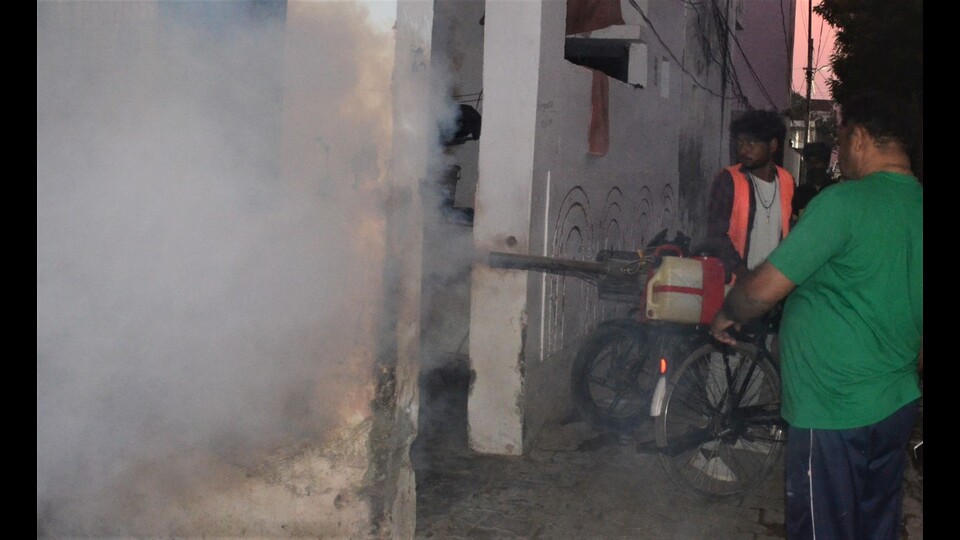
“Dengue fever is a viral illness which is acquired through a mosquito bite. People should clear areas where there is an accumulation of water like coolers, flower pots, old tyres etc in their homes or in the neighbourhood. Fogging drives are being carried out across the district. Fever surveillance is under way to detect cases at the earliest so that proper treatment can be initiated in time,” said district malaria officer of Prayagraj AK Singh.
The health department has also mapped hotspots in the district which have reported a large number of dengue cases and corrective measures are being initiated. In accordance with the recent decision taken by the divisional commissioner and the district magistrate, special camps across the city are being held to detect and treat dengue patients. As many as 105 cycle-mounted anti-fogging machines and eight big fogging machines have been pressed into service every day and 30 additional cycle-mounted fogging machines are also being procured.


