E-Paper



Political row erupts over plan for Shivalaya Park in Kanpur’s Buddha Park
Mayawati, Chandra Shekhar oppose project, say it is against secular principles and the legacy of Dr BR Ambedkar.

 Prefer HTon Google


The plan to construct a Shivalaya Park with replicas of the 12 Jyotirlingas inside the premises of the Gautam Buddha Park in Kanpur has sparked a political controversy.
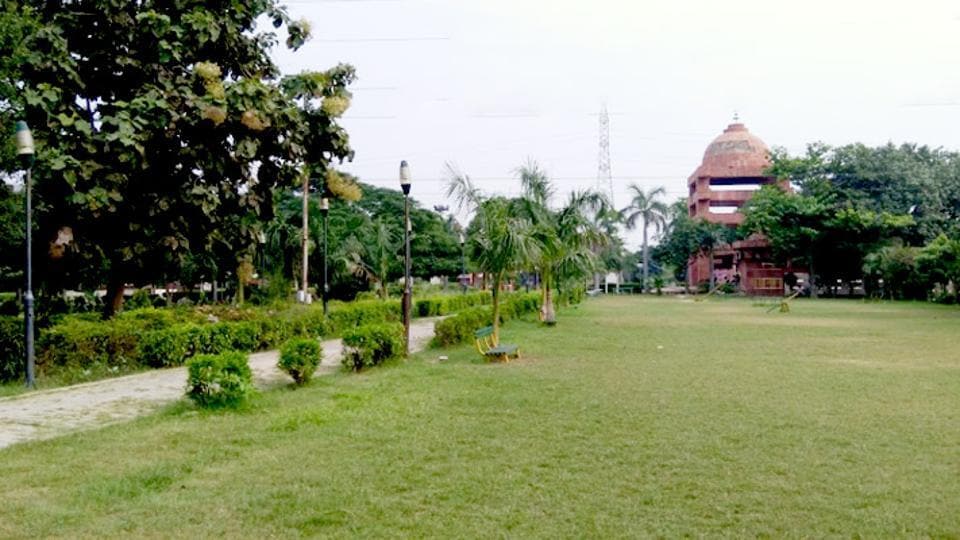
Bahujan Samaj Party (BSP) president Mayawati and Azad Samaj party chief and Nagina MP Chandra Shekhar have demanded an immediate halt to the move, saying it is against secular principles and the legacy of Gautam Buddha and Dr BR Ambedkar.
The Kanpur Municipal Corporation has earmarked ₹15 crore for the project, which is modelled on a similar park in Prayagraj.
The plan includes installing replicas of the 12 Jyotirlingas and developing a “Happiness Park” as an adjoining attraction. Municipal commissioner Sudhir Kumar inspected the proposed site last week after receiving clearance from the Kanpur Development Authority (KDA). The project was initially meant to come up at Shatabdi park in Rooma, but was later shifted to Gautam Buddha park.
Taking to X, BSP chief Mayawati termed the proposal “entirely unacceptable” and warned that it risked aggravating communal tensions.
“India is a secular country where people of all faiths have their own places of worship. Gautam Buddha Park is a centre of reverence for Buddhists and Ambedkarites. The government’s move to establish another religion’s shrines here is unjustified and must be stopped immediately, otherwise it could spread hatred among communities,” she wrote.
Mayawati had personally commissioned the Gautam Buddha park project in 1997 during her second term as chief minister, reviewing progress at the site herself. She had also ordered the renaming of Kanpur University after Chhatrapati Shahuji Maharaj. Both projects were seen as symbolic of her party’s commitment to Bahujan identity and social justice.
Chandra Shekhar has also voiced strong objections, writing to chief minister Yogi Adityanath to demand that the project be shifted elsewhere.
“Gautam Buddha park is not merely a green expanse. It is a symbol of the compassion, equality and fraternity of Gautam Buddha and Dr Ambedkar. To convert it into a religious space would be to wound the sentiments of the Bahujan community and to go against the spirit of the constitution,” he wrote.
Affirming his respect for religious freedom, the Dalit leader nevertheless insisted that the park’s “original character must remain intact.” Any such religious project, he said, should be developed on new land to avoid confrontation.
Kanpur Municipal Corporation officials, however, have stressed that the Buddha park itself will not be altered. Environmental engineer Diwakar Bhaskar said the Shivalaya Park would be built on adjoining KDA land that is currently vacant, with a separate entrance.
“The objective is to allow citizens to have darshan of all 12 Jyotirlingas at one location and to highlight their cultural and religious significance,” he said.