
 E-Paper



Previous govts shut industrial units, BJP has people-oriented approach: U.P. CM
CM Yogi Adityanath outlined his vision for Uttar Pradesh's growth and heritage, launching ₹1,533 crore in projects and emphasizing inclusive development.


Chief minister Yogi Adityanath on Thursday outlined his government’s vision of preserving Uttar Pradesh’s heritage while accelerating growth in 2025 here.
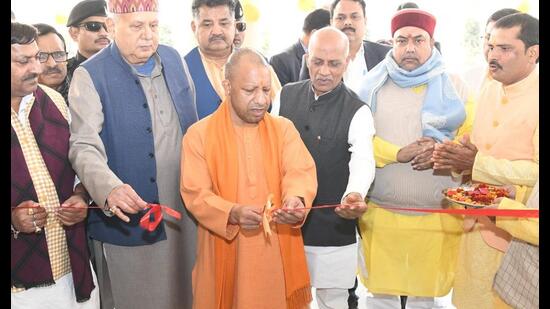
“With a people-oriented approach, the government has created new opportunities, modernised infrastructure, and ensured prosperity for all citizens. Uttar Pradesh will continue to march forward with renewed energy and purpose,” he after launching development projects worth ₹1,533 crore at Janta Inter College grounds at Chargawan in Gorakhpur.
The CM criticised previous governments for halting the state’s progress and shutting down industrial units. Yogi said BJP-led double engine government was committed to development, citing the revival of Gorakhpur’s fertiliser plant and Pipraich sugar mill.
He inaugurated the new building of the state agriculture college, a farmers’ hostel and regional public analysis laboratory. Besides, the CM distributed tractors and modern equipment to farmers, reinforcing the government’s support for the agricultural sector.
As part of the region’s infrastructure development, he laid the foundation for a four-lane road from Gorakhpur to Pipraich, two additional bridges over the Rapti and road expansion from Gorakhpur to Sikriganj to enhance connectivity.
Detailing industrial growth in Gorakhpur, Yogi said ₹15,000– ₹20,000 crore had been invested over the past seven years to revive closed fertiliser units and sugar mills, boosting the region’s economy.
He also highlighted the significant transformation in Gorakhpur, including eradication of encephalitis, establishment of super-specialty facilities at BRD Medical College and the opening of AIIMS.
Reaffirming his commitment to inclusive development, the CM reiterated the government’s ‘Sabka Saath, Sabka Vikas’ motto, aiming to ensure that all sections of society benefit equitably from its schemes.


