
 E-Paper



Puja, Pandal and Pratima: How Bengal workers shape Lucknow’s Durga Puja
For their efforts, the livelihood they earn in a couple of months, sets them up for almost the rest of the year, back home


Every year, as Durga Puja approaches, thousands of men and women from Bengal leave their homes and arrive in Lucknow, transforming the City of Nawabs into a hub of art, music, and seasonal livelihoods.
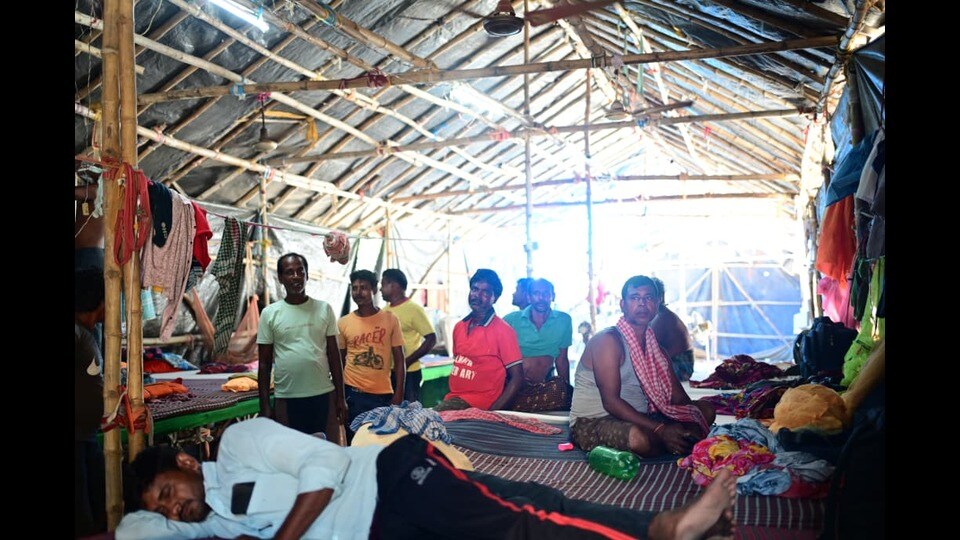
From idol sculptors and pandal decorators to dhakis - the traditional drummers - the festive season brings both cultural exchange and economic opportunity.
Durga Puja in Lucknow thrives on Bengali artists’ idols, Pandals, and drumming. Over a month before the festival, makeshift workshops crop up across the city, where clay is moulded into idols of Goddess Durga. Skilled idol-makers, mostly hailing from districts like Kumartuli in Kolkata and rural parts of Nadia and Hoogly, begin work in open spaces or temporary sheds. Bamboo frames are erected into beautiful pandals, crafted by migrant carpenters and decorators who often work through the night to meet deadlines.
For the artisans, this seasonal migration is not just tradition, it is survival. “Back home, there isn’t enough demand to sustain us throughout the year,” says Biswajit Das, a 42-year-old idol maker who has been visiting Lucknow every year for the past 15 years.
“Here, in one season, we earn double income to keep our families going for months,” said Subol Dollopotatti, 48, hailing from Medinepore district of Bengal at Jankipuram Pandal. “I will stay here even after Durga puja to open the Pandal’s bamboo, so that we (his family and he) celebrate the rest of the festival nicely,” he added.
The dhakis, blessed with rhythm, are equally in demand. Puja committees across Lucknow book them months in advance to ensure that the authentic rhythm of Bengal resonates through the celebrations. “The sound of the dhak is what makes Durga Puja feel real,” says Anindita Sen, an organiser of a community puja in Mahanagar. “No sound system can replace it.”
According to puja organisers, the number of migrant workers employed during this season runs into several thousands. Large pujas often hire entire teams from Bengal, covering their travel and accommodation. Smaller committees, too, rely on the expertise of these artisans, who bring with them skills passed down generations.
While the work is seasonal, the economic impact is substantial, says Saurav Bandhopahyay, Secretary of Jankipuram Puja. “As many as 41 people from different places of Bengal come every year and stay here to give shape to the panadal. A special dormitory is made from them on the premises. What they earn in these few months in the city, keeps their kitchen fire burning throughout the year.”
Popular Pandal maker Asim Matiya who takes work of most of the big pandals in the city and employs over hundreds of workers from Bengal said, “The festival creates a parallel economy that benefits multiple communities as they come every year where I keep them and give them food and lodging along with daily wages which is higher than what they get in Bengal.”
Popular idol-maker Niloy Kumar Mitra, who takes up the work of most of the famous pandals in the city said, “These people who come from Bengal are my lifeline. I treat them as family. Not just Durga Puja, they start coming to Lucknow from Gangesh Chaturthi which is followed by Durga Puja, Laxmi Puja and Diwali.”
Pic cap: (Deepak Gupta)


