A Rainbow Water Snake (Enhydris enhydris) was spotted for the first time in Uttar Pradesh, with photographic evidence collected from the buffer area of Dudhwa Tiger Reserve.
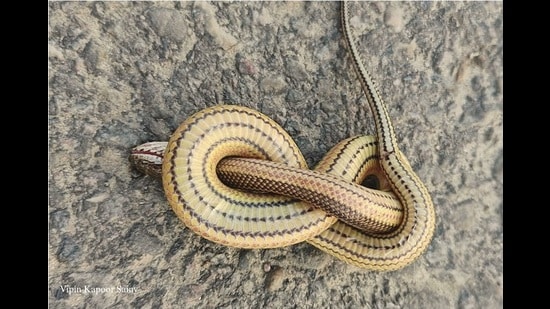
Vipin Kapoor Sainy, outreach officer-cum-field biologist, who recorded the presence of the snake, said that this species was encountered twice by him, both times in live condition, making the record even more valuable.
“The first sighting was documented on November 7 from the buffer forest adjoining the road network of Dudhwa, while an earlier sighting was on September 7 near Changa Nala, Belraya Range (Core Zone),” said Sainy.
During the second encounter, Sainy was accompanied by Rohit Ravi (senior project officer), Apoor Gupta, field biologist, Dudhwa, and Amit Kumar (field assistant, WWF-India).
“The individual measured approximately 35 cm in length and appeared slightly lethargic as it was undergoing skin shedding (ecdysis), a natural behaviour observed in snakes. We carefully documented morphological details, measured the specimen, and ensured that the snake was handled minimally and released safely into its natural habitat,” said Sainy.
“This latest addition further highlights the immense ecological value of the Terai ecosystem. This important record reaffirms the biological richness of Dudhwa’s diverse habitats. Discoveries like these highlight the importance of sustained field research and biodiversity documentation in the Terai ecosystem,” said Dudhwa Tiger Reserve field director H Raja Mohan.
Deputy director Jagadeesh R said, “This sighting in the buffer zone signifies the importance of habitat connectivity and long-term biodiversity monitoring.”
{{/usCountry}}Deputy director Jagadeesh R said, “This sighting in the buffer zone signifies the importance of habitat connectivity and long-term biodiversity monitoring.”
{{/usCountry}}Dudhwa Tiger Reserve, is known globally for its flagship species like tiger (Panthera tigris) and one-horned rhino (Rhinoceros unicornis), continues to reveal its lesser-known ecological treasures. Over the past two years, six species have been reported for the very first time from Uttar Pradesh.