
 E-Paper



UP govt schools saw highest increase in enrolment during pandemic: ASER report
A total of 43.1% of the school-going children were admitted to government schools in Uttar Pradesh in 2018. This number rose to 49.7% in 2020 and 56.3% in 2021, according to the report


LUCKNOW Uttar Pradesh has shown a marked growth in enrollment of students in government schools during the Covid-19 pandemic.
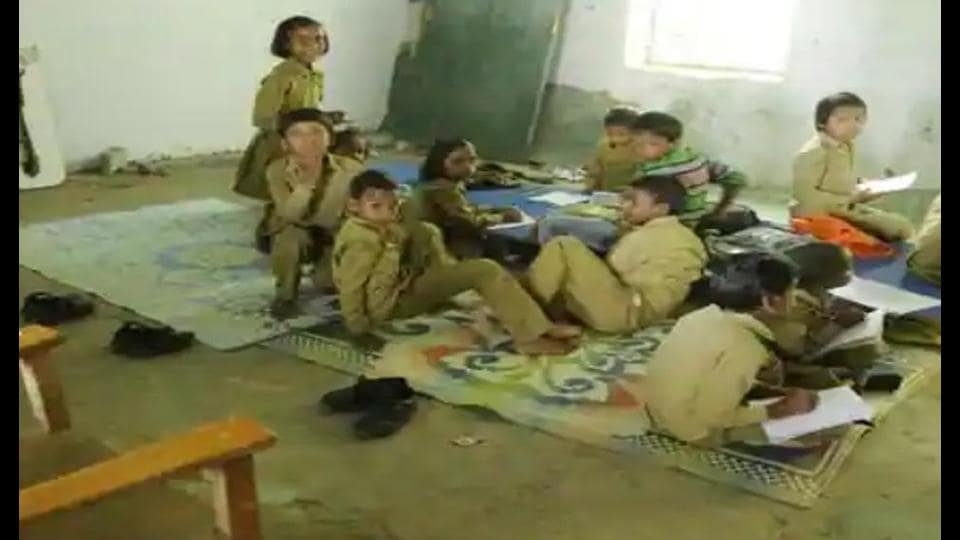
The state saw a 13.2% increase in the number of children (aged 6-14 years) in government schools between 2018 and 2021, as per the 16th ASER (Annual Status of Education Report) Report released on Wednesday.
A total of 43.1% of the school-going children were admitted to government schools in Uttar Pradesh in 2018. This number rose to 49.7% in 2020 and 56.3% in 2021. While the percentage of school-going children admitted to government schools was less than the national average of 70.3%, the increase in enrollment was highest in the country in the period, stated the report.
ASER-2021 was conducted in 25 states and 3 Union Territories. It reached 76,706 households and 75,234 children in the age group of 5-16 years, as well as teachers or head teachers from 7,299 government schools offering primary grades.
Experts suggested different factors for the rise in enrolment but all said it was a positive sign for the state of education in UP.
UP basic education minister Satish Chandra Dwivedi said, “The enrolment in government schools over the last couple of years is reflective of the focus on education in the state. Steps taken by the state government like easy enrolment of children of migrant workers who returned home during the first wave of pandemic, transfer of money into accounts of parents via Direct Benefit Transfer to purchase bags, shoes, sweaters and uniforms for children along with easy accessibility led to the rise in enrolment.”
As per education department data, around 175.8 lakh students sought admission to government primary schools across UP for the 2021-22 session, as compared to 166.3 lakh students in 2020-21 and 160.1 lakh students in 2019-20. To cater to the new students, the state government also increased the budgetary allocation for the basic education department in UP.
The budgetary allocation for basic education department in 2018-19 was ₹55188 crore that went up to ₹59879.69 crore in 2019-20, ₹60358.49 crore in 2020-21 and currently stood at ₹63455.69 crore in the 2022-22 session. “Primary education has become the focus point for our government. We are trying to modernise amenities at our primary schools. During the last couple of years, the infrastructure of government schools has changed remarkably that has helped in increasing enrolment,” said Dwivedi.
The minister said that a large chunk of the new students enrolled in government primary schools were children of migrant workers who returned home during the first phase of the pandemic. “Children of families financially affected during the pandemic have also shifted to government schools from private schools. We are trying to provide all facilities of private schools in government schools now,” he said.
The basic education department had also started to change the existing culture at government schools. “Our government has introduced activities like parent teachers meet, annual day, sports day etc that attract students and also help in their all-around development,” informed the minister.
During the period, the ASER report also found a rise in tuitions across the country. This reflected the lack of confidence in quality of education, according to experts. The number of students taking tuitions went up by 19.1% between 2018 and 2021, as per the report. This was the second highest in the country and more than the national average of 10.5%.
“The closure of schools for physical classes during the pandemic is a reason for rise in tuitions. Parents enrolled their children in nearby tuition classes to utilise time. I believe that the trend of tuition will go down again once schools reopen completely,” said the minister.
The report also found an increase in smartphone availability to children in UP but the rise was less than the national average. Though 58.9% of all enrolled children in Uttar Pradesh had a smartphone at home, about 34% of those children could not use it for studies, the ASER report found.
IMPORTANT FINDINGS OF ASER REPORT
• In Uttar Pradesh, less than 20% of children took private tuition classes in 2018. In 2021, this proportion increased to about 38.7%. At the national level, Uttar Pradesh and Nagaland are only second to Arunachal Pradesh, and have seen the second highest increase (19.1%).
• Smartphone ownership in Uttar Pradesh almost doubled from 30.4% in 2018 to 58.9% in 2021.
• Though 58.9% of all enrolled children in Uttar Pradesh have a smartphone at home, about 34% of those children cannot use it for studies.
• 68.7% of enrolled children (government and private) in Uttar Pradesh received learning support at home.


