
Sign in

Uttar Pradesh: Faulty power meters go beyond permissible limit

UP power corporation also found that 606,915 of its consumers with defective electricity meters have never paid even a single bill since 2006.

Published on: Aug 9, 2021, 10:52:13 IST
Share
Share via
  • facebook
  • twitter
  • linkedin
Copy link
  • copy link

The Uttar Pradesh Power Corporation Ltd (UPPCL) has identified more than 1.3 million electricity meters in the state as defective as of June 2021. This also includes 767,000 meters that have been faulty for over six months, causing revenue losses to the corporation which is forced to issue provisional bills to such consumers regardless of their actual power consumption.
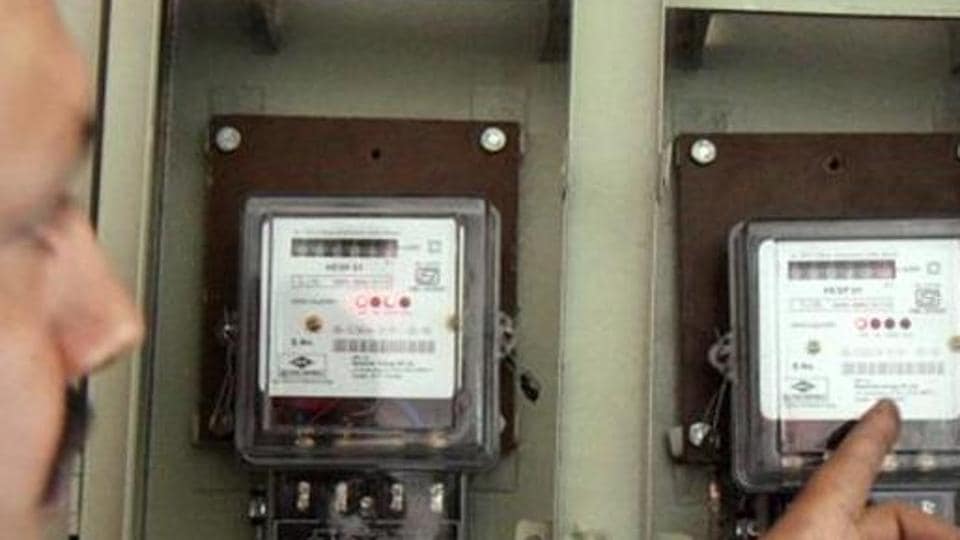
UP power corporation found that the reading of 195,337 of the 767,349 meters found defective for over six months had never been done. (HT Photo/Representative use)

Finding the number of the identified defective meters to be ‘excessive’ and exceeding the permissible limit by far, UPPCL managing director Pankaj Kumar last month sent a circular to the discoms’ managing directors, asking them to launch a drive to ensure all the defective meters were replaced.

533,590 defective meters, the highest in the state, are in the Varanasi discom followed by Agra (369,644), Lucknow (207,219) and Meerut (200,052) discoms.

It was also found that the reading of 195,337 of the 767,349 meters found defective for over six months has never been done. In the Varanasi discom, as many as 105,306 meters were never read while the number of such meters was 47,421 in Agra discom, 33,816 in Lucknow discom and 8,794 in Meerut discom.

It was further found that 606,915 consumers with defective meters have never paid even a single electricity bill since 2006. “This means that consumers are either not paying bills, or the power connections do not exist on the site or these consumers have subscribed to fresh connections,” Kumar said in the circular.

As per the provisions, bills to a power consumer can be issued only for two billing cycles, after which the defective meter must be replaced within 15 days of the testing report. Moreover, consumers are also entitled under the same provisions to a compensation of ₹50 per day if the defective or the burnt meter is not replaced after 15 days of it being tested.

Kumar mentioned all these provisions in the circular, asking MDs to fix the timeframe to replace all the faulty meters in keeping with the provisions that also say that not more than 3% of the meters vis-à-vis the number of consumers should be defective at one time. UPPCL has 29.7 million power connections in the state.
  • Brajendra K Parashar
    ABOUT THE AUTHOR
    Brajendra K Parashar

    Brajendra K Parashar is a Senior Journalist with the Hindustan Times, based in Lucknow, with nearly three decades of experience covering governance, public policy, politics and development in Uttar Pradesh. Over the years, he has reported extensively on key sectors, including energy and renewable power, mobility and transport, road safety, agriculture and allied sectors and issues related to farmers, rural development, taxation under the Goods and Services Tax (GST) and public administration. A seasoned political correspondent, Parashar closely tracks the Bharatiya Janata Party (BJP) and has covered every major election in Uttar Pradesh right from three-tier panchayat elections and urban local body polls to Assembly and Lok Sabha elections. He also reports regularly on the proceedings of the Uttar Pradesh Legislature, bureaucracy, governance, policy decisions and administrative developments with focus on their impact on public life. His reporting is known for its strong analytical approach, extensive use of official data. His areas of interests include investigative journalism, long-form political and policy analysis, data-driven reporting, elections and institutional reforms. Parashar holds a postgraduate degree in Political Science with First Division from Aligarh Muslim University (AMU), followed by a Diploma in Journalism and Mass Communication from the same university. His inclination towards journalism began during his student days, when he regularly contributed letters to editors and articles to newspapers and magazines. In the mid-1990S, his essay, “Should India Switch Over to the Presidential Form Of Government?”, published in Politics India magazine edited by noted constitutional expert Subhash C Kashyap, was adjudged the best entry in a national competition. His work has received professional recognition, including the Hindustan Times Journalist of the Month Award for an impactful series on drinking water issues during the 2010 Lok Sabha election campaign. Originally from Kasganj in western Uttar Pradesh, Parashar is currently based in Lucknow where continues to report on politics, governance and public policy.Read More