A three-month-old lost leopard cub, which was reunited with its mother on Wednesday in Ahmednagar, was microchipped, making it the 20th cub to be tagged.
The cub was microchipped as part of a programme to find out the identity of animals in inhabited areas. The microchips carry an identification number, but do not have a global positioning system (GPS) tracking device on it.
Cubs are being microchipped in Nashik, Pune and Ahmednagar. Guidelines by Ministry of Environment, Forest and Climate Change requires animals that are in captivity or have to be released back into the wild, to be numbered, as it helps monitor their movements.
“Microchipping is done through a sub cut from where the leopard’s tail starts. As they grow up, they realise the presence of this chip, but cannot remove it. It is not harmful,” said Dr Ajay Deshmukh, senior veterinarian, MLRC. “The process helps us identify the individual during man-animal conflict, or if the animal falls into a well. It also helps to monitor their movement, and keeping count of leopards in particular area.”
The microchipping programme began in 2015. Wildlife experts said microchipping has helped identify leopards at locations such as Radhanagari, Kolhapur and Chalisgaon, Jalgaon. They were relocated to other areas but their tags revealed that they had come back to the area, where they were trapped. “We have the example of the famous leopard Ajoba, that walked 125 km from Malshej Ghat to Mumbai, only because of microchipping. Thus, it is a knowledge tool to enhance wildlife management and eventually conservation,” said Vidya Athreya, wildlife biologist.
This week’s incident was the 51st successful rescue operation, where a leopard cub was reunited with their mother. On Wednesday evening, a farmer at Wadegavhan village in Parner, Ahmednagar district spotted the cub outside his sugarcane field and informed the forest department.
{{/usCountry}}This week’s incident was the 51st successful rescue operation, where a leopard cub was reunited with their mother. On Wednesday evening, a farmer at Wadegavhan village in Parner, Ahmednagar district spotted the cub outside his sugarcane field and informed the forest department.
{{/usCountry}}“Prior to the incident, locals had informed us that the mother leopard had given birth to three cubs. This was one of them,” said Manisha Bhinge, range forest officer (Parner).
“This region has significant leopard population and due to rapid loss of forest cover, these animals seek cover in sugarcane fields.”
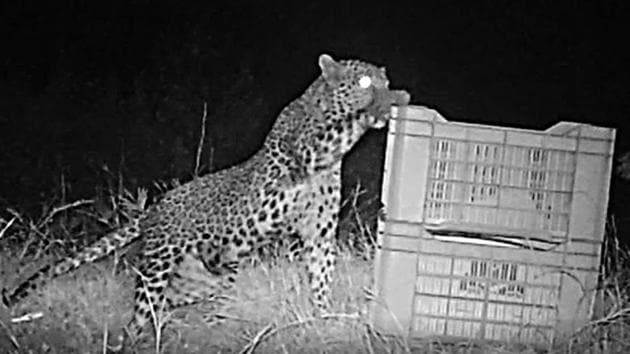
After the forest department informed MLRC and Wildlife SOS, a team travelled 90 km from Junnar, carried out a medical examination of the cub and said that it could be united with its mother. “We placed him in a safe box and installed a remote controlled camera trap to document the reunion process, and monitored the area from a distance,” said Deshmukh.
“Around 12:30 am, the mother returned to the spot and took the cub.”
For the last decade, the Manikdoh Leopard Rescue Centre (MLRC), Junnar, and conservation group Wildlife SOS, have been trying to reunite lost cubs with their mothers instead of keeping them in rescue centres for the rest of their lives.
Stay updated with all the Breaking News and Latest News from Mumbai. Click here for comprehensive coverage of top Cities including Bengaluru, Delhi, Hyderabad, and more across India along with Stay informed on the latest happenings in World News.
Stay updated with all the Breaking News and Latest News from Mumbai. Click here for comprehensive coverage of top Cities including Bengaluru, Delhi, Hyderabad, and more across India along with Stay informed on the latest happenings in World News.