
 E-Paper



Amitav Ghosh on why fiction is critical to uncovering the truth
The writer's new collection of essays, ‘Wild Fictions’, locates the diagnosis of truth, about humankind, nature, peregrination, war, and words, in stories

 Prefer HTon Google


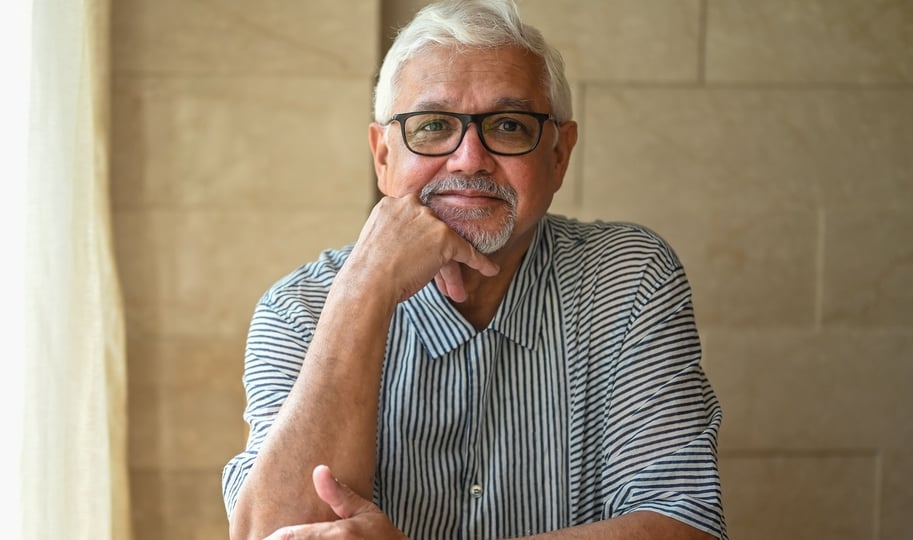
Amitav Ghosh’s new book, ‘Wild Fictions’, is a work of non-fiction that makes a plangent argument for fiction. It locates the diagnosis of truth, about humankind, nature, peregrination, war, and words, in stories – and more important, in the act of storytelling. Ghosh demonstrates this in the 26 essays that give the book its form and scaffolding. The author, in Mumbai for the launch of ‘Wild Fictions’, spoke to Jaideep Giridhar about the broad themes that animate this book, and his body of work spanning nearly four decades. Edited excerpts:
There are a few recurring motifs in your work – in this collection of essays and the rest of the books – that inform your approach to stories. One of them is science. Your first work, ‘The Circle of Reason’, uses phrenology [the study of the shape and size of the cranium as an indication of character and mental abilities]. Later, in books like ‘The Hungry Tide’ [set in the Sunderbans], scientific discovery plays an important role in how the story unfolds. How did this come about?
In a lot of my work, science as a way of knowing and a form of knowledge has been important, going back to ‘The Circle of Reason’ and phrenology. For ‘The Hungry Tide’, I became immersed in geology, zoology, and botany. The Sundarbans particularly drew me to geology – it's a very geologically active landscape where islands appear and disappear. I spent time with a cetologist studying Irrawaddy dolphins, accompanying her on surveys from Cambodia to the Laos border.
A theme that’s closely related is nature and climate change, but you don’t romanticise humankind’s relationship with the natural world, which is a characteristic you describe in the title essay of ‘Wild Fictions’. You also invoke writers like Shivarama Karanth, who adopted a similar approach. How do you reconcile the empirical approach of someone like a cetologist with the more organic, vernacular understanding found in Indian literature?
That's a question with many aspects. Writers like Shivarama Karanth, Kuvempu, and others across Indian languages had a deep engagement with the natural world. This was characteristic of that entire generation, whether it’s Gopinath Mohanty writing in Odia or Mahasweta Devi in Bengali. However, today's writers are mostly urban and writing a more global kind of fiction focused on identity issues.
While the writers you speak of had a more organic relationship with nature, it seems that contemporary authors find it almost fashionable to pick up climate change as a subject. Why do you think this shift has occurred?
It's easily explained - it begins around 1990 when global greenhouse gas emissions started rising steeply, coinciding with neoliberal globalisation. This has had a profound impact on literature, art, and literary tastes. Writers across languages are now writing with international prizes like the Booker in mind.
Doesn't this shift away from local storytelling seem counterproductive, especially when contrasted with the kind of work you do, which aims to communicate and make indigenous ideas accessible?
I completely agree. Although I've engaged with science, I don't privilege it over other forms of understanding or knowing. That's a constant theme in my books. Science is in many ways very limited. People writing "climate fiction" are actually limited by the science – if all you're doing is putting a story on top of scientific findings, what's of interest in that? Writers like Karanth used dialect heavily because there are many things that you can't really write about in English the same way.
You also point out how science itself is based on indigenous forms of knowing that aren't acknowledged.
Yes, in my book ‘The Calcutta Chromosome’, I found through reading Ronald Ross's diaries that every one of his so-called discoveries was suggested by his native assistants. Most of this knowledge was already known. In the Nilgiris, local people knew malaria came through specific types of mosquitoes. There's also the history of vaccination, which was ancient knowledge carried from India to Britain via Turkey. Many early Western natural historians often concealed their sources and wouldn't acknowledge native discoveries. Everything had to appear to come from the West.
The other theme that occurs in your work is migration and how the narrative about migrants is being shaped in the West, by powerful figures like Elon Musk, for instance. What's your view on multiculturalism in the West – is it a zero-sum game, or do you see hope for it?
The question of multiculturalism was actually a kind of policy position that had very bad effects. Under multiculturalism, they would identify certain members of the community as representative, invariably choosing the most right-wing elements. For example, they would take very extreme fundamentalists as representatives of Islam. In some bizarre way, they created the problem by supporting these elements.
How does this contrast with multiculturalism in India, which has over 1,600 languages and various religions, sects and castes?
You can't compare them. In India, you have entire communities living together – families, men, women, children. In the West, the profile of migrants is completely different: overwhelmingly male, overwhelmingly young. That demographic profile creates problems – these people are completely alienated from the society around them and have no compensatory mechanisms.
But don't we see similar situations in India, like tenements or ghettoes peopled with migrants from a particular region?
There are similarities, but within the Indian subcontinent, you get what's called circulatory migration – they come for six months, go back to their families, then return. With Arab, Pakistani, and Syrian migrants in the West, they can't do this because of immigration structures. They have to wait years for papers, their passports are often taken away, and they're trapped without family interaction. It's a very artificial situation, completely different from the circulatory migration we see within India or between India and the Gulf.
One of the aspects of the migrant experience you describe in Wild Fictions has to do with the technological disruption that mobile phones have caused – helping create informal information networks that migrants can use to navigate journeys. While that technology was a disruption that began in the 2000s, the new technological disruptor appears to be generative artificial intelligence. How do you view this as an anthropologist?
I think this sudden AI obsession is just one of those social media-fuelled things. My nephew is actually the CEO of an AI company, and he always says it's just a tool like any other. I find AI useful.
And how do you view it as a writer? Doesn’t the tendency of AI models being trained on work that is the intellectual property of an author worry you?
The Authors Guild and PEN have been suing many AI companies. I think it's unethical - they should pay us royalties. Writers should absolutely be involved in these conversations about how their work is used.

Stay updated with all the Breaking News and Latest News from Mumbai. Click here for comprehensive coverage of top Cities including Bengaluru, Delhi, Hyderabad, and more across India along with Stay informed on the latest happenings in World News.


