
 E-Paper



BMC to introduce QR code system for banners/hoardings to weed out illegal ones
The move comes in the wake of the state urban department’s directive in mid-November to the BMC and other municipal bodies to earmark designated spaces for outdoor posters, hoardings and banners and submit a list to the state government


In a heartening development for a city overrun by illegal banners, posters and hoardings, the civic body will henceforth use a QR code-based system to take timely action against these. According to the Brihanmumbai Municipal Corporation (BMC), private premises will be the only designated spaces for hoardings, banners, flexes and posters, and the QR codes embossed on them will be the deciding factor in their legality.
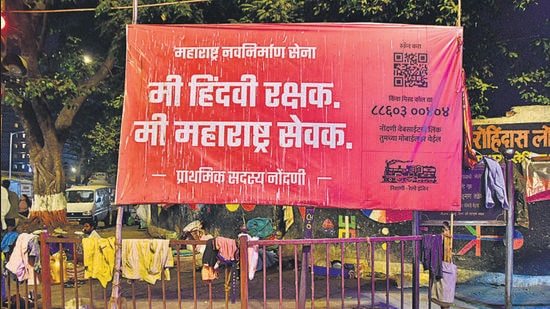
The move comes in the wake of the state urban department’s directive in mid-November to the BMC and other municipal bodies to earmark designated spaces for outdoor posters, hoardings and banners and submit a list to the state government. The orders were issued so that action can be taken against those installed outside the designated areas.
A civic official from the removal of encroachment department, when asked about the illegal banners and posters on footpaths and roads, said that the BMC had never granted permission for these, so there was no question of designated places for them. “We only grant temporary permissions for banners and hoardings in private premises by obtaining an NOC from the landlord,” he said. “Political/ religious banners, posters and temporary hoardings on roads and footpaths are deemed illegal and will be pulled down.”
The BMC will conduct repeated drives and take action under Section 328/471 of the MMC Act, under which violators are liable for prosecution. “We will ask the police to register an FIR against the offender,” the civic official said.
Regarding QR codes, the civic official explained that when an advertiser submitted an application with an NOC from the land owner, the BMC would now insist that a QR code be published on the banner/poster. These codes will be imprinted on all authorised hoardings and other publicity material, which will help in identifying the illegal ones. Through the QR code system, the concerned authorities can check all the related information such as the name of the applicant, permission number, area and the duration for which permission has been granted to put up hoardings.
The UD department had also directed the urban civic bodies to set up a mechanism through which the local police get information about daily permissions provided by the civic bodies for putting up such hoardings/banners. It had further directed them to identify dedicated spots where authorised hoardings/banners could be put up after getting due permission.
At present, there are 1,000 approved commercial hoardings in Mumbai with permissions dating back to 1970. “The huge hoardings are usually on terraces, and QR codes cannot be scanned at such heights,” said the civic official. “So, at such places BMC will put up boards declaring the name of the advertiser, permit number and other details. This information will also be updated on BMC portals.”
The Bombay high court on October 13, while hearing a public interest litigation on illegal hoardings, had directed the BMC to take action against these. The HC also asked the BMC to consider the suggestions made by the state nodal committee to have dedicated spots in the city for putting up hoardings, and maintaining and updating the database of permissions granted, embossing QR codes on hoardings for easy verification of permissions and requisitioning special vehicles to remove hoardings.
Stay updated with all the Breaking News and Latest News from Mumbai. Click here for comprehensive coverage of top Cities including Bengaluru, Delhi, Hyderabad, and more across India along with Stay informed on the latest happenings in World News.


