
 E-Paper



HC-appointed panel recommends steps to shield city’s high-rises against bomb blasts, fires
A committee appointed by the Bombay High Court has recommended changes to the city's development control regulation to protect vital establishments from man-made disasters such as bomb blasts and fires. The panel proposed designing blast-resistant buildings, installing fire towers in buildings over 27 storeys tall, and implementing fire tanks and break tanks in high-rises. The committee also prepared a list of 472 installations, split into three categories according to risk level, and recommended fire safety drills, evacuation signboards and distribution of fire safety plans to occupants.


A Bombay high court-appointed committee has recommended changes in the development control regulation (DCR), among a slew of measures, to protect the city’s vital establishments from man-made disasters such as bomb blasts and fires.
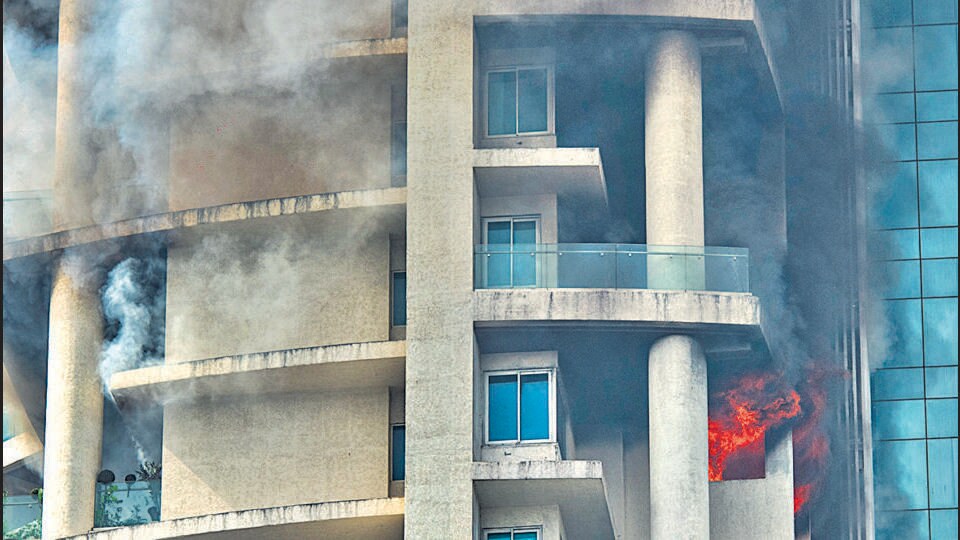
The panel that studied major fire incidents in high-rises in the last few years submitted its report to chief minister Eknath Shinde on Wednesday. It is headed by retired IAS officer Praveen Pardeshi and comprises additional chief secretary Sujata Saunik and experts from various fields.
As per the report, the DCR could be tweaked to design blast-resistant buildings while a fire tower could be set up in buildings with a height of more than 90 metres (27-storeyed) to help fire brigade personnel evacuate occupants. It has also recommended fire tanks and fire break tanks in high-rises.
An official from the urban development department said, “The committee was appointed by the HC last year when it was hearing a PIL plea related to man-made disasters. After the 2008 blasts, the urban development department was asked to prepare security control rules for the protection of citizens at hotels, workplaces, malls, and markets. Since then, the state has made several changes. Recently, the government amended the fire safety Act as per the national building code and has mandated stricter norms.”
The committee has prepared a list of 472 installations, which include religious, healthcare and academic buildings, and has divided them in three categories. While 67 of them are at the highest risk in case of bomb blasts like the ones in 1992 or 2008, as many as 253 are at the lowest risk and 152 are in the moderate category.
The members visited a few buildings like the Bombay high court, Sion Hospital etc. and recommended certain mitigation measures.
Fire safety drills every three months and installation of signboards for evacuations are also among the recommendations made in the 323-page report. The panel has suggested distribution of the fire safety plan to all the occupants.
“A short circuit is the dominant cause in 71% of the total fire incidents in the city. Addressing the underlying causes of electrical fires will result in a significant decrease in the frequency of incidents,” the report added.


Stay updated with all the Breaking News and Latest News from Mumbai. Click here for comprehensive coverage of top Cities including Bengaluru, Delhi, Hyderabad, and more across India along with Stay informed on the latest happenings in World News.


