The latest National Family Health Survey -5 presents some sobering data on the health of India’s youngest. Eighty nine percent of children between six to 23 months (less than two years of age) do not receive a “minimum acceptable diet.” In Maharashtra, the proportion is higher; only 8.9% of this age group receives an adequate diet. Malnutrition is not a new problem for a country like ours, where dietary habits, access to staples and socio-economic vulnerability present a problem, both in rural and urban populations. Last year’s NFHS data for Mumbai suburban showed that 7.2% of children under the age of five are severely wasted (weight to height ratio) 18% are wasted, and 24.6% are underweight.
Since 2019, we have worked with the Foundation for Mother and Child Health (FMCH), a non-governmental organisation (NGO) that works with the urban poor in Mumbai and its suburbs, supporting over 50,000 beneficiaries. Field workers are trained to conduct door-to-door visits to provide the support that pregnant women, lactating mothers and children up to two years would need to cut malnutrition at its bud.
Our foundation’s thrust is to build the capacity of NGOs. In this instance, we found the biggest support we could offer FMCH was to help build them a digital platform. Technology, we found, really can help control widespread malnutrition across communities.
In each home visit, NGO teams need to share relevant health content (for instance, good practices for nutrition of mother and child, guidelines for breast-feeding, vaccination schedules), as well as conduct anthropometry — measure the height and weight of the child; the most important indicator of malnutrition — at specific intervals. So where does technology come into the picture?
Over rounds of discussions with the NGO we helped create NuTree, a mobile application for the Android platform. The NuTree platform allows field workers to register beneficiaries and also record visits. We launched the first phase in 2020 across communities in Bhiwandi, Kurla and at Wadia Hospital and for starters, included a comprehensive decision tree for each type of visit that guided the field worker on the type of questions to be asked, and also provided visual content like pictures and videos to help explain concepts better. For instance, a pregnant woman is asked if she has gone for her ante-natal check-up (ANC). If she has, she is asked to furnish more details – how many visits are over, when she went etc. If she hasn’t gone for any check-up, she is counselled on its importance and given crucial information on where she could go. Field officers are also prompted to ask about the frequency of meals and diet diversity. They go through the NuTree questionnaire and enter the data in the app, saving crucial time.
{{/usCountry}}Over rounds of discussions with the NGO we helped create NuTree, a mobile application for the Android platform. The NuTree platform allows field workers to register beneficiaries and also record visits. We launched the first phase in 2020 across communities in Bhiwandi, Kurla and at Wadia Hospital and for starters, included a comprehensive decision tree for each type of visit that guided the field worker on the type of questions to be asked, and also provided visual content like pictures and videos to help explain concepts better. For instance, a pregnant woman is asked if she has gone for her ante-natal check-up (ANC). If she has, she is asked to furnish more details – how many visits are over, when she went etc. If she hasn’t gone for any check-up, she is counselled on its importance and given crucial information on where she could go. Field officers are also prompted to ask about the frequency of meals and diet diversity. They go through the NuTree questionnaire and enter the data in the app, saving crucial time.
{{/usCountry}}In the second phase, launched last year, the app included decision trees for children with severe acute malnutrition (SAM) and moderate acute malnutrition (MAM) after FMCH realised that they didn’t have a standardised protocol for visiting and managing such cases which was lowering the impact of their programmes. Accordingly, they defined a protocol which ensured consistency across field workers and higher quality of care: They standardised once-a-week visits for SAM cases and fortnightly visits for MAM cases, with detailed questions for each visit. Almost immediately, within 3-5 weeks, they were able to record improvements in the health of beneficiaries.
This phase also included a module for field workers to schedule their day: each person now had a list of visits due, by date and location, as well as overdue visits. Data after just four months of usage showed that the percentage of high-risk mothers who missed visits went down from 58% to 37%, pregnant mothers who missed anthropometry visits went down from 40% to 20% and children who missed anthropometry visits each went down from 30% to 14%. FMCH found that the app allowed a field officer to handle 100 more families on average– a 50% increase in their productivity.
The government’s anganwadi system takes care of the health and nutrition of pregnant women, lactating mothers, and children from zero to five years in addition to several other aspects of health and education. While the system itself is vital to the long-term well-being of the community, the current set up has gaps, like insufficient leadership and inadequate training for anganwadi workers to counsel mothers. Furthermore, their visits require additional data entry, and tracking hundreds of mothers, children and visits adds to the anganwadi worker’s burden.
Implementing the right technology, we found, not only improved the field worker’s efficiency by taking a load off of their backs, but also ensured consistency and accountability as the NGO leaders could monitor what’s happening on ground. While adoption of technology cannot solve all problems, it clearly provides tools to equip our community workers and enables them to become more effective in resolving widespread malnutrition.
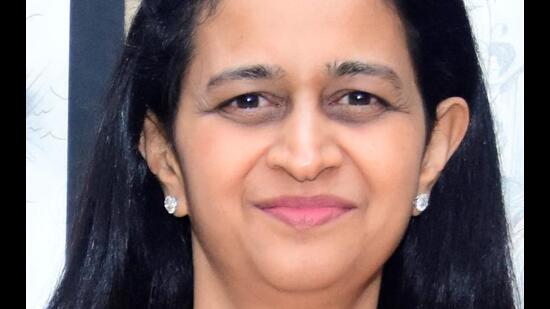
Rekha Koita is the co-founder and director of Koita Foundation, a philanthropic venture that works on digital transformation of NGOs in areas of livelihood, education and healthcare. The foundation also works on adoption of digital health in India and is supporting the Government of India’s roll out of the Ayushman Bharat Digital Mission
Stay updated with all the Breaking News and Latest News from Mumbai. Click here for comprehensive coverage of top Cities including Bengaluru, Delhi, Hyderabad, and more across India along with Stay informed on the latest happenings in World News.
Stay updated with all the Breaking News and Latest News from Mumbai. Click here for comprehensive coverage of top Cities including Bengaluru, Delhi, Hyderabad, and more across India along with Stay informed on the latest happenings in World News.