
 E-Paper



Data on caste-related deaths at educational institutes is telling
To quote a few grave and blatant instances: Aniket Ambhore, a third-year Dalit student at IIT-Bombay died by suicide in 2014. In January, 2016, Rohith Vemula, a brilliant student of the Central University of Hyderabad -- known to me for five years -- was harassed by reactionary social and political forces (including the University administration) to the point where he chose to end his life

 Prefer HTon Google


Mumbai: With the recent alleged suicide of Darshan Solanki, an 18-year-old Dalit student at IIT-Bombay, the ugly face of caste-based discrimination in Indian institutes of higher education has resurfaced. Caste is a defining characteristic of Hindu society, and Indian society at large. Despite Constitutional and other legal measures being in place, caste-bias dominates every aspect of our lives.
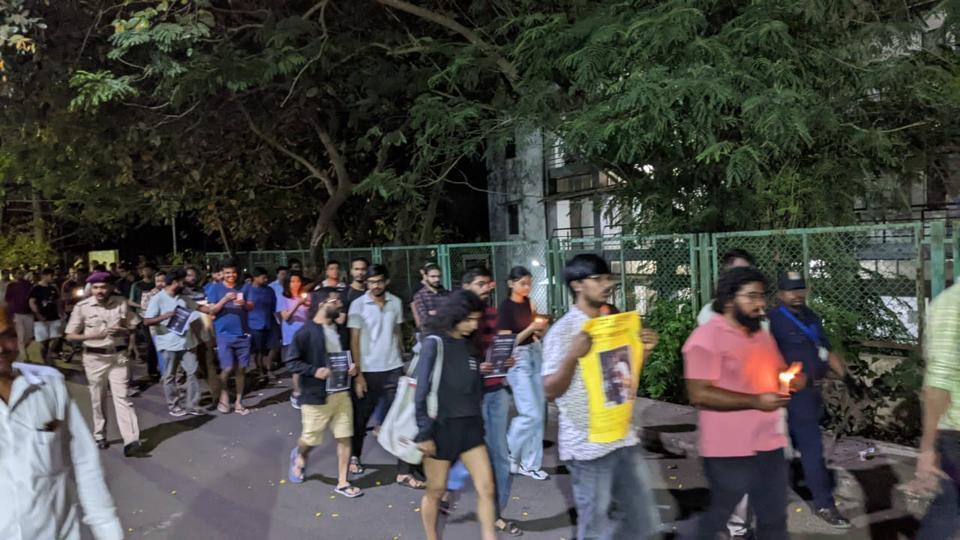
To quote a few grave and blatant instances: Aniket Ambhore, a third-year Dalit student at IIT-Bombay died by suicide in 2014. In January, 2016, Rohith Vemula, a brilliant student of the Central University of Hyderabad -- known to me for five years -- was harassed by reactionary social and political forces (including the University administration) to the point where he chose to end his life. A founder of the Ambedkar Students Association at UoH, Vemula was targeted for his bold criticism of various injustices meted out by the University towards students from backward castes. I had personally filed an FIR in the matter with the Hyderabad Divisional Commissioner of Police. I had given a breach of privilege motion in this matter against the-then HRD minister in the Rajya Sabha, though it was not accepted.
In 2019, Payal Tadvi, an Adivasi student in her final year of Doctor of Medicine (MD) study, was tortured by three so-called upper caste colleagues, including her hostel roommate, as a result of which she chose to end her life. The Bombay High Court took a very serious view of the incident and the guilty parties were denied their MD degrees for about two or three years. But later, considering their future careers, the court acquitted them.
According to a statement made in the Parliament by Dharmendra Pradhan, the Union Minister of Education, 122 students have committed suicides in IITs, NITs, Central Universities, and IISERs in the country in the period between 2014 to 2021. All these students belonged to the SC, ST, and the OBC communities. Isn’t this shameful for a country which claims to preach the gospel of Vasudaiva Kutumbkam?
Notwithstanding the troubling report of the internal committee appointed by the IIT-B administration to probe Solanki’s death, there is enough information to show that there is, in fact, a strong caste angle to the incident. The most outrageous aspect of this entire episode is that Solanki’s post-mortem was done without the consent of his father, and his body was not shown to his relatives who were in Mumbai the night before the autopsy.
During my tenure in the Rajya Sabha -- as the Chairman of the Enquiry Committees in such matters -- I directly observed such caste-based discrimination in places of higher education. My experience led me to move a Personal Bill in the Rajya Sabha, ‘The Scheduled Castes and Scheduled Tribes (Prevention of Caste-based Discrimination in the Institutes of Higher Learning) Bill’ in 2016.
The Bill’s preamble outlines the prevalence of caste-bias in such spaces, and how higher education is failing to make newer generations of students aware of the same. The Bill provides a mechanism to strengthen broad-based counselling, increasing engagement between teachers and students, and amongst students themselves to ensure a healthy atmosphere on campuses, and also to engage professional mental health services for students in need.
Dalit lives matter. Until caste is ‘annihilated’, such discrimination will continue. A civilised society must make an honest effort to change its ways, and prevent further instances in which students from marginalised communities feel forced to take such a tragic decision.
(The author is a former Member of Rajya Sabha, and former Vice-Chancellor, University of Mumbai.)


