Maharashtra will become the first state in India to tokenise land using blockchain technology, to unlock the full value of property, thus enhancing liquidity in the real estate market while also improving transparency.
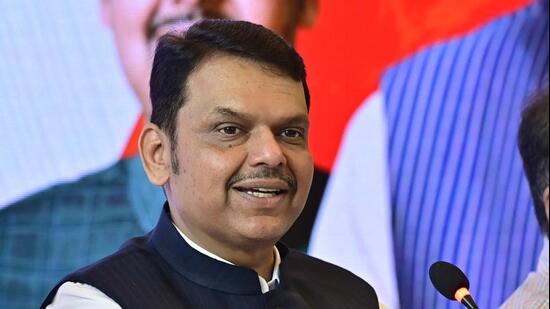
To this end, the state government is developing a legal framework that will eventually translate into the proposed Maharashtra Digitisation and Exchange of Land Token Asset (Delta) Act, said chief minister Devendra Fadnavis at the Global Fintech Fest 2026 in Mumbai on Wednesday.
The framework will be developed with inputs from the Securities and Exchange Board of India (SEBI), Bombay Stock Exchange (BSE), National Stock Exchange of India (NSE), as well as experts from industry, technology, law and academia, he said.
Also read: Maharashtra CM Fadnavis announces legislation for land tokenisation
How land tokenisation would work
Real estate tokenisation is the process of converting the value of a physical property into digital tokens that can be bought, sold or traded on a blockchain platform. Each token represents a fractional ownership stake in the property, allowing investors to gain exposure to property without purchasing an entire asset.
{{/usCountry}}Real estate tokenisation is the process of converting the value of a physical property into digital tokens that can be bought, sold or traded on a blockchain platform. Each token represents a fractional ownership stake in the property, allowing investors to gain exposure to property without purchasing an entire asset.
{{/usCountry}}So, for instance, a property worth ₹1 crore could, depending on the legal structure, be represented by 1,000 digital tokens, with each token representing a portion of the property’s value or associated rights.
₹50 lakh crore in land assets could come under framework
Land assets that will be covered under the new framework are estimated to be worth ₹50 lakh crore, said Fadnavis but did not elaborate. While tokenisation could be applied to different types of real estate, the properties that will be tokenised, along with the legal rights attached to these tokens, will be determined by the provisions of the draft law to be introduced by the state government.
“For generations, land has represented wealth in India but very often it is wealth without liquidity,” he said. ”A family may own an asset of significant value but struggles to access capital against it efficiently. Similarly, entrepreneurs may hold valuable assets but be unable to unlock their economic potential quickly. Tokenisation could help address this challenge by improving transparency and liquidity while enabling owners to unlock the economic value of their assets,” he added.
Also read: Cops probe fake Kurash certificates used to bag government jobs under sports quota in Maharashtra
“Let me make one thing absolutely clear. For us, tokenisation is not about speculation, it is about unlocking productive capital. Ultimately, it is about converting dormant wealth into economic opportunity,” said Fadnavis, adding that operationalising the Delta Act would require significant collaboration between the Union and state governments.
Maharashtra seeks to build fintech innovation ecosystem
Fadnavis also said the state is building an ecosystem around artificial intelligence (AI), data centres, global capability centres, start-ups, universities and advanced technology. “I want technology companies and financial institutions to view Maharashtra not merely as a market but as a laboratory for innovation,” said the chief minister.
He invited companies to bring their “most ambitious ideas” across sectors such as agriculture, MSMEs, urban governance, mobility, healthcare, financial inclusion, fraud prevention and public finance. “Maharashtra will remain at the forefront of this transformation and develop as the country’s largest real-world test-bed for next-generation fintech solutions,” he said.
Also read: Prolonged dry spell impacts Kharif crops in Maharashtra: Officials
The event concluded after MMRDA handed over allotment land letters to SEBI, NSE and the Enforcement Directorate (ED). Together, the three allotments carry lease premiums totalling ₹2,652.37 crore. SEBI has been allotted 16,000 sq m of built-up area at a lease premium of ₹606.32 crore; NSE 43,980 sq m for ₹1,684.32 crore; and the ED has been allotted 10,500 sq m at a lease premium of ₹361.73 crore.
Stay updated with all the Breaking News and Latest News from Mumbai. Click here for comprehensive coverage of top Cities including Bengaluru, Delhi, Hyderabad, and more across India along with Stay informed on the latest happenings in World News.
Stay updated with all the Breaking News and Latest News from Mumbai. Click here for comprehensive coverage of top Cities including Bengaluru, Delhi, Hyderabad, and more across India along with Stay informed on the latest happenings in World News.