
 E-Paper



Malavika’s Mumbaistan: Strangers in The Night
(Cities) differ from towns and suburbs in basic ways, and one of these is that cities are, by definition, full of strangers


(Cities) differ from towns and suburbs in basic ways, and one of these is that cities are, by definition, full of strangers. - Journalist, author and urban theorist, Jane Jacobs
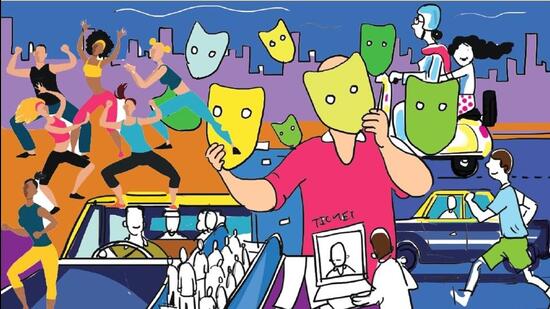
Who is not familiar with the ‘stranger in the city’ trope? From Muzaffar Ali’s Gaman, about a migrant worker forced to find work in Mumbai as a taxi driver, while struggling to come to terms with the alienation and loneliness of the big, bewildering city, to Anuraag Basu’s Life In a Metro, an account of nine people adrift amongst a sea of strangers trying to cope with the vicissitudes of love, loneliness and loss in Mumbai, to Kiran Rao’s Dhobi Ghat, about a set of characters in search of meaning among the multitudes, hundreds of auteurs have tried to convey the alienation and isolation of big city blues; that peculiar feeling that cities like Mumbai impart to those who belong and those who are visiting – of that of being surrounded by and sharing their waking lives with hundreds of faceless, nameless people - who they will never know…
***
Strangers: At ticket counters and clinics; inside railway stations and salons, behind store fronts, coffee shops and the windows of passing cars and trains and in cinemas, restaurants and elevators: the people we constantly brush up against, share moments and experiences with but who appear like silent bit -players in the show reels of our lives. The little school girl, riding pillion on her mother’s scooter who blushes and then waves shyly, back when you catch her staring intently at you, one random afternoon, at a busy traffic light; the anxious young man at the hospital OPD, late one night, most likely feigning his migraine, when everyone, you, the other patients and even the presiding nurse know that all he really looking for is a human connection, someone who will speak kindly to him, in the panic attack of waking alone in a city that overwhelms him; the garrulous taxi driver who shares his world view, his political expertise, his family tree and the names and brief lives of every fish he’s ever owned, without so much as a by -your -leave, and knowing full well that he might never see you again; or the hopelessly out of step senior citizen in your Zumba class, there to soak up every last morsel of energy and joie that comes her way, to feel in touch with life; all part of the mosaic of life in a big city and those fleeting moments when the nameless, faceless stranger behind their mask of anonymity and estrangement, suddenly breaks through as a face, a heart, a story…
***
Few films have captured the tender, miraculous moment of connection between strangers in a big city, than Ritesh Batra’s The Lunchbox, where an undistinguished, everyday tiffin, passing between two lost souls, lights the spark of a bond, turning the banal and forgettable routines of life into something worthy of the human spirit. Through its telling, we see how, even amidst the grinding, everyday rigour of Mumbai’s daily existence, a couple can find expression, can seek love, can triumph over loneliness and hope to find meaning to their lives. If anything, The Lunchbox shows us how what we are searching for, is often right before us and besides us, if we only had the sense to stop and look. ‘No one is a stranger, my child;’ As Sarada Devi, the wife and spiritual consort of Ramakrishna Paramahamsa, the nineteenth-century Hindu mystic had said so wisely, so many years ago: ‘Learn to make the whole world your own’.
***
Ever since I’ve been a child, the business of watching strangers has fascinated me. To watch people as they go about their lives, unselfconsciously and anonymously, in hotel lobbies, airports, stations and other public spaces has been an abiding passion. Mumbai, like every other big city, is a haven for people -watching. An evening spent in Marine Drive, as the city comes out for its breath of fresh air (or for ‘hawa khana’ ‘to eat air’ as it is delightfully described in local patois) can be more entertaining and enlightening than much of what you will see on screen, or stage, or read between the pages of a book.
People, uninhibited and en masse, in groups and alone, with purpose or in aimless reverie, offer up a peerless insight in to the myriad colours and moods of the human spirit; show us again and again, how beneath it all, we are more alike than we will ever imagine.
***
Last week was witness to a strange occurrence: 19-year-old army aspirant Pradeep Mehra turned into a household name when a video of him shot by a stranger in a passing car became a viral sensation. The situation was one that occurs perhaps a million times in every big city. A passenger in a car, idly staring outside his window at the everyday street scenes unfolding around him, spots a young boy, running late one night, past him with the grace of a gazelle, but the determination of a cheetah- running as if his life depended on it. But this time, as a breakaway from the usual script, the passenger suddenly decides to interject himself in to the pantomime outside his window.
“Hey! Who are you? Where are you running so late?” he enquires of the boy, while capturing the interaction on his cell phone. “Let me give you a ride…” And then the responses come and suddenly, before our eyes, the strange, graceful, fleeing phantom, becomes a human being -and then a hero. He’s running for a purpose, he replies, over his shoulder to the passenger. To keep his daily physical regimen going, to qualify for a post in the army.
A young boy, supporting himself and his family with his earnings at a fast-food centre in Noida, running late at night, his mother in hospital, his father a victim of mental illness, his equally harried brother, waiting for him to prepare dinner…
From the everyday and banal, we are transported to the heroism of the exceptional. Mehra cheerily lopes on into the night, as the passenger most likely overwhelmed by that unexpected encounter, shares it with his followers and suddenly the banal and common place becomes extraordinary, remarkable and unforgettable. Just a fleeing boy, who you and I have overlooked and ignored outside our windows, a million times. Now a story of grit and courage that we can never forget.
Indeed, this edifying, inspiring recent incident proves once again what I have always known: that the strangest thing about this business of strangers is that we believe they actually exist, when in fact, as in the case of Mehra, we see how the stranger in the big city, who we encounter on the road, in the queue, or in the elevator besides us could cease to be one, in the instant of a magical moment when we roll down our windows and step outside and beyond the silos and cells we’ve imprisoned ourselves in- and ask-“Hey, who are you? Where are you going? Won’t you please tell me your story…”
Stay updated with all the Breaking News and Latest News from Mumbai. Click here for comprehensive coverage of top Cities including Bengaluru, Delhi, Hyderabad, and more across India along with Stay informed on the latest happenings in World News.


