
 E-Paper



Mergers and acquisitions in Maharashtra’s politics
Party splits and rebellions are not new to the state but recent rebellions point to a changing political dynamics

 Prefer HTon Google


The high-decibel political drama in Maharashtra in the last two years has revolved around two regional parties, the Shiv Sena and the Nationalist Congress Party (NCP), splitting. While these splits are unprecedented in their scale and design, this is not the first time that the state has witnessed such political rebellions.
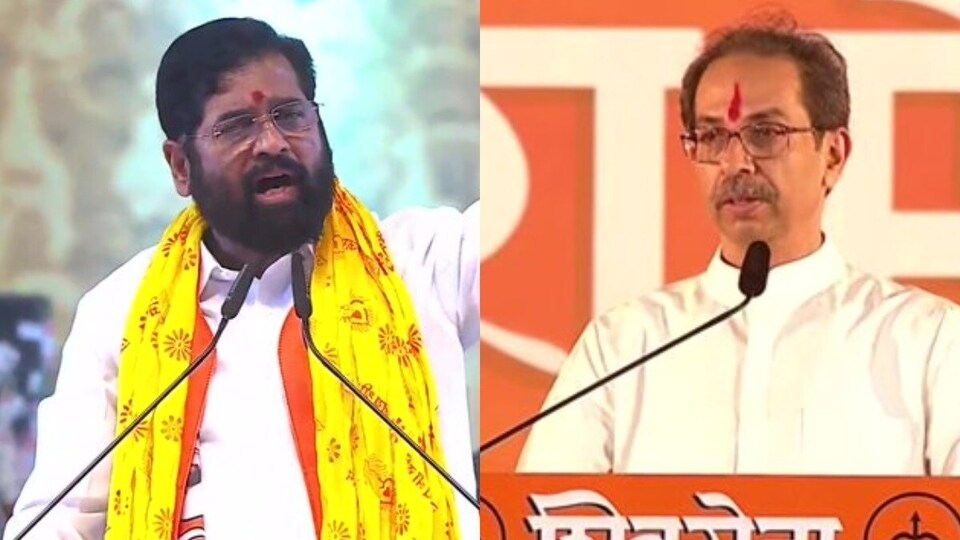
The first major political split that rocked the state was in 1978 when Sharad Pawar broke away from the Congress along with 38 MLAs to form the Progressive Democratic Front government in alliance with the Janata Party and the Peasants and Workers Party. At 38 years, Pawar then emerged as the youngest chief minister that Maharashtra has witnessed, so far. While this has some echoes of the Sena split by the now CM Eknath Shinde in terms of its impact of toppling the incumbent government and getting the top ministerial chair, the similarities end there. This breakaway faction did not claim to be the original Congress party, it called itself the Indian National Congress (Socialist) or the Congress (S).
Pawar’s Congress (S) merged back with the parent party in 1986. The second time Pawar split from the Congress was in 1999 with the support of 22-odd MLAs and around nine sitting MPs. This time around, he formed the Nationalist Congress Party (NCP). The grounds for the split at the time were the foreign origins of Sonia Gandhi and that of Marathi asmita or pride. The NCP contested the 1999 elections on its own and won 58 seats but post-polls struck an alliance with the Congress to form the government.
NCP splits
The Congress-NCP government in Maharashtra ruled from 1999 to 2014. In 2004, NCP faced a challenge though not in Maharashtra when one of its founding leaders PA Sangma broke away along with the Meghalaya unit and claimed to be the real head of the party. Sangma wanted to align with the Bharatiya Janata Party-led National Democratic Alliance (NDA) and not the Congress in the 2004 polls. This tussle over the party symbol and leadership was fought in the Election Commission.
NCP faced a rebellion in 2019 when Pawar’s nephew Ajit Pawar in a secret early morning ceremony took oath as the deputy chief minister with BJP’s Devendra Fadnavis as the chief minister. But, this coup backfired when Ajit’s supporters were successfully recalled by senior Pawar.
Sena splits
The Sena faced its first big challenge in 1991 when one of its senior leaders Chhagan Bhujbal broke away claiming the support of 17 out of the then 52 MLAs. This coup was unsuccessful as all but one MLA returned back to the fold. Bhujbal joined the Congress under Pawar’s mentorship and went on to fashion himself as one of the tallest Other Backward Class (OBC) leaders in the state.
The second challenge for the Sena was in 2006 when founder Bal Thackeray’s nephew, Raj Thackeray, upset at being sidelined, resigned from the party and set up his own political party, the Maharashtra Navnirman Sena (MNS). While Raj did not engineer a party split by breaking away MLAs, MNS won the support of many Sena party workers, leaders and the party vote share in the next polls. In the 2009 polls, MNS won 13 legislative seats in Maharashtra. However, MNS failed to make a bigger dent in the Sena post its initial wins and Uddhav Thackeray managed to successfully steer his father’s party until Shinde arose as a challenger.
Despite claims made by political leaders and parties, Mrudul Nile, professor in the department of civics and politics at Mumbai University, points out that all political splits so far were the result of internal factionalism and power struggles with breakaway leaders eyeing greater political power, posts and money. “No split can be credited to ideology, ideals or welfare of people," Nile added.
The difference between then and now
However, there are two significant differences in the way these current political splits were designed and will play out and shape political futures.
“Prior to 2022, barring Sangma’s claims, disgruntled factions or leaders, who split the parties, did not claim the right to the original party. The groups or leaders broke away to form their own outfits or joined another party. Eknath Shinde and then Ajit Pawar, have however claimed that their factions represent the original party," said Abhay Deshpande, political analyst and commentator.
This strategy is to avoid disqualification under the Anti-Defection Law (amended in 2003), which does not recognise a split in the legislature party. Prior to the amendment, if one-third legislators of a political party broke away to form a separate faction, they were exempted from disqualification. The amendment provides an exemption from disqualification only when at least two-thirds of party legislators break away and merge with another political party.
The other major difference is the central role played by another political party, the BJP, in the current NCP and Sena split.
“In no earlier political party split has another political party played such a decisive role. The Sena and NCP rebellions have been engineered and managed by the BJP, using its clout. The Sena rebellion could be successful largely because of the role played by BJP leadership, specifically Devendra Fadnavis," said Mrunalini Naniwadekar, associate editor of Sakal newspaper and a political commentator. The Sena split was both a payback for humiliation and loss the BJP suffered when Uddhav Thackeray formed the MVA government with Congress and NCP, and a part of the 2024 electoral strategy, she added.
The NCP split, similarly, is to ensure that the BJP retains its seat share in the Lok Sabha polls in Maharashtra. The state elects 48 MPs to the Centre; in 2019, BJP-Sena together won 41 of the 48 Lok Sabha seats. Despite these splits, the Lok Sabha polls in Maharashtra are still not a done deal for the BJP.
Impact on state polity
For one, Nile points out, there is confusion and chaos for voters with both factions in the NCP and Sena claiming to be the original party. “The identity lines are blurring. What do each of these factions stand for in terms of ideology or issues? How do voters make a choice? This kind of politics erodes the political consciousness of people. We are increasingly moving towards a monolithic polity,’’ he said.
Naniwadekar also believes that these splits point to shrinking space for family-run regional parties like NCP and Sena in Maharashtra. “It will be difficult for these parties to retain their relevance and separate identity. The future of Sena is more uncertain than NCP unless Aditya Thackeray manages a fresh, new lease for the party,” she said.


