
 E-Paper



Most patients were referred from other hospitals in critical condition, finds preliminary report
A total of 38 people, including 12 newborns, have died at the Dr Shankarrao Chavan Government Medical College (DSCGMC) in Nanded, India. A preliminary report by a committee found that the majority of patients who died were referred from private and peripheral government hospitals in a critical condition. The hospital is now being investigated over the high number of deaths.

 Prefer HTon Google


Nanded: As politicians flocked to the Dr Shankarrao Chavan Government Medical College (DSCGMC) at Nanded on Wednesday morning, Laxmi Bai Tomse was inconsolable. Doctors had informed the family that her daughter Anjali Waghmare (22) had passed away in the morning.
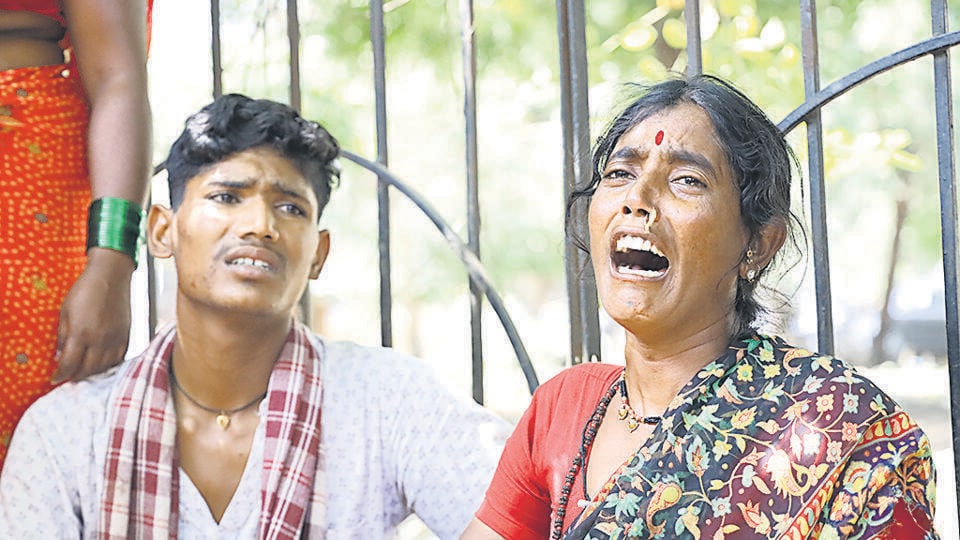
Anjali’s two-day-old son was one of the twelve babies who died on October 2. Twelve adults too passed away the same day, dragging the hospital into the media glare for seeing 24 deaths in 24 hours. Anjali’s death took the toll to 38.
The preliminary report by a six-member committee headed by DMER director Dr Dilip Mhaisekar found that of the 24 deaths, 17 were referred from private and peripheral government hospitals in a critical condition. The patient referrals were noted to be two-thirds of all the deaths. Of the 24 who died, eleven were neonates (less than one month of age). The committee observed that all were critical and on AMBU ventilatory support.
“This hospital is a tertiary care hospital,” said Abhijeet Raut, collector of Nanded. “A tertiary care hospital is associated with high mortality rates because most of the time patients are referred here when there is almost no chance to save them. Terminally ill patients too are shifted to such centres. However, 24 deaths on a single day is indeed alarming and needs to be thoroughly investigated.”
Raut said that the committee’s preliminary report also noted that patient referrals were high and patients were brought in in a critical condition.
“Also, after verifying documents and interrogating the nursing staff and doctors, the committee found that all patients received appropriate management during hospitalisation,” he added. A state health department official, who is part of the inquiry committee, said that four or five deaths could have been avoided but most were inevitable.
“We have a 508-bed strength but treat more than 1,000 patients,” said dean Dr S R Wakode. “This is because of references from peripheral areas. We never deny treatment even if the patient is terminally ill. We get premature babies in a critical condition. We do our best to treat them.”
After the committee findings, state health officials also held an informal meeting with the Indian Medical Association (IMA), Nanded, requesting them not to refer patients unnecessarily to government hospitals. “It is not good on their part to call themselves multi-specialty hospitals and then refer patients to DSCGMC to ensure that their mortality rate is good,” said the official, adding that they were also asking the peripheral hospitals not to unnecessarily refer patients, especially critical and terminally ill patients. “It was observed that peripheral government hospitals are referring patients, who can be managed at their level,” he said. “This is increasing the burden on government medical colleges.”
NICU beds increased from 24 to 36
Post the incident, the NICU bed strength at DSCGMC was increased from 24 to 36. On an average, the NICU sees eight admissions every day. “On any given day, our NICU has over 60 babies,” said a doctor. “On October 3, we had eight new admissions. In the last 12 hours, we have had six. Fifty to seventy percent of the babies are referred from private hospitals and peripheral hospitals.”
Two resident doctors, one senior doctor and a nurse manage the NICU load. In the last three days, the resident doctors have barely slept. “We are working 24x7,” said a doctor. “Every half an hour, we have patients coming from the OPD, inpatient department and via referrals. Whenever there are long holidays, the referral numbers increase. Whether it is rural hospitals, primary health care centres or private hospitals, they refer patients to us. No one wants to take responsibility during holiday/festival time.”
Manpower, medicine shortage, diagnostic services not available
The 508-bed hospital treats 1,000 in-patients and sees more than 1,500 patients in a day in its OPD. It treats around 150 patients in its 64 ICU beds. However, the hospital does not have an MRI facility and its CT scan machine has been out of service for two weeks. Patients are referred outside for MRIs and sent to a civil hospital, 4.5 km away, for CT scans.
The hospital also has a shortage of medicines. Anjali’s family had to spend over ₹50,000 on medicines and 12 bottles of blood. Madhave Ghule, whose brother was admitted for food poisoning on October 4, was asked to bring medicines from outside. “I got him medicines worth ₹500. They also asked us to get saline,” he said.
While the six-member committee report said the hospital had enough stock of essential medicines, a doctor from the hospital agreed that basic medicines were in short supply. “Normal saline and ringer lactate—basic rehydration intravenous fluids required for critical patients—are in short supply,” he said. “Mannitol, another important drug used in head injury/ stroke patients, is also in short supply. Sterile water for injections and ORS, which is especially required for children, is also in short supply.”
An official from the hospital added there were vacant posts for doctors, nursing staff and Class 4 employees. “We need 43 more senior residents, ten assistant professors, seven associate professors and five professors,” he said. “There are as many as 263 nursing staff vacancies and 195 Class IV vacancies.”
While the state health department has decided to fast-track the recruitment process, the Waghmare family registered a police complaint at the Nanded Gramin police station, saying they had lost Anjali and her newborn due to negligence.


