
 E-Paper



‘No anti-incumbency against Modi government:’ Devendra Fadnavis
BJP leader Fadnavis defends Modi, criticizes Thackeray and Pawar in an interview. Claims strong response to Modi, dismisses low voter turnout narrative

 Prefer HTon Google


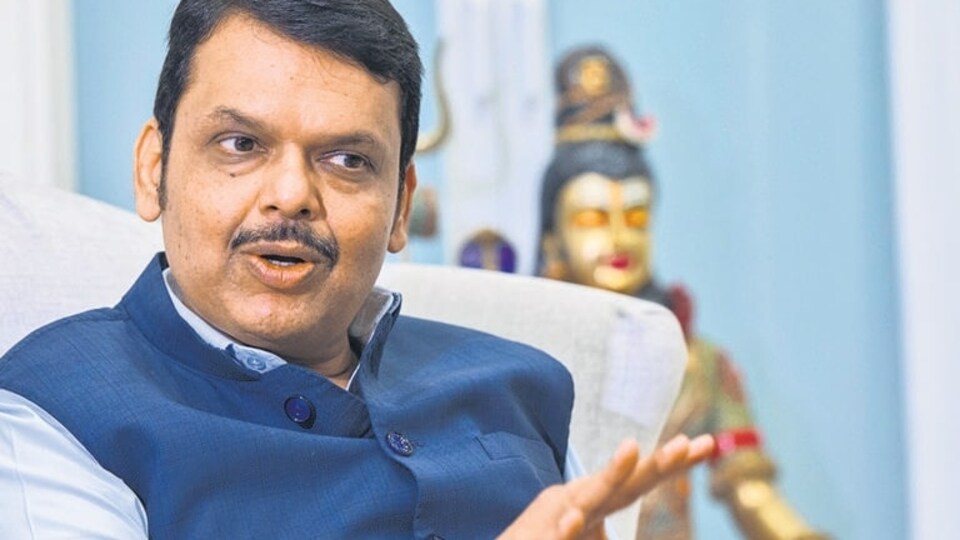
BJP leader and deputy chief minister Devendra Fadnavis defended Narendra Modi and hit out at Uddhav Thackeray and Sharad Pawar in an interview to HT’s Shailesh Gaikwad and Surendra P Gangan.
What kind of response have you seen in your campaigns as compared to 2014 and 2019? It is being said that the Modi factor is not as strong as earlier.
There is a tremendous, frenzied response to Modiji, even better than earlier. The crowd’s response is spontaneous, not that of a collected crowd.
*This is seen as a silent election. The turnout too is said to be low as compared to 2019. What does this indicate?
There is less noise among voters, and the reason is that Modiji has created a loyal voter base. In 2014, voters saw hope. In 2019, they saw a delivery of the promises. In 2024, they are confident of his government’s performance once it is back in power. The voters are now settled and need not assert themselves like earlier.
There is also a fake narrative being peddled that the turnout was low and people were unhappy. Only four out of 24 constituencies have seen less voting than in 2019. There is no significant dip in numbers.
*Ten years of governance can create anti-incumbency. Your party has changed several candidates to beat this.
As far as Modi is concerned, there is no anti-incumbency. It could be about a few individual candidates. People want Modi as prime minister again. People said they would not vote for the candidates but for Modi as PM.
*Modi has held more rallies than in past elections. Wasn’t it because there is a problem in Maharashtra?
He has held 12 rallies so far. This time, he is holding rallies even in allies’ constituencies since they cannot get 100 percent votes of the undivided parties they once belonged to. Modi’s rallies are being organised wherever we suspect a deficit.
*There has been an adverse reaction to the selection of some candidates, especially of your allies. They were also unhappy with the seat-sharing formula.
Allies can’t decide each other’s candidates. We can make suggestions but ultimately it is the right of each party. Whether the candidates fielded by them are right or not will be known after the results.
Both our allies (the Shinde Sena and Ajit Pawar NCP) wanted more seats. Shinde wanted 23, the number that the Shiv Sena had contested in 2019. But in a three-party alliance, you have to make adjustments. Our allies understand that. Even we wanted to contest more than 30. Ajitdada wanted 10 seats but settled for five.
*There seems to be an adverse reaction from people to the splits engineered in the Shiv Sena and NCP.
I don’t think so. Erstwhile Shiv Sena or Pawar loyalists may be unhappy, not the people. Common people know the feud was started by Uddhav Thackeray and not by us. The onus for the party splits lies with the respective party heads.
*How so?
Uddhav Thackeray wanted to be chief minister from Day 1. He was insecure about Shinde’s popularity among MLAs and tried to cut him down to size. Shinde was left with no alternative but to revolt. Ajit Pawar faced a similar situation. On several occasions, he was sent to us for negotiations by Sharad Pawar, who then changed his stand.
Ajitdada was made to look like a villain to promote Supriya Sule’s leadership, as Pawar wanted to hand over the reins of the party to her. We didn’t have a hand in the splits. Of course, we took advantage of them as a political party.
*But you yourself said at a function that you split the two parties.
It was a sarcastic comment in an informal show. The other day, Modiji made a similarly sarcastic comment when he publicly asked Sharad Pawar and Thackeray to come to the NDA instead of staying with a dying Congress. The Opposition thinks it is an invitation to them.
*This election is also witnessing a sharp divide between Marathas and OBCs. Won’t it affect your party?
Both OBCs and Marathas are with us. Attempts to create a divide are being made by people whose politics is based on casteism. There is a sharp divide in some constituencies but not all over the state. It is a bad trend in state politics and bad for the social fabric of Maharashtra.
*Maratha activist Manoj Jarange-Patil has appealed to the people to vote against the BJP.
Jarange-Patil announced that he would not campaign for any party and said he had no political affiliations. We’ll know after the elections whether this is true. Right now we are only watching.
*Dalits and Muslims are uneasy due to talk that the BJP will change the Constitution if it returns to power.
No government can change the Constitution. This is the verdict of a full bench of the Supreme Court. This narrative is not being set for the first time. The Opposition did it in 2014 and 2019 as well. I don’t think it will sell much.
*Isn’t your party hostile towards Muslims? Even Modi baits them in his rallies.
He is not targeting Muslims, just exposing the Opposition which is misleading the community. We are asked about Muslim candidates but the Congress has not fielded a single Muslim candidate in ten major states, including Maharashtra. They want the votes of the minorities but don’t want to give them representation.
Muslims are among the beneficiaries of the Modi government’s welfare schemes. We haven’t excluded them. We also want to break the myth that a community will vote only because of appeasement.
*The BJP first sought votes on its ten-year performance but the discourse changed midway. Now it is Hindus-versus-Muslims and such other issues. Why?
Eighty percent of Modi’s speeches are on the developmental work he has done and 20 percent are on other issues. We speak on these issues because the opposition rakes them up and we have to counter them, as a certain percentage of people may believe them.
*This election is also a battle between you and NCP (SP) chief Sharad Pawar.
When we started expanding our party, naturally we had friction with Pawar. We got a toehold in western Maharashtra, which is considered his bastion and then gained ground. We won several seats in successive elections. This was not a personal battle. We had to expand our party and we did it.
*Do you see any political realignment after the elections?
Possible. Not in our alliance but in the opposition.
*Is any reconciliation with Uddhav Thackeray possible?
I don’t think that is a possibility now. Nitish Kumar came to the NDA twice and left but he never indulged in personal attacks. The way Thackeray has been criticising PM Modi has ended such a possibility. He is not leaving any scope for reconciliation.
*If the BJP wins the highest number of seats in the state, will it stake claim to the chief minister’s post?
The arrangements will remain the same. After the assembly elections, the party will decide what to do about the CM’s post.
*In Mumbai, your party colleagues are wary of the Marathi-versus-Gujarati narrative of the MVA.
The fake narrative they created was busted in the first instance itself. The Ghatkopar housing society, which allegedly did not let Sena (UBT) candidates in, also has Marathi and South Indian residents. They said these were attempts at defamation.
In Mumbai, Uddhav Thackeray can’t seek votes on the issue of development. For 25 years, he and his party did nothing for Mumbai and their corruption was exposed as well. So they have to rake up issues such as Marathi-versus-Gujarati or conspiracy to break Mumbai from Maharashtra. We will also show how the Marathi manoos was ousted from several areas of Mumbai during their tenure.
*But the International Finance Centre and other projects were taken away from Mumbai-Maharashtra.
The IFC went to Gujarat in 2012 (before the Modi government came to power). I tried to set up an International Financial Services Centre in Mumbai but it was too late by then. I was told the second one would be approved for Mumbai. Most industries left the state in their tenure.
*Why did the BJP concede the South Mumbai seat to the Shiv Sena?
The decision was taken in our seat-sharing negotiations and we had to honour it. There was unhappiness in our cadres but they are now working for the candidates of our allies everywhere. They understand how attempts are being made to isolate Modiji and how we need to expand our space by forging alliances and increasing our strength.


