
 E-Paper



Power of four at writer Datta Patil’s Natyachaufula
There is wit, there is doom and gloom. There is a notional kathavasthu (plot). For example, ‘Dagad Ani Maati’ follows a character called Nana, through the village called Babul Gaon. It’s one of the most pointless searches for non-existent history of the village

 Prefer HTon Google


MUMBAI: First things first. It’s rare to spend time with a playwright for an entire day. The Datta Patil Natyachaufula ensures one can do that. And so, you sit back and watch four of Datta Patil’s plays performed one after the other – plays that celebrate the village, where everything we imagine (especially the bad news) can happen and it does happen.
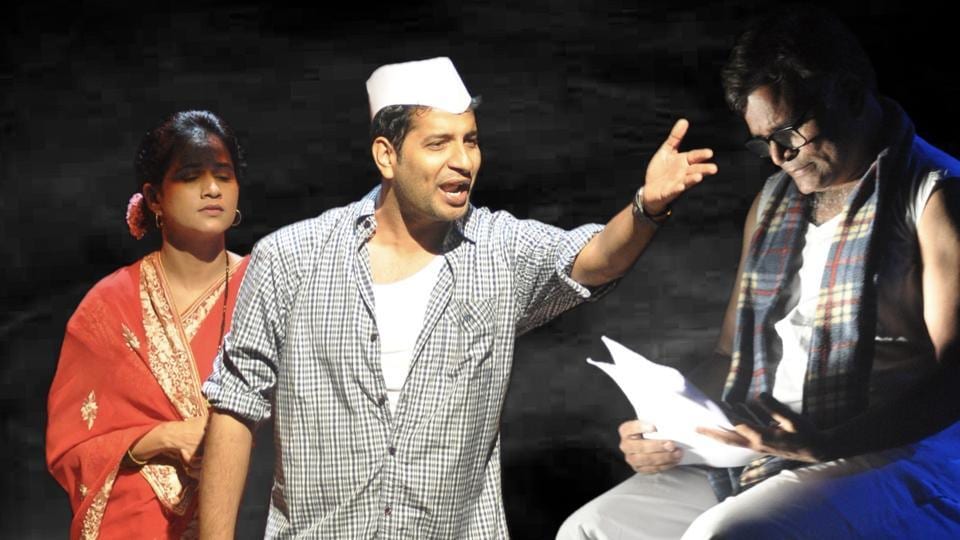
There is wit, there is doom and gloom. There is a notional kathavasthu (plot). For example, ‘Dagad Ani Maati’ follows a character called Nana, through the village called Babul Gaon. It’s one of the most pointless searches for non-existent history of the village. We know the end of the play before it starts. Its triumph is the tone of its defeatism. Datta Patil’s great contribution is the elevation of that pointlessness to understand the concept of village in the 21st century and the dire need for rural local governance.
It is not only the village in the plays, but also Sachin Shinde’s directorial baton which consolidates the audio-visual setting for the words. All the four Datta Patil plays are directed by Shinde. Directorially ambitious, each play is different from the next one. There are bits on the stage in Handabar Chandnya that have heart-wrenching beauty (especially the wait for a water tank in the blistering heat to the accompaniment of a Gondhali) and the poetic depiction of a funeral in Kalgitura (in the middle of the night; in the midst of that nothingness, death is vivifying).
The key to Datta Patil’s writing is based on two opposing elements in his work – the often colloquial, crude and simple vocabulary he deploys is contrasted with high and mighty progressive thought. The straightforward rural language is merged with a disdain for regressive, anti-democratic spleen. The things that stand out: snarling at authority when a young 10th standard pass man kidnaps the lady tehsildar (‘Handabar Chandnya’), pent up anger in Babul Gaon which has been cursed with zero history (‘Dagad Ani Maati’), the dark lyricism of a coming-of-age tale and mental illness (‘Toh Rajhans Ek’); and a homage to the forgotten masters and an attempt to revive an abandoned musical form (‘Kalgitura’).
It’s a constant tussle between the primitive village and the more advanced one, the way of the world versus the tradition. In all this, one cry is heard, “I just want to live.” On the one hand we see the stripping of Bharat into proverbial penury and a cycle of water shortage and shortage of hope. On the other hand, the plays celebrate a rich legacy of language, songs and the enduring spirit of the people of the land.
Through his plays, Patil tries to spotlight the talukas where “the nobodies” have been forgotten. Patil’s strategy is to empower them. In ‘Dagad Ani Maati’ there is a quest (futile and almost farcical) for the abandoned history of the land. In ‘Handabar Chandnya’, the tehsildar is kidnapped because of the absence of water. It tells the tale of a small drought-stricken village that waits for a water tanker – a commentary on the current situation. But what lifts it from the prosaic is when the Gondhalis sing.
In the three plays Datta Patil is asking some fundamental questions. “The high and mighty of the world practice the tyranny of power. These people are more powerful than emperors and army chiefs, even more than the Presidents and Prime Ministers. Their hands are never muddied or dirtied. They shoot no-one: they ensure the system is rigged. They work behind-the-scenes and everyone works for them. This is how they rule our people: they are never elected, but they decide the wage levels plus subsidies for peasants and labourers.” Soon enough, these faceless babus and bureaucrats will penalise the sun rays and tax the raindrops.
At the end of all four plays, there is hope. The non-heroes are all fools who dare to dream the impossible dream till the very end. And like Cervantes’s Don Quixote, they dream bravely. Despite the indifference of a ruthless regime and a brutal bureaucracy, they are doggedly persistent, The only difference between Patil’s Don Quixotes and the 17th century original, is when they tilt at the windmill, it’s not a single solitary soul but a community.
Datta Patil is a playwright from Nashik who shows us a mirror to our soul. He embodies the archetype of light in our understanding of the humble Indian peasant. More power to him and his plays, which tell us we need to get behind the surface appearances if we are to act coherently and democratically in this world.
(Four of Datta Patil’s plays will be staged on April 12 at Ravindra Laghu Natyagruh in Prabhadevi, between 10:30 am and 6pm. The plays are directed by Sachin Shinde and conceptualised by Atul Pethe.)

Stay updated with all the Breaking News and Latest News from Mumbai. Click here for comprehensive coverage of top Cities including Bengaluru, Delhi, Hyderabad, and more across India along with Stay informed on the latest happenings in World News.


