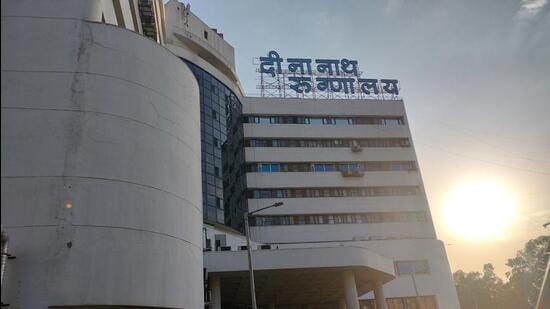
MUMBAI: The Jan Arogya Abhiyan (JAA) – a coalition of NGOs and healthcare professionals advocating patients’ rights and improvement in public healthcare in the state – has called for sweeping changes in Maharashtra’s private healthcare sector and issued a set of recommendations to prevent deaths like that of 26-year-old Tanisha Bhise in Pune, after she was denied emergency treatment at the Deenanath Mangeshkar Hospital (DMH) recently. The network has asked for a legal ban on demands for advance payment during emergencies, strict enforcement of free and concessional beds in charitable hospitals, mandatory display of patient rights and service rates, operational grievance redressal cells, and regulation of charges levied on patients in private hospitals.
“This is not just about one life lost. It’s about a healthcare system that is failing the poor every day,” said Dr Abhay Shukla, co-convenor of Jan Swasthya Abhiyan (JSA), an arm of JAA. “The government must act now to ensure that money is not a barrier to life-saving care.”
As part of its demand to regulate the private healthcare JAA has urged the state government to amend the Maharashtra Nursing Homes Registration Act (MNHRA) immediately to include a binding provision that prohibits hospitals from demanding advance deposits before starting treatment, especially during emergencies – a routine occurrence in many private and trust-run hospitals, said the body.
“This is a violation of the right to life,” said Dr Anant Phadke of JAA. “We need to urgently enforce a rule that no treatment can be denied due to lack of advance payment.”
The reformist measures were prompted by the death of Bhise, who was taken to DMH, Pune, on March 28, with a high-risk pregnancy. Her family alleged that the hospital refused to initiate treatment unless they deposited ₹10 lakh—an amount they were unable to arrange. She was then shifted to Sassoon Hospital and subsequently to Surya Hospital, where she gave birth to premature twin girls via caesarean section. As he condition worsened, she was referred to Manipal Hospital, where she died on March 31 from post-delivery complications.
{{/usCountry}}The reformist measures were prompted by the death of Bhise, who was taken to DMH, Pune, on March 28, with a high-risk pregnancy. Her family alleged that the hospital refused to initiate treatment unless they deposited ₹10 lakh—an amount they were unable to arrange. She was then shifted to Sassoon Hospital and subsequently to Surya Hospital, where she gave birth to premature twin girls via caesarean section. As he condition worsened, she was referred to Manipal Hospital, where she died on March 31 from post-delivery complications.
{{/usCountry}}Additionally, JAA also highlighted the chronic neglect of statutory obligations by charitable hospitals. Trust hospitals are legally required to reserve 10% of their beds for free treatment to patients who belong to the Below Poverty Line (BPL) segment, and another 10% for concessional care to low-income individuals.
The compliance however remains poor. As Dr Kishore Khilare of JAA pointed out: “Most hospitals are not following this rule. There is a complete lack of transparency and enforcement. The government and the Charity Commissioner must act immediately to fix this.” To make the process transparent, the body has suggested an online portal be created where real-time updates on availability of beds and the fine print of the admission process be available for the entitled patients.
The body also criticised hospitals for failing to implement the Patient Rights Charter, a requirement under the MNHRA Rules 2021. Inspections by JAA and other rights groups in the past have revealed that many hospitals do not display the charter or disclose their standard treatment rates—both mandatory under the law.
Raising concern about the lack of grievance redressal mechanisms in most districts, Dr Phadke said, “Patients and families have no clear channels for filing complaints. That has to change.” The body demanded that grievance cells be immediately set up in every district and city, with contact details visibly displayed in every hospital.
On the issue of skyrocketing healthcare costs, JAA drew attention to unethical practices such as inflated drug pricing, unnecessary tests, and commission-driven referrals. To address this, the body urged the government to revive and implement the Maharashtra Clinical Establishments Act, whose draft has been pending since 2014. The Act would empower the state to regulate charges levied by private hospital and promote ethical, standardised treatment protocols—especially crucial for maternal and neonatal care.
Marking World Health Day 2025 (April 7), themed ‘Healthy beginnings, hopeful futures,’ members of JAA said unanimously, “Bhise’s death must serve as a reminder of what is at stake”.
“We need a system where maternal health is a right, not a privilege. We need to act and not just issue statements,” concluded Dr Phadke.
Stay updated with all the Breaking News and Latest News from Mumbai. Click here for comprehensive coverage of top Cities including Bengaluru, Delhi, Hyderabad, and more across India along with Stay informed on the latest happenings in World News.
Stay updated with all the Breaking News and Latest News from Mumbai. Click here for comprehensive coverage of top Cities including Bengaluru, Delhi, Hyderabad, and more across India along with Stay informed on the latest happenings in World News.