Mumbai: The Supreme Court (SC) judgement on Economically Weaker Sections (EWS) on Monday has revived the hopes for the Maratha community whose 12 and 13% quota in education and jobs respectively was termed unconstitutional by the apex court in May last year.
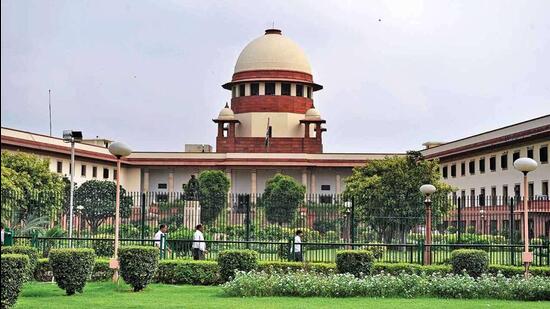
The community outfits feel that one of the grounds on which the quota was quashed—the 50% cap on the reservation--has become an infructuous paving way for the revival of the quota.
Deputy chief minister Devendra Fadnavis on Monday said that the 50% cap on the overall reservation has been nullified by the SC judgement and in light of it the state government will study the possibilities for the revival of the Maratha reservation.
The apex court on May 5, 2021, had said that there was no exceptional circumstances or extraordinary situation in Maharashtra required for the government to cross the 50% ceiling on the reservation. The SC had also questioned the authenticity of the Maharashtra State Commission for Backward Classes report based on which the community was given the reservation in 2018.
Community leaders and officials in the government feel that the Maratha reservation could be looked at afresh in the wake of the EWS ruling by the SC.
{{/usCountry}}Community leaders and officials in the government feel that the Maratha reservation could be looked at afresh in the wake of the EWS ruling by the SC.
{{/usCountry}}Fadnavis said, “Today’s judgement is a milestone ruling. In the wake of the ruling which has lifted the cap of 50%, we will check the possibility of our argument for the Maratha reservation. Until the Maratha reservation is not restored, economically weaker people from the Maratha community will avail the benefits of reservation through the EWS quota.”
The state government has already moved the SC in a review petition demanding the review of the 5-judge bench judgement of quashing the Maratha quota. A committee of Justice Dilip Bhosale had in June 2021 recommended the constitution of a fresh commission to study the backwardness of the community.
Vinod Patil, one of the petitioners in the Bombay high court for Maratha reservation said, “The EWS verdict has paved way for the reservation to the Marathas as the cap mandated by the Indra Sawhney case has been nullified by today’s judgement. The central government has submitted in the apex court that the powers of reservation are with the state governments endorsing the Maratha reservation given by the Maharashtra government. The state government should now push for the review petition pending in the Supreme Court,” he said.
Patil said that the petitioners will convince the apex court during the review petition that the Gaikwad Commission report based on which the Maratha reservation was given in 2018 was misinterpreted. “The Gaikwad Commission report was misinterpreted in the court. We will get an opportunity to bring more clarity on it during the review petition hearing by which we would be able to prove our exceptional and extraordinary backwardness,” he added.
According to an official from the general administration department, the SC has been requested recently to take up the review petition for hearing at the earliest.
Maharashtra has around 97 castes and social groups in the general or open category, this includes the Marathas, Brahmins, Saraswats, Kayasthas, Chandraseniya Kayastha Prabhus (CKP) and sub-castes from the Muslim, Christian and Lingayat communities.
“The points made in the SC’s EWS judgement must be taken into consideration to strengthen the claim of the Maratha community for reservations in the review petition filed before the apex court,” said Rajendra Kondhare of the Akhil Bharatiya Maratha Mahasangh.
Professor Ulhas Bapat, an expert on constitutional law, said this judgement would have no impact on the demand for quotas in Maharashtra, like those for the Maratha and Muslim communities and pointed to how the Maratha quota had been struck down on separate grounds. “This (EWS quota) will open Pandora’s box and create several questions. The ₹8 lakh annual income criteria, which translates into a monthly income of ₹65,000 will ensure that almost everyone will be eligible for these benefits,” he explained.
Purushottam Khedekar of the Maratha Seva Sangh said the SC’s decision to uphold the EWS quota would help deserving youth from the Maratha community get reservation benefits from this category. “Our demand for Marathas to be included in the other backward classes (OBC) category stands... When this is done, the Marathas will be removed from the EWS category. Till then, they can avail of these (EWS) benefits,” he explained.
Balasaheb Sarate, who was part of the study group on the Maratha reservation said that the Supreme Court is unlikely to allow the reservation above 50%. “The EWS reservation has been upheld citing it being a constitutional amendment and as such the reservations given by any state government is unexpected to stand the legal scrutiny. The political willpower is lagging in the inclusion of Marathas in Other Backward Classes (OBC) as they fear backlash from the community. The only option that remains open for us is the demand of the reservation reforms which induce the casteless reservation based on economic backwardness.”
Stay updated with all the Breaking News and Latest News from Mumbai. Click here for comprehensive coverage of top Cities including Bengaluru, Delhi, Hyderabad, and more across India along with Stay informed on the latest happenings in World News.
Stay updated with all the Breaking News and Latest News from Mumbai. Click here for comprehensive coverage of top Cities including Bengaluru, Delhi, Hyderabad, and more across India along with Stay informed on the latest happenings in World News.