Several industrial units in the National Capital Region (NCR) have been fined a total of over ₹1.5 crore for violating the graded response action plan (GRAP) stage three. This penalty was imposed by the Uttar Pradesh Pollution Control Board as part of a special drive aimed at addressing violators in cities near the national capital.
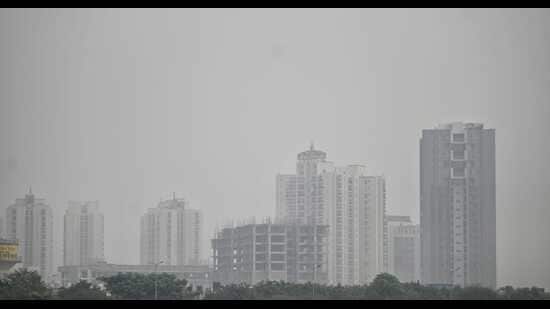
The highest fine, amounting to ₹50 lakh, was levied against those found to be storing construction materials in the open. The rigorous physical verification process was put in place due to the reported increase in pollution levels within the NCR region, as explained by Ajay Sharma, the member secretary of the Uttar Pradesh Pollution Control Board.
On Saturday, officials imposed fines on two dozen violators in Noida and Greater Noida. GRAP is a comprehensive set of anti-air pollution measures implemented during the winter season. Notably, this year, GRAP was put into effect even before air quality in the Delhi region deteriorated significantly.
Read Here: Primary schools shut till Nov 10 in Delhi; institutes to decide on higher classes as AQI remains ‘severe’
The Uttar Pradesh government is required to submit an affidavit to the Supreme Court, outlining the measures taken to control air pollution in the state, particularly in the NCR region. This affidavit is being prepared with a focus on various sectors such as industry and transportation.
{{/usCountry}}The Uttar Pradesh government is required to submit an affidavit to the Supreme Court, outlining the measures taken to control air pollution in the state, particularly in the NCR region. This affidavit is being prepared with a focus on various sectors such as industry and transportation.
{{/usCountry}}Uttar Pradesh has taken steps to mitigate its contributions to pollution, including a decision to only send buses meeting or exceeding BS-VI standards to Delhi/NCR and a mandate for all 2188 industrial units in the NCR region to transition from coal-based fuel to biofuel. Additionally, construction sites are now required to register with the dust control audit registry, a portal where they document the measures taken to reduce air pollution during their operations.