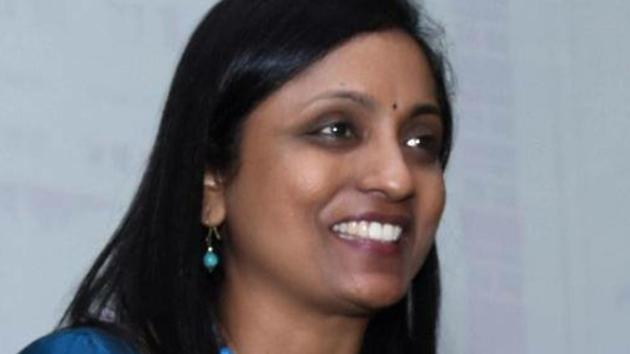
National Institute of Virology, Pune, affiliated with India’s top health research agency, the Indian Council of Medical Research, is the lone testing centre in the country for Covid-19 (coronavirus). The institute has achieved the feat of reducing the virus testing time from 12-14 hours to four hours per sample. NIV director Dr Priya Abraham explains to Steffy Thevar the institute’s functioning during the present global health emergency.
Since the Covid-19 outbreak, NIV has been the most reliable institute for checking samples of suspected patients. With more samples submitted every day, is the current staff strength enough to deal with the excess load?
Indian Council of Medical Research- National Institute of Virology (ICMR-NIV), Pune was the first laboratory to start testing for the Covid-19 agent in India. We also reported the first three positive cases within the country. As an institute, we have the capacity to scale up our testing considerably. However, it was expected that if suspected cases were to increase, it would become logistically difficult to send all samples to Pune in a timely manner with India being a vast country. Hence, initially, about 12 virus research diagnostic laboratories (VRDLs) under department of health research (DHR) and Indian Council of Medical Research within the ministry of health and family welfare were equipped to do the screening for the Covid-19 agent. Gradually, the number has become 51 VRDLs, with a plan to further support and equip yet another 56 VRDLs across this country. It is a sizable network. The laboratories have received all reagent supplies from ICMR-NIV, Pune along with standard operating protocols to screen for the virus. Many of it have also been provided with a capacity to confirm the presence of the virus by running additional confirmatory Polymerase chain reaction (PCR). All laboratories meet via video conference every day, even on weekends, to share results. ICMR-NIV helps with trouble shooting, and providing “top-up” reagent supplies. The network has helped considerably to cope with the increasing load that we are seeing now.
Is the sample testing time reduced from 12-14 hours as reported during the early phase of the outbreak of the virus?
{{/usCountry}}Is the sample testing time reduced from 12-14 hours as reported during the early phase of the outbreak of the virus?
{{/usCountry}}Currently, the testing time for each sample is maximum four hours from the earlier 12-14 hours as we have allocated more staff for these tests. Each sample is not just tested for Covid-19, but also for 18 other respiratory viral infections, including influenza viruses.
Has NIV recruited more staff after the virus outbreak?
No, we have just re-organised scientists and technicians from various sections from within NIV and formed a SARS-CoV-2 (Severe acute respiratory syndrome - coronavirus) detection team.
What is the sample testing process?
SARS-CoV-2 is a RNA (ribonucleic acid) virus. RNA is extracted from the clinical specimen (throat swabs, nasal swabs and sputum) and then reverse transcribed to complementary DNA (deoxyribonucleic acid). It is then amplified in a real time (PCR) polymerase chain reaction using primers and probes specific for the virus. We have a screening assay and also additional real-time PCR assays to confirm the presence of virus. Positive results obtained in the primary testing lab are sent as part of a coded panel to the secondary lab. Results are released only after ensuring 100 per cent concordance between both labs.
Which countries have approached NIV for test requests and how many samples been received so far?
We have received requests from Maldives and Afghanistan. We tested and reported seven samples from Maldives. We have been asked to help with setting up testing in Timor-Leste (East Timor). We are also helping Iran.
Should not the country need one more institute like NIV to reduce the burden during such virus outbreaks?
As described to you earlier, we have equipped other VRDLs in the DHR-ICMR network in a big way. In my opinion, this will be the strategy for such outbreaks in the future.