
 E-Paper



Noida: Dense fog in morning gives way to warmer day; air quality improves
According to the weather experts, while parts of Noida, especially Sector 114, was still suffering from a severe level of pollution.


A day after slipping into the “severe” category, the air quality of Noida, Ghaziabad and Greater Noida improved marginally to “very poor” category on Monday with the pollution board expecting no significant improvement for the few days. Although the region witnessed dense fog in the early morning, rising temperature and wind speeds led to a partial dispersal of pollutants later in the day, said weather experts.
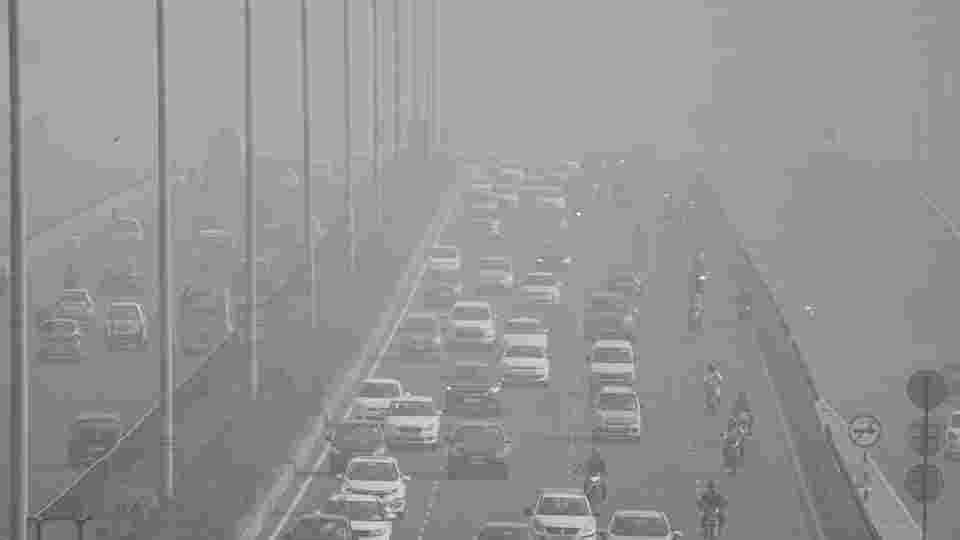
While the minimum and maximum temperatures will be around 10 and 30 degrees Celsius respectively for the next few days, the open areas along the Noida-Greater Noida Expressway and parts of Western Uttar Pradesh may see dense fog in the morning. However, foggy mornings will give way to warmer days along with rising wind speeds.
According to the weather experts, while parts of Noida, especially Sector 114, was still suffering from a severe level of pollution, in other parts, a slight rise in the wind speed and higher maximum temperatures have led to an improvement in the level of ventilation leading to better dispersal of pollutants.
“The wind speed increased slightly towards the daytime reaching 10kmph on Monday. Though the wind speed was not enough to disperse the current volume of pollutants, the higher mercury helped. The temperatures in the region on Monday were five degrees higher than the season’s average. High temperature also helped with the dispersal of the pollutants,” said Kuldeep Srivastava, head, regional weather forecasting centre, India Meteorological Department (IMD).
On Monday, the maximum and minimum temperatures for Noida was recorded at 29.1 degrees Celsius and 11.4 degrees Celsius respectively.
“Due to zero wind speed during the early morning, regions of western Uttar Pradesh, including the Agra and Lucknow expressways, may see dense fog during the early morning hours between 4am to 9am,” Srivastava added.
He also said that the weather conditions will remain almost the same for the next few days and the pollution levels will not see much improvement either.
According to the Central Pollution Control Board (CPCB), the air quality index (AQI) of Noida on Saturday was recorded at 368 (very poor) as against 416 (severe) a day earlier.
The AQI of Greater Noida was recorded at 349 as against 402 a day earlier. Meanwhile, the air quality of Ghaziabad was 369 — the third worst in country — as against 416 a day earlier
Between February 9 and 14, Noida, Greater Noida and Gaziabad have seen some of the worst pollution levels in the country.
The AQI between 101 to 200 is considered to be “moderate”, while that between 201 and 300 is considered to be “poor”. The air quality between 301 and 400 is considered a “ very-poor” while the same above 400 is considered “severe”.
According to the system of air quality and weather forecasting and research (SAFAR), the air quality is likely to improve but likely to remain within the “very poor” category for the next few days.
“Surface winds are low and forecasted to improve over the next two days. Better ventilation is likely to influence AQI positively. AQI is likely to improve towards the lower end of Very Poor for the next three days,” read the SAFAR statement on Monday.
Stay updated with all the Breaking News and Latest News from Mumbai. Click here for comprehensive coverage of top Cities including Bengaluru, Delhi, Hyderabad, and more across India along with Stay informed on the latest happenings in World News.


