For the first time in three years, the month of October has turned out to be less polluted, allowing Ghaziabad residents to breathe a bit easier, showed the data compiled by the Central Pollution Control Board (CPCB) with pollution control board officials attributing the improvement to favourable meteorological conditions and also local measures taken up under the graded response action plan (Grap).
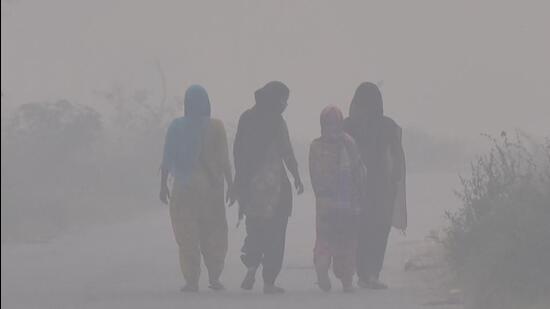
According to CPCB, the city suffered no ”very poor” air quality this October as opposed to six ”very poor” air days in 2022 and four such days in 2021.
According to CPCB figures, the city’s air quality index (AQI) stood at an average of 195 this October, and AQI remained between a minimum of 61 and a maximum of 291.
The range was 14-384 in October 2022 while it was 45-349 in October 2021. The average AQI in the month of October 2022 was 216 while it was 211 in October 2021.
For the past few years, Grap regulations are enforced from the first of October till February or mid-March.
The Grap lists several pollution abatement measures to be taken when pollution levels increase in Delhi and the National Capital Region.
According to the AQI scale, readings between 0 and 50 are considered “good”, 51 and 100 are “satisfactory”, 101 and 200 are “moderate”, 201 and 300 are “poor”, 301 and 400 are “very poor”, and 401 and 500 are “severe”.
{{/usCountry}}According to the AQI scale, readings between 0 and 50 are considered “good”, 51 and 100 are “satisfactory”, 101 and 200 are “moderate”, 201 and 300 are “poor”, 301 and 400 are “very poor”, and 401 and 500 are “severe”.
{{/usCountry}}“The better AQI this October has been the result of meteorological conditions and local measures taken up under Grap. The better condition is also a result of reduced stubble burning activities. In the months of September/October, we issued penalties amounting to ₹22 lakh against different violators for garbage burning, construction and demolition waste dumping, and industrial emissions, among others.,” said Vikas Misra, regional officer, Uttar Pradesh Pollution Control Board.
Environmentalists said the reduction in pollution is largely due to favourable meteorological factors.
“The claimed measures by different agencies will be put to test in the coming festival days and also when temperature falls further and there is a decline in wind speed. There is lot which can be done to strengthen ground level enforcement. In fact, the Grap measures should be implemented throughout the year and not just during winter months. Bad roads, dusty patches and garbage dumps still dot city roads and open areas. Also, more monitoring stations are needed across the city to get a correct picture of AQI,” said Akash Vashishtha, a city-based environmentalist and lawyer.
On Tuesday, the last day of October, the city’s AQI was 251 in the ”poor” category while it stood in the higher ranges in neighbouring Greater Noida at 375 and Noida at 329 both in the ”very poor” category.
The forecast by the ministry of earth sciences for Delhi on Tuesday said, “The outlook for subsequent six days: the air quality is likely to remain in the “very poor” category.”
Stay updated with all the Breaking News and Latest News from Mumbai. Click here for comprehensive coverage of top Cities including Bengaluru, Delhi, Hyderabad, and more across India along with Stay informed on the latest happenings in World News.
Stay updated with all the Breaking News and Latest News from Mumbai. Click here for comprehensive coverage of top Cities including Bengaluru, Delhi, Hyderabad, and more across India along with Stay informed on the latest happenings in World News.