
 E-Paper



Revised Delhi-Meerut Expressway toll fee likely from April 1 onwards
The Delhi-Meerut Expressway stretches 59.77 kilometres from Sarai Kale Khan in Delhi to Partapur in Meerut with the final toll plaza being located at Kashi

 Prefer HTon Google


The National Highways Authority of India (NHAI) has notified revised toll fees for the Delhi-Meerut Expressway and officials said that the new rates are likely to be effective from April 1 onwards, when toll fees will finally be charged from commuters.
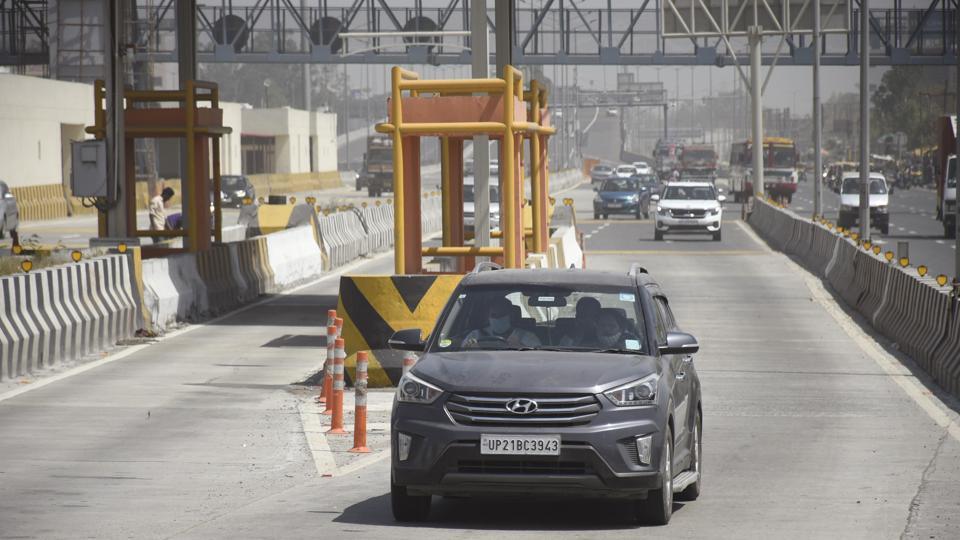
The previous rate for vehicles such as cars/jeeps was ₹140 while as per the revised rate; the toll fee will be ₹155 for the entire distance from Sarai Kale Khan in Delhi to Kashi toll plaza in Meerut.
According to the official rate structure, vehicles such as cars/jeeps paid ₹2.34 per kilometre earlier and it has been increased to ₹2.59 per kilometre as per the revised rates.
The Delhi-Meerut Expressway stretches 59.77 kilometres from Sarai Kale Khan in Delhi to Partapur in Meerut with the final toll plaza being located at Kashi.
The DME was formally inaugurated in December last year and the tolling was to start from December 25, but it could not be initiated due to a host of reasons.
“The tolling is likely to start from April 1 and there has been some revision in the rates, which will be applicable from the new financial year. For instance, the new rate for the entire stretch is now ₹155 as against the previous rate of ₹140 for cars/jeeps etc.,” said Arvind Kumar, project director from NHAI.
“For some stretches such as the one from Sarai Kale Khan to Dasna in Ghaziabad, no rates have been notified. It will be done as and when we get directions from the NHAI headquarters. For now, travelling between Sarai Kale Khan and Dasna will be free of cost and the move will benefit local commuters,” Kumar added.
The NHAI has already implemented automatic number plate readers (ANPRs) to record the registration plates of vehicles entering and exiting the expressway lanes. The ANPRs will help deduct the toll fee from the vehicles’ FASTag accounts.
According to NHAI, the annual toll collection potential on the expressway is estimated to be about ₹111.39 crore, with cars/jeeps/light motor vehicles accounting for about 82% of the traffic and bus/trucks accounting for 14%.
The 14-lane DME comprises four phases — phase 1 links Sarai Kale Khan in Delhi and UP Gate in Ghaziabad, phase 2 connects UP Gate and Dasna in Ghaziabad, phase 3 connects Dasna to Hapur, while phase 4 is a six-lane 32-km access-controlled alignment between Dasna and Meerut.
According to official estimates, phase 1 caters to the movement of about 120,000 passenger car units (PCUs) per day, while phase 2 in Ghaziabad caters to the movement of about 60,000 PCUs per day. The PCU for phase 4 is estimated at about 40,000.
The expressway has six entry/exit points at Sarai Kale Khan, Indirapuram, Dundahera (Vijay Nagar), Dasna, Rasoolpur Sikrod, Bhojpur and the main toll plaza is located at Kashi in Meerut.


