
 E-Paper



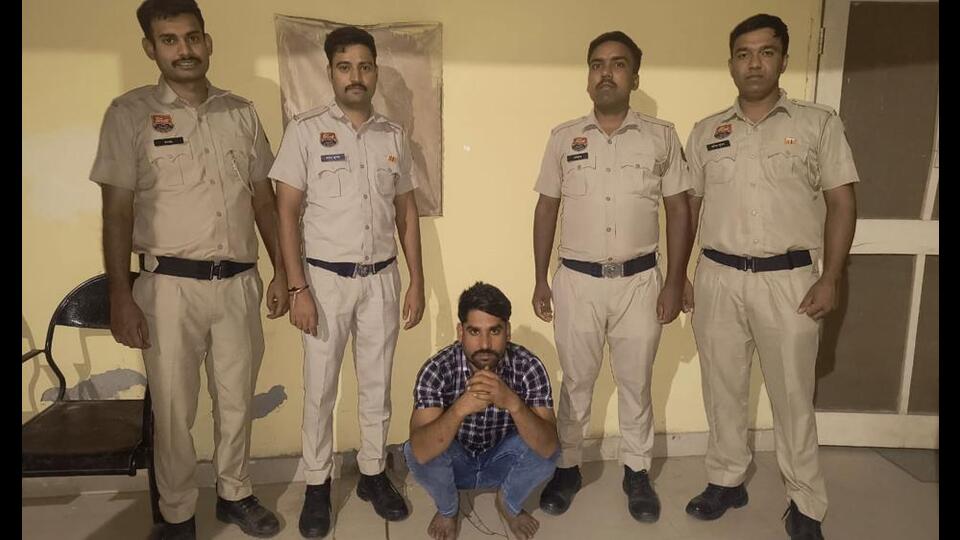
1 held for rebuilding illegal stretch of road in Aravallis
Khan was arrested after forest beat staff on night patrol caught the duo allegedly cutting rocks and refilling the pathway through the Aravalli forests

 Prefer HTon Google


The Nuh police booked two men and arrested one of them on Wednesday, for allegedly attempting to rebuild a road in Basai Meo village in the ecologically sensitive Aravalli hills, police officials said.
The 1.5 km-long illegal stretch had earlier been razed on the orders of Nuh deputy commissioner Vishram Kumar Meena, following directions from the Supreme Court-appointed Central Empowered Committee (CEC), officials said.
The police identified the arrested man as Saikul Khan, a resident of Basai Meo village, in Ferozepur Jhirka. His accomplice, Mohammad Ali, is currently at large, police said.
Khan was arrested on Wednesday after forest beat staff on night patrol caught the duo allegedly cutting rocks and refilling the pathway through the Aravalli forests. A complaint was immediately filed by the forest department, triggering legal action. “These are clear attempts to subvert forest protection and facilitate illegal access for mining. We acted promptly and will not tolerate such violations,” said Vineet Kumar Garg, principal chief conservator of forests, Haryana.
The accused have been booked under multiple sections of the Bharatiya Nyaya Sanhita (BNS), 2023, the Punjab Land Preservation Act (PLPA), 1900, and the Mines and Minerals (Development and Regulation) Act, 1957. Charges under Sections 33 and 32 of the Indian Forest Act, 1927, have also been invoked on June 2, police said.
Khan is being interrogated to know the extent of the network behind the attempt to rebuild the road and to identify any possible handlers, police said. “We are actively patrolling all vulnerable points and are working closely with panchayats and the forest department to prevent further violations,” said Rajesh Kumar, superintendent of police, Nuh. He added that the local vigilance unit in Gurugram is also investigating the matter.
The road in question, had originally been constructed illegally through protected Aravalli forest land in Basai Meo village. Following a Supreme Court petition, the CEC submitted a report confirming the violation, which led to the suspension of the village sarpanch earlier this year. The Haryana chief secretary later, admitted in an affidavit, to the apex court that the forest department had failed to take action, triggering criticism from environmental groups.
“The Aravallis are not just ancient hills—they are the lungs of North India,” said environmental activist Vaishali Rana. “Every tree felled and every illegal encroachment weakens our ecological future. Roads through these hills, are not only illegal but also fragment a critical eco-sensitive zone.”
According to forest officials, the department had blocked the illegal path in January this year to halt mining and encroachment. FIRs were also registered against three revenue officials for facilitating the illegal construction, but follow-up enforcement has been slow.
The recent arrest underlines a growing pattern of violations and delayed deterrence in the Aravallis. Despite monitoring by the top court, activists and officials say illegal road construction, tree felling and land encroachments continue to threaten the already degraded forest range, which plays a vital role in groundwater recharge, biodiversity conservation, and climate regulation in the region.
A survey of the disputed pathways in Basai Meo village has begun under the supervision of a senior vigilance officer, following directives from the Supreme Court. The exercise will demarcate the Aravalli terrain and Panchayat land on both sides of these routes. The paths cut through the Aravalli terrain and were allegedly built to enable illegal mining operations.


